Ham Radio · Volume 3
The SB and HW Years
From 1964 to the early 1970s Heath sold two parallel lines of amateur equipment, and together they made it one of the largest amateur-radio suppliers in the world. The SB line was a coordinated single-sideband station built to stand comparison with the Collins S-Line. The HW line was the same technology cut down to a price a beginner could pay. Around them grew a ring of matching accessories, VHF sets, Novice rigs and kilowatt amplifiers. Chas Gilmore counts 44 amateur products in the 1970 catalogue (Leibson, EEJournal, “‘H’ is for Heathkits and Hams”, part 3). A count of model numbers in the Winter 1970 and 1971 catalogues for this dive finds 40 to 42, which agrees.
Five of the rigs of this period have their own dives on this site, and they are summarised here rather than retold: the SB-301 and SB-401 station, the SB-102 transceiver, the HW-101 transceiver, and, in the next volume, the SB-104A. The company history’s Golden Age volume gives the corporate setting under Schlumberger.
3.1 The SB system
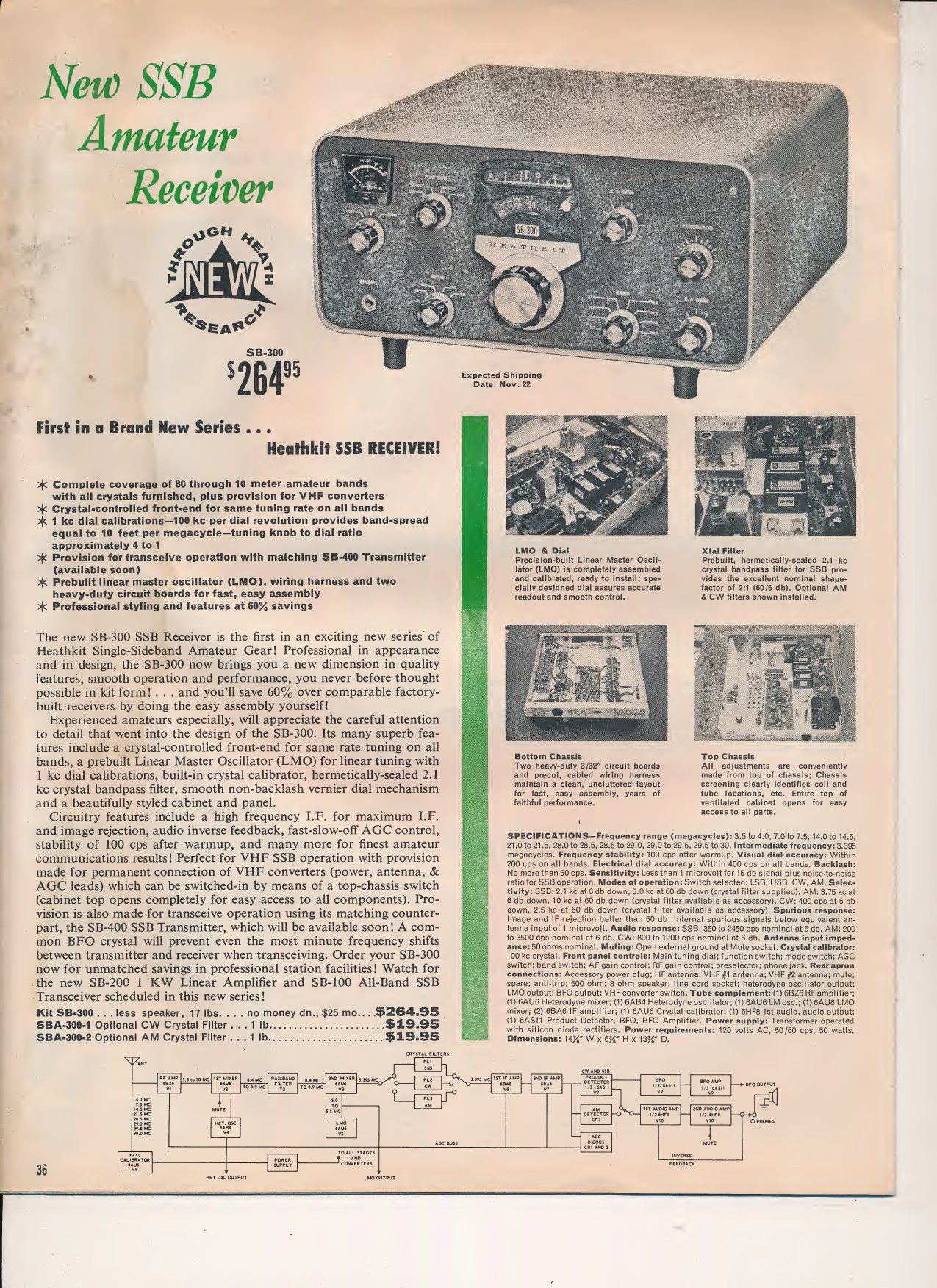
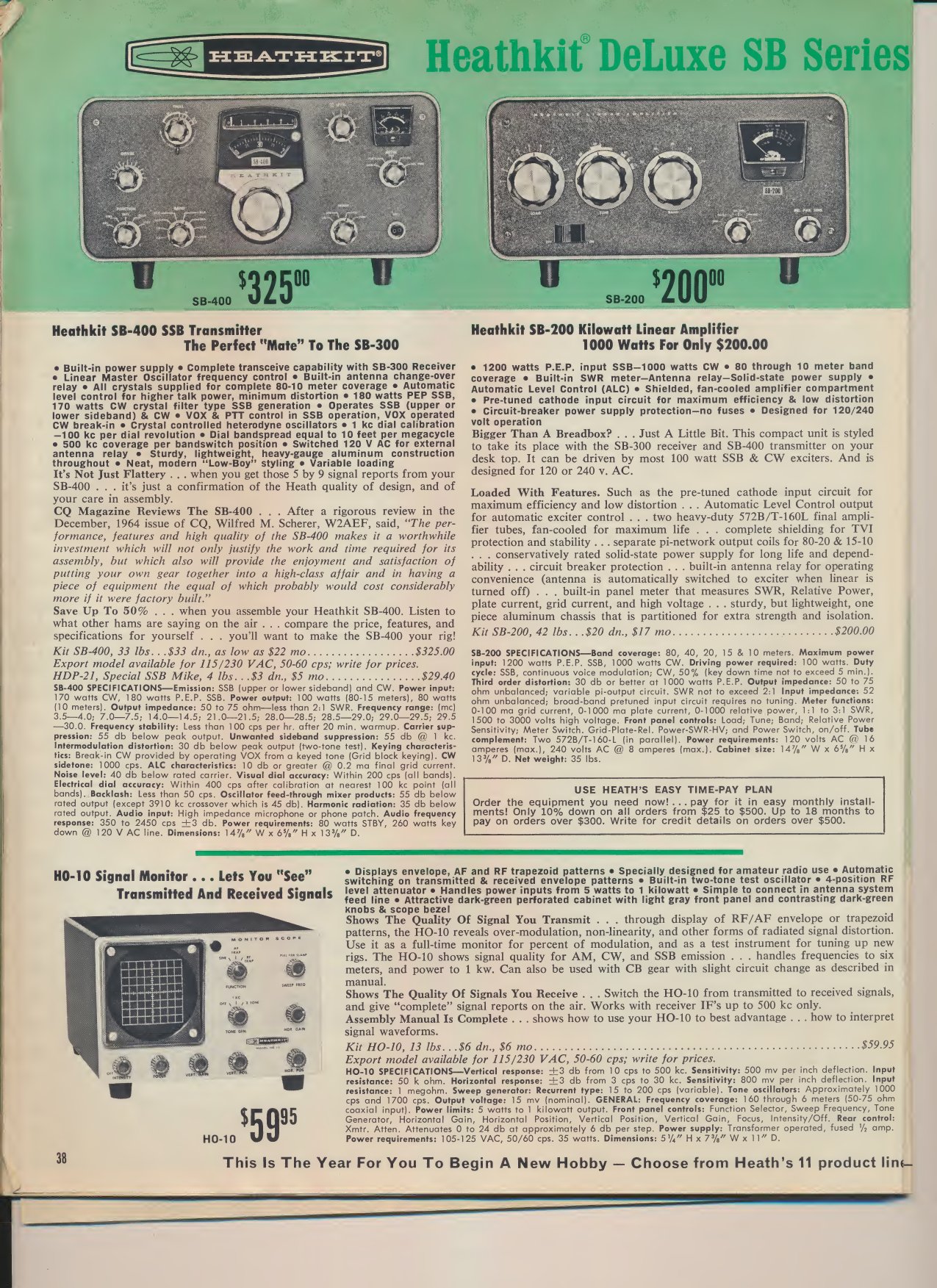
The SB-300 receiver was announced in Heath’s catalogue 80-34, issued at the end of 1963, at $264.95, as the “first in a brand new series”. The copy promised that the SB-400 transmitter “will be available soon”, and told readers to “watch for the new SB-200 1 KW Linear Amplifier and SB-100 All-Band SSB Transceiver scheduled in this new series” (catalogue 80-34). By the March 1965 catalogue the SB-400 was $325 and the SB-200 $200. That catalogue quoted Wilfred M. Scherer, W2AEF, reviewing the SB-400 in CQ in December 1964: its performance, features and quality made it “a worthwhile investment”, equal to equipment that “probably would cost considerably more if it were factory built” (catalogue 800/53, March 1965).
The system’s defining part was the Linear Master Oscillator, a VFO tuning 5.5 down to 5.0 MHz that Heath built, aligned and sealed at the factory, so that the builder never had to align the one circuit that set the frequency. Every other oscillator was crystal-controlled, and each band-switch position covered exactly 500 kHz. Eckweiler judges the resulting stability “comparable with quality radios of the same era”, with a dial readable to better than 200 Hz (Heathkit of the Month #30). The receiver and transmitter could share one oscillator and transceive, or be used apart.
The resemblance to Collins was deliberate. The SB twins copied the S-Line’s grey and green styling and its dial, a slide-rule scale for hundreds of kilohertz over a round kilohertz scale. They differed in using crystal-lattice filters rather than Collins’s mechanical filters, and in putting the transmitter’s high-voltage supply inside its own cabinet rather than in a separate box (Eckweiler, #30; W2PA, “Collins S/Line Influence on Heathkit’s SB-Series”). Gilmore recalls that several engineers who worked on the SB radios had come from Collins after layoffs there (EEJournal, part 2). The pair soon became known as the “Heathkit Twins” and “the poor man’s Collins”, and Heath’s own copy promised “professional styling & features at 60% savings”.
3.2 The station grows
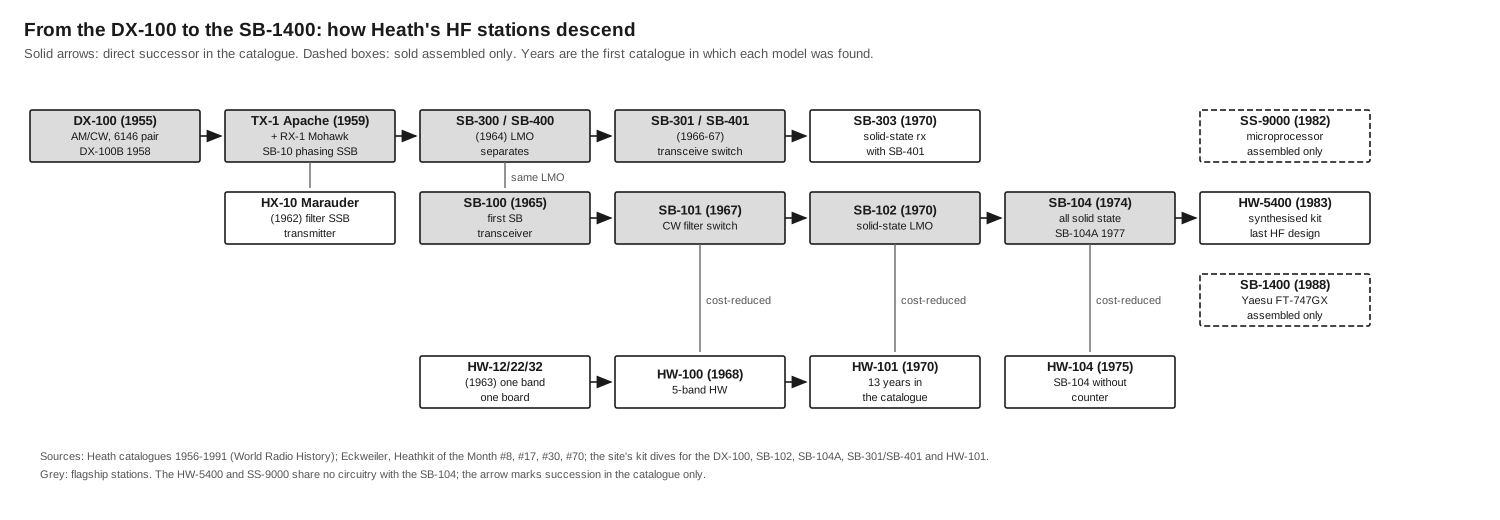
The rest of the promised series followed within two years, and then went through revisions. The model years below are the first catalogues in which each model was found; the site’s kit dives give the detail.
- SB-200 linear amplifier (1964). A pair of 572B triodes, 1,200 watts PEP input on SSB, with its power supply built in, at $200. Gilmore says it “outsold all linear amplifiers anywhere” and that it was probably Heath’s top ham kit by lifetime dollars. It stayed in the catalogue until 1978, when an FCC rule against amplifiers usable on 10 metres (because they were being sold into the 11-metre Citizens Band) forced a revision as the SB-201, without 10 metres (EEJournal, part 2; Eckweiler, Heathkit of the Month #33).
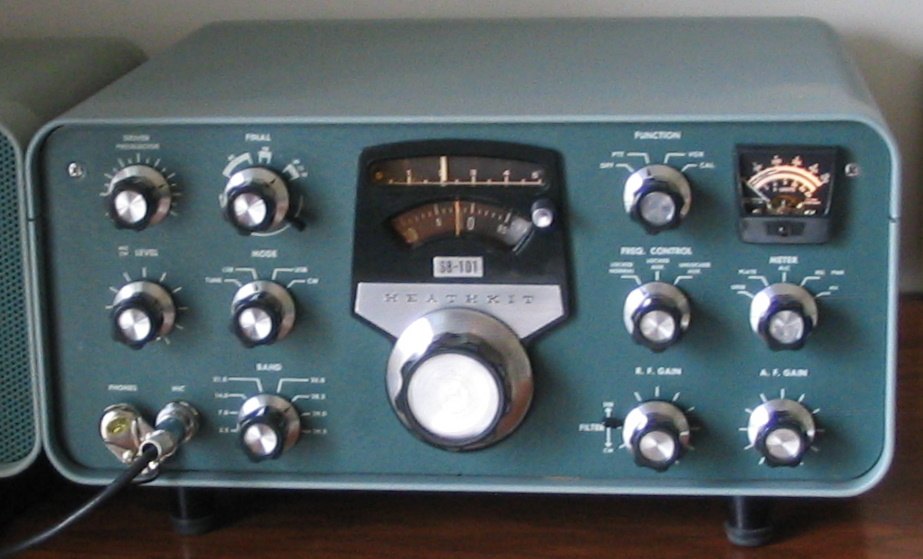
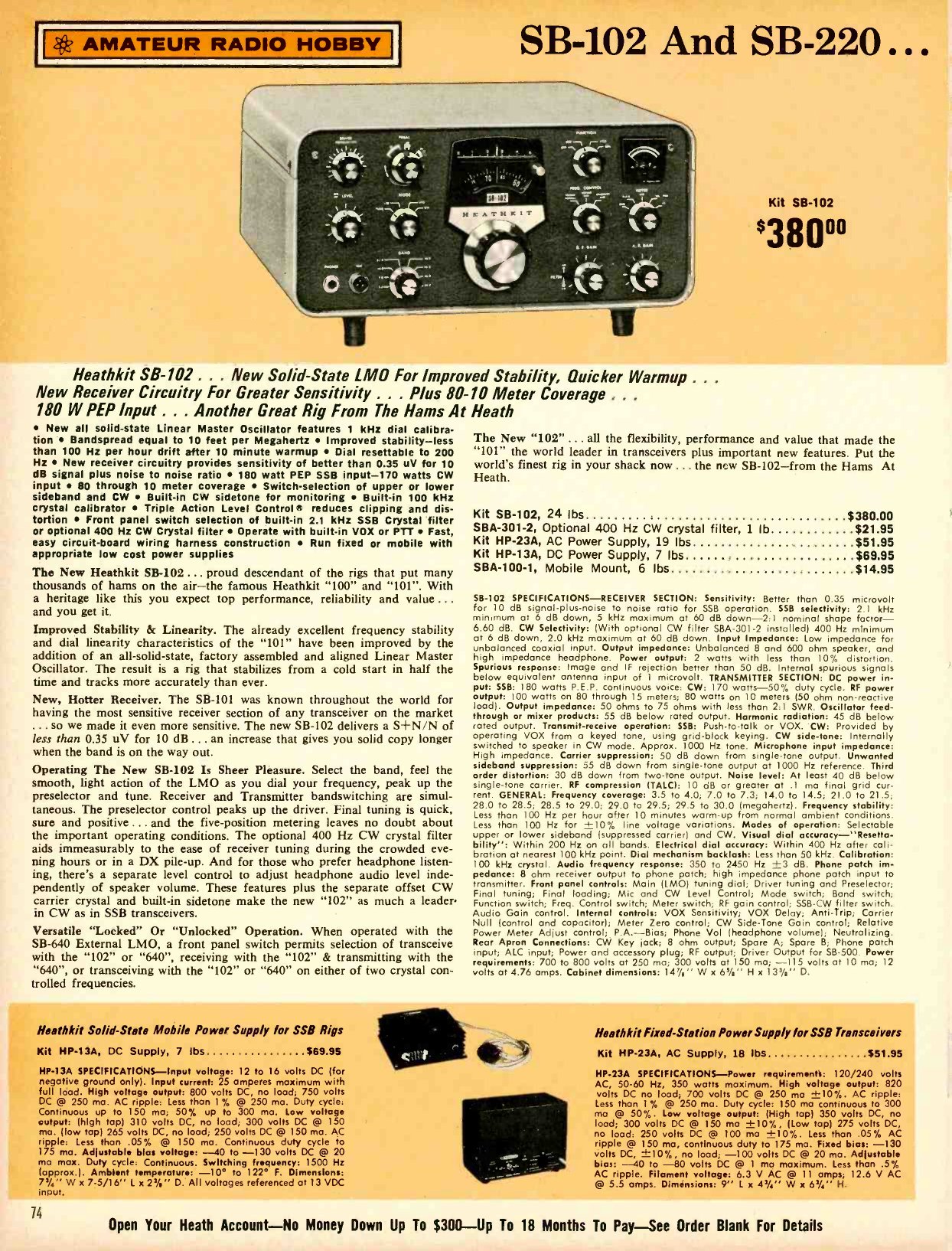
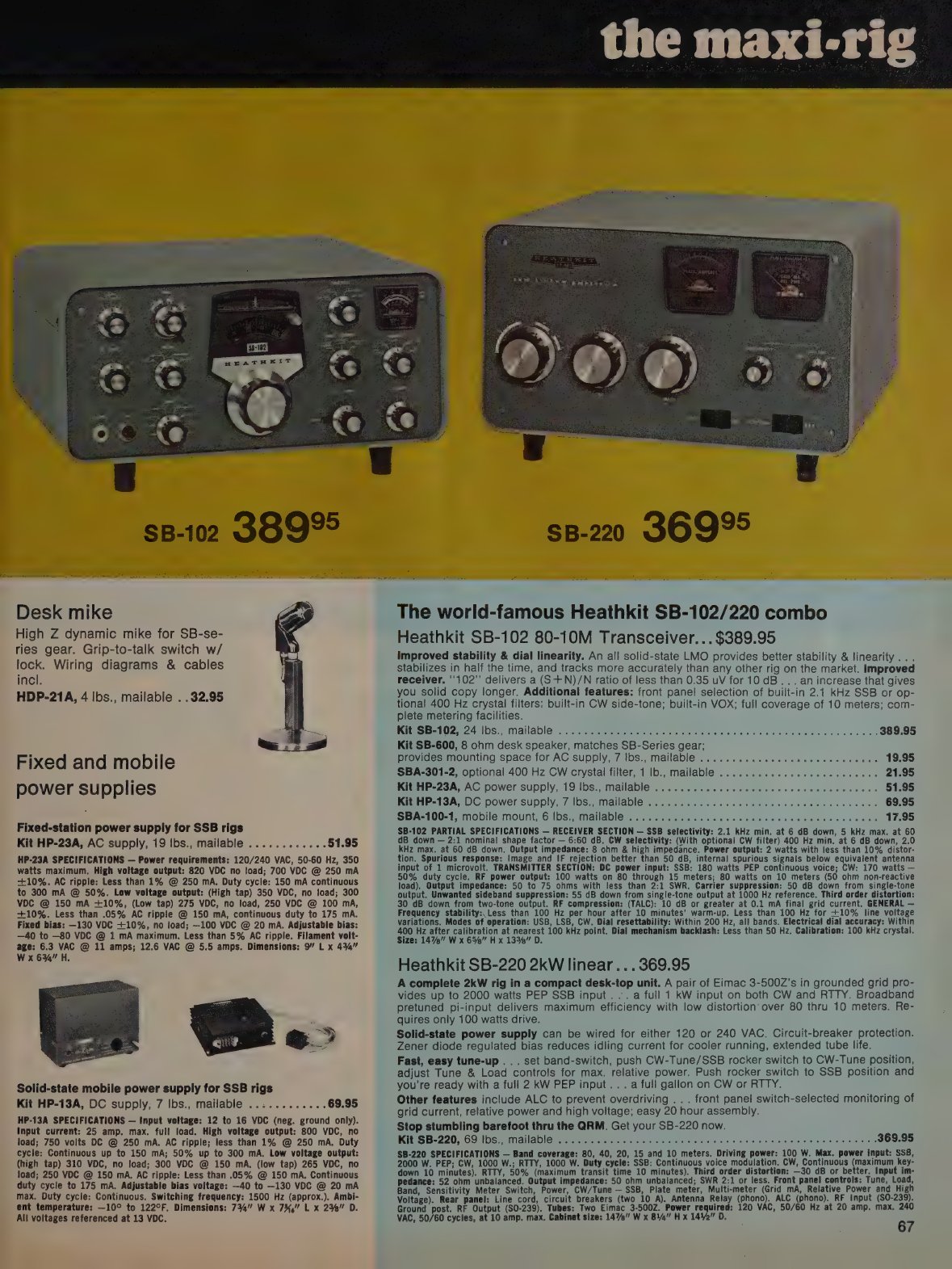
- SB-100 transceiver (1965, $360). Receiver, transmitter and one LMO in one cabinet, with an external supply: the HP-23 ($39.95) for the station or the HP-13 ($59.95) for the car. It became the SB-101 in 1967 ($370), which added front-panel switching between SSB and CW filters, and the SB-102 in 1970 ($380), which replaced the tube LMO with a solid-state one and improved the receiver. The SB-102 dive traces the three generations.
- SB-110 six-metre transceiver (1965, $320), the SB-100 idea on 50–52 MHz, revised as the SB-110A in 1969 (catalogue 800/62, March 1966).
- SB-301 receiver and SB-401 transmitter (late 1966, $260 and $285). Refinements of the twins, with a front-panel switch between transceive and independent operation, RTTY and WWV positions, and the transmitter’s crystals moved into an optional pack. The solid-state SB-303 receiver replaced the SB-301 in November 1970; the SB-401 lasted into 1976. The SB-301/SB-401 dive covers the pair. A shortwave-listener version, the SB-310 ($249 in 1968), and its solid-state successor the SB-313 used the same cabinet.
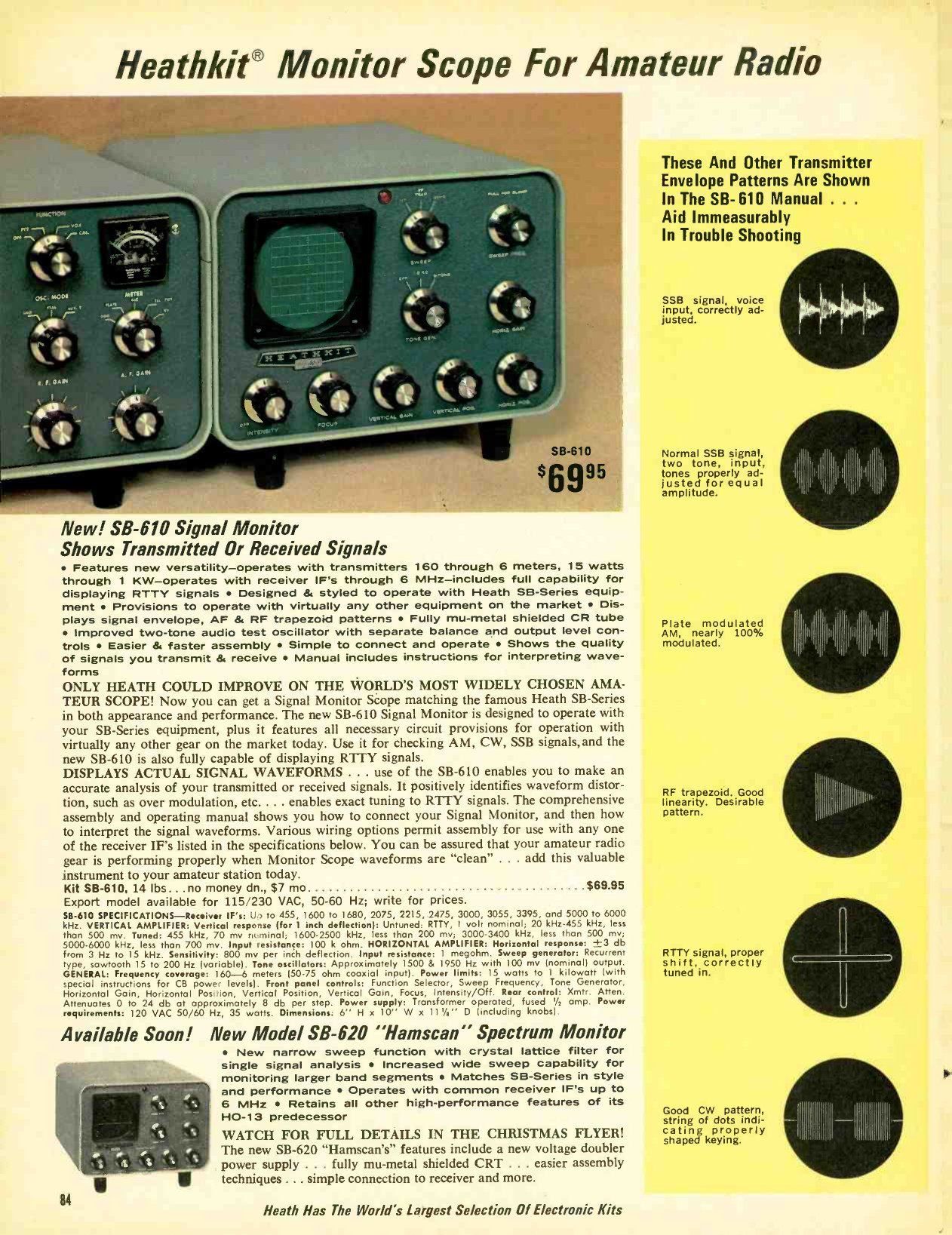
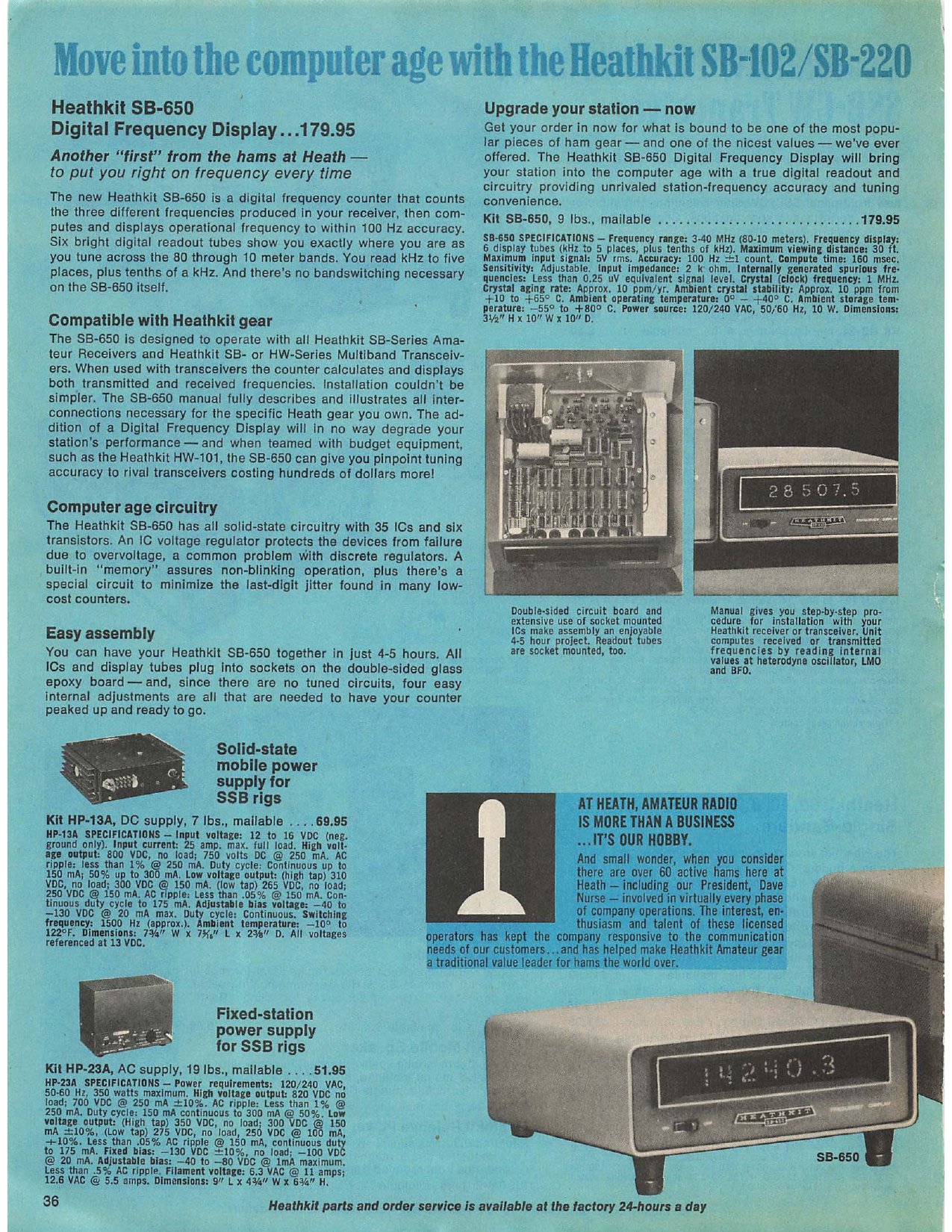
Heath sold the SB line as a station, and the accessories were as much a part of it as the radios. By the late 1960s the catalogue offered the SB-600 speaker ($17.95), which had room inside for the HP-23 supply; the SB-610 monitor scope ($69.95), for watching the transmitted envelope and the linearity of an amplifier; the SB-620 “Scanalyzer” panoramic adapter ($119.95); the SB-630 station console with clock, timer, SWR bridge and phone patch ($74.95); the SB-640 external LMO ($99) for split-frequency operation with a transceiver; the SBA-300-3 and SBA-300-4 plug-in converters for six and two metres; and the SB-500 two-metre transverter ($179.95 in 1971) (1967, 1968, 1969 and 1971 catalogues). The last addition was the SB-650 digital frequency display of 1972–73 ($179.95), a Nixie-tube counter that read the true operating frequency of an SB-102 or HW-101, sold under the headline “Move into the computer age” (catalogue 810/73).
3.3 The HW line
The HW line began with the Singlebanders of 1963 (described in the previous volume). In 1966 they became the HW-12A, HW-22A and HW-32A, which added selectable upper and lower sideband and cost about $99 (Eckweiler, Heathkit of the Month #70; EEJournal, part 2). They stayed in the catalogue until 1974. The step that made the HW name was the HW-100 of 1968, a five-band SSB and CW transceiver that was, in the words of the HW-101 dive, an SB-101 with a cheaper dial mechanism, a builder-assembled VFO in place of the factory LMO, plainer styling and no provision for switching filters. The 1969 catalogue listed it at $240 against the SB-101’s $370, and called it “the world’s fastest selling transceiver”. Its successor the HW-101, $249.95 in 1971, answered the two complaints about the HW-100 (the dial drive and the single filter), improved the receiver, and stayed in the catalogue for thirteen years. The HW-101 dive documents it in full.
How many HW-101s were built is not known exactly. The figure usually quoted, “nearly 40,000”, comes from Chuck Penson’s fiftieth-anniversary article of 1997, which also claimed it was “more of a single product than anyone before or since, even more than Collins” (Penson, “Heathkit’s 50th: The Green Turns to Gold”). Heath’s own catalogues give two dated claims. The Fall 1979 catalogue says “over 27,000 sold throughout the world”, and the Winter 1981–82 catalogue “over 30,000” (Fall 1979, p. 26; Winter 1981–82). The two catalogue figures imply about 1,500 a year near the end of the rig’s life. Penson’s estimate is plausible only if it includes earlier years at a much higher rate or the HW-100 as well.
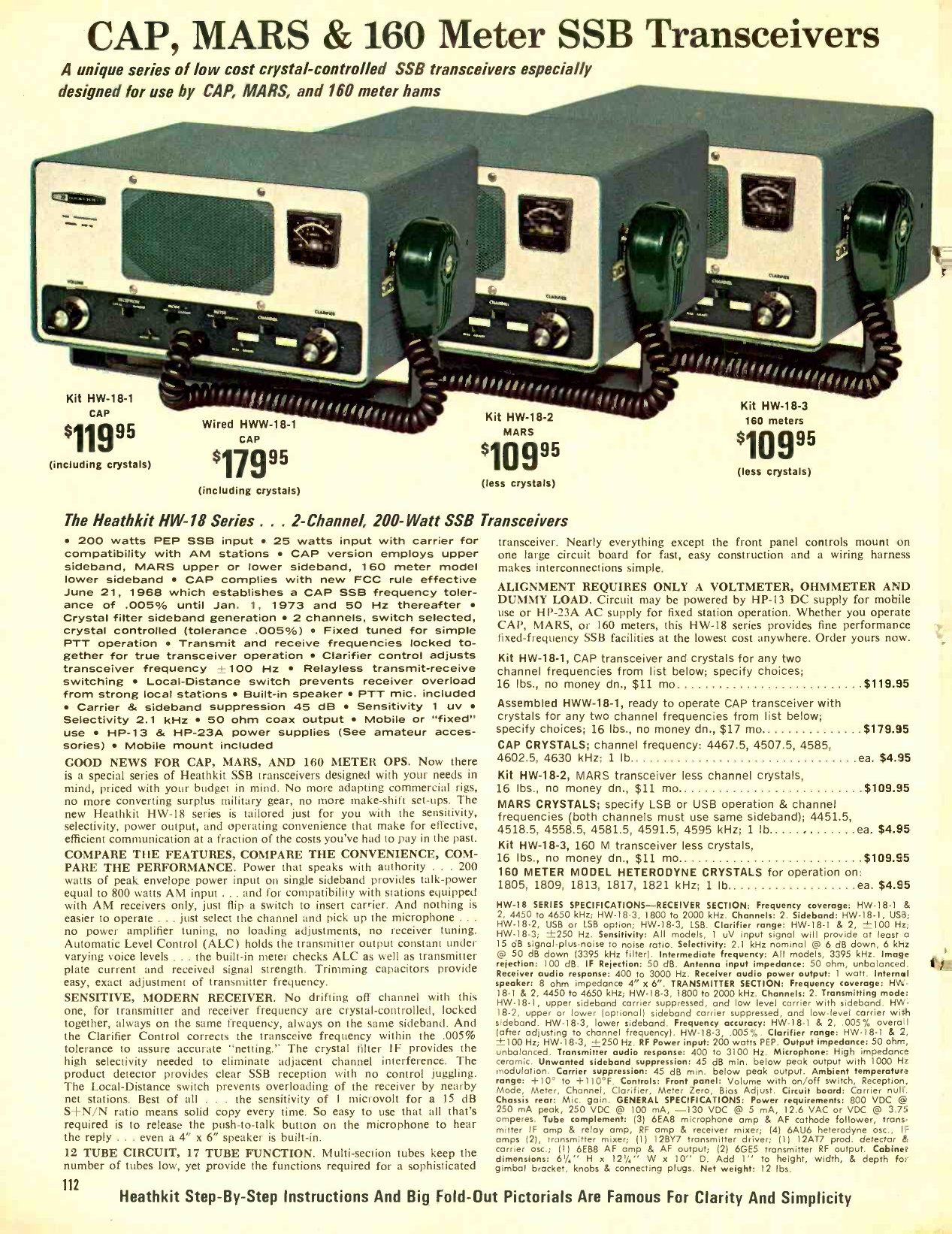
The HW prefix also covered specialised transceivers. The HW-18 series of 1968–72 were two-channel, 200-watt SSB transceivers built for the Civil Air Patrol (HW-18-1), for MARS (HW-18-2) and for 160 metres (HW-18-3), from $109.95 (1969 catalogue, p. 112). The HW-17 of 1968 was a two-metre AM transceiver at $129.95, for which Heath soon offered an FM adapter, the HWA-17-2 (1969 catalogue; Nostalgic Kits Central matrix).
3.4 The Novice line: HW-16 and the old station
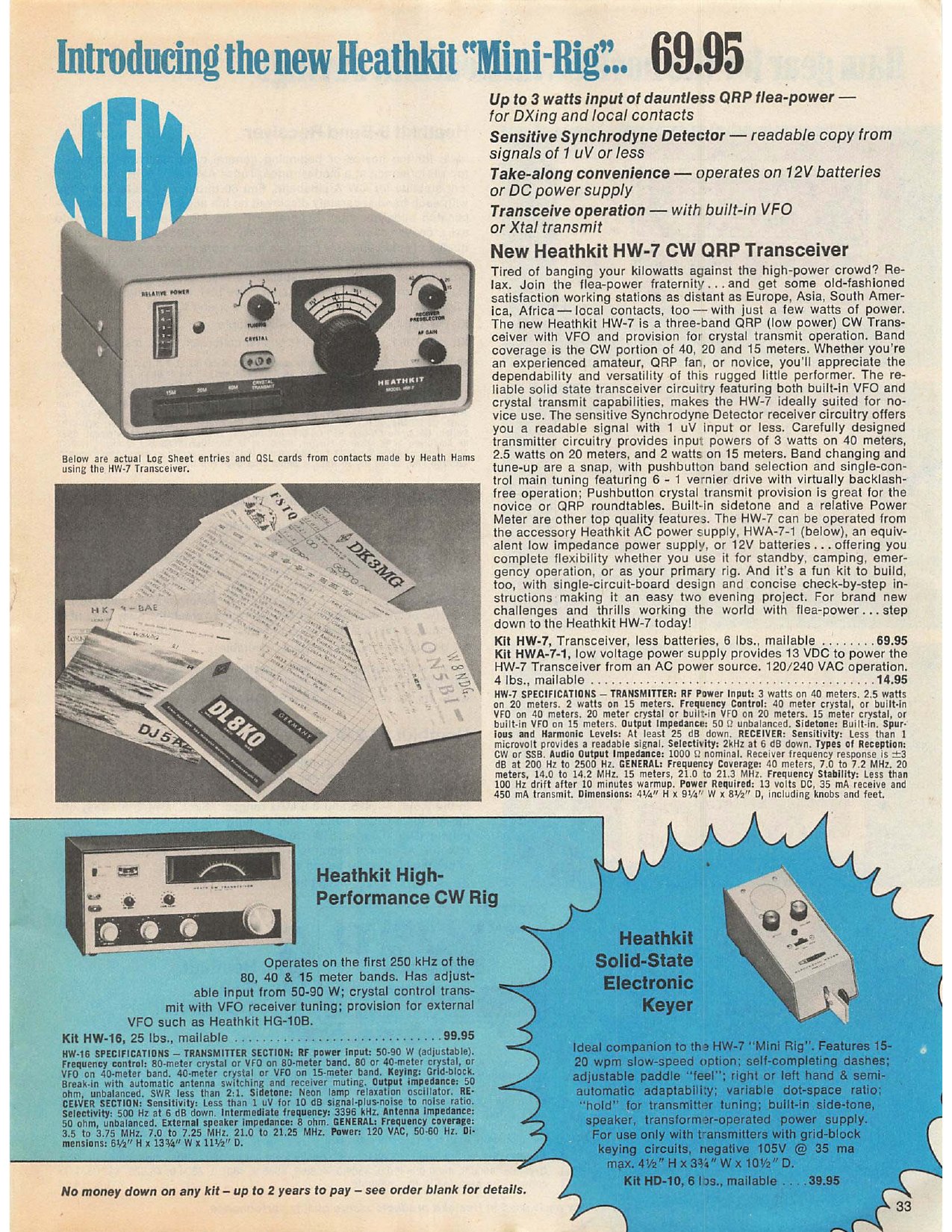
For the beginner the HW-16 was the most important new rig of the decade. It appeared in the June 1967 catalogue under the headline “Novices!… New Hams! Here’s How You Can Get On-The-Air With A High-Performance Rig For Less Than $100!”. It was a CW-only transceiver for the Novice segments of 80, 40 and 15 metres, crystal-controlled on transmit but with a tunable dual-conversion receiver, full break-in keying and built-in sidetone; Heath promised “you’ll never outgrow your HW-16” (June 1967 catalogue). The price in the 1968 catalogue was $99.50 (company history, vol. 4). Once its owner had a General licence the HG-10B VFO freed its transmitter from crystals. The HW-16 stayed in the catalogue until 1976. It is one of the few Heath rigs with an online owners’ group of its own (company history, vol. 7).
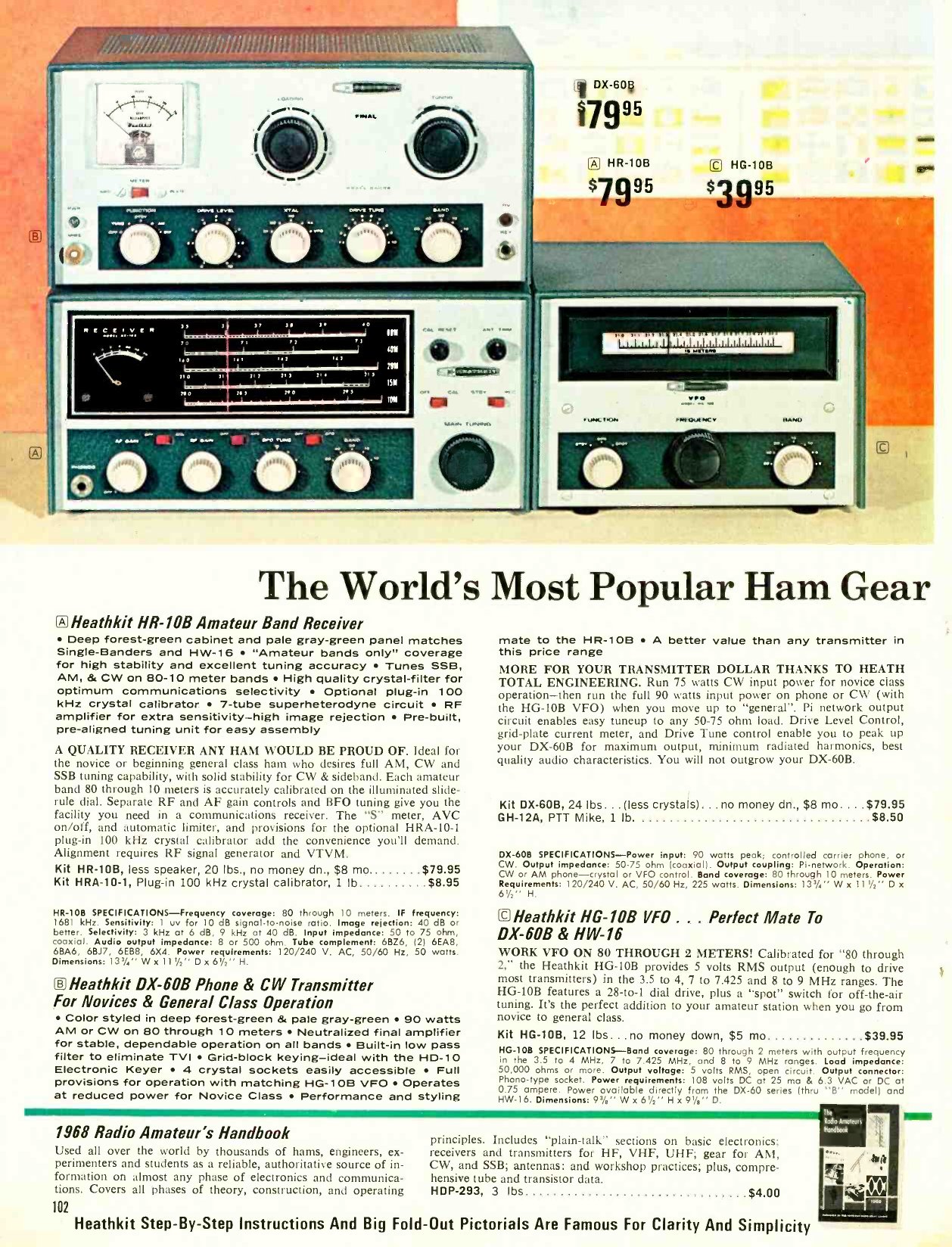
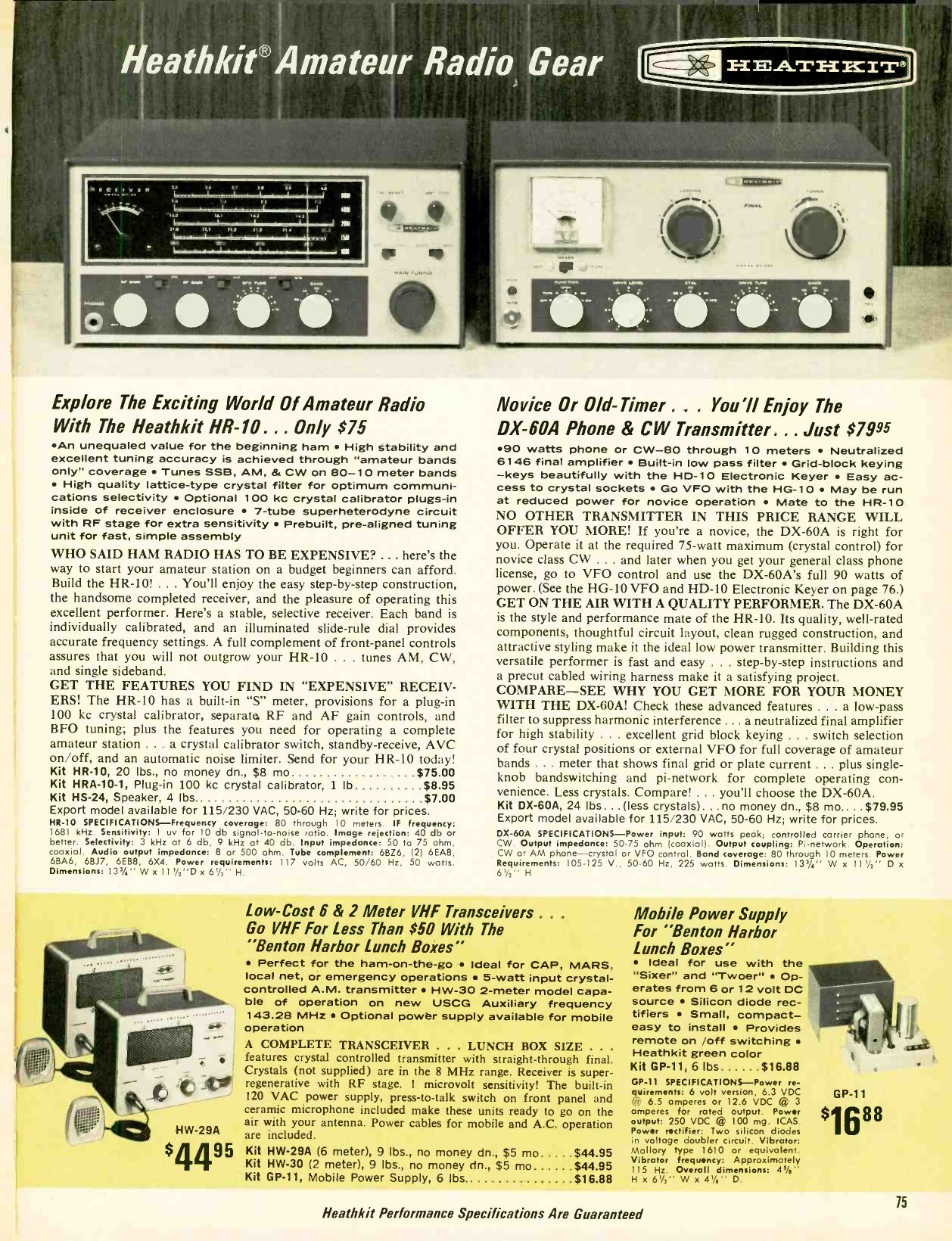
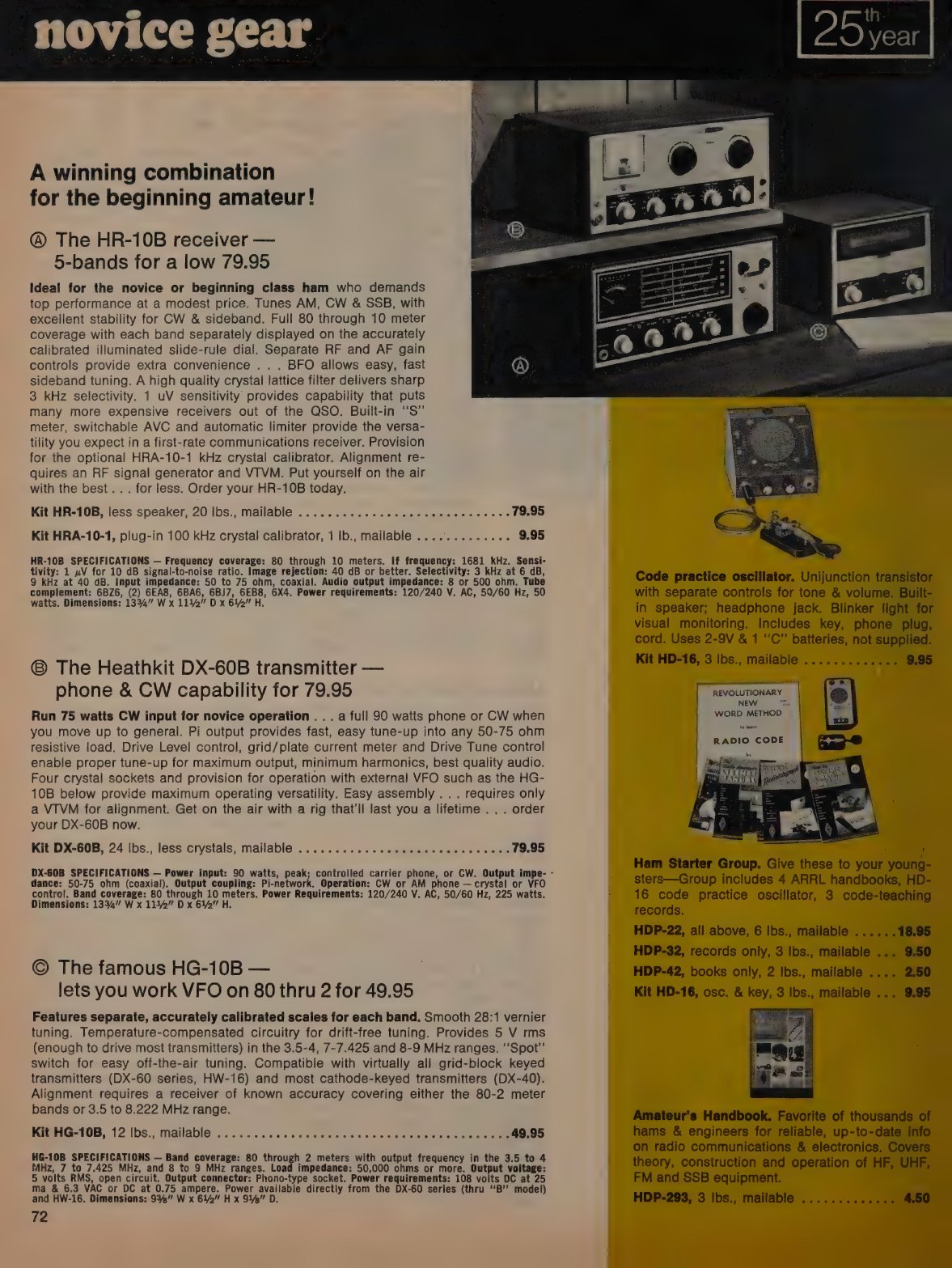
The older Novice station, the DX-60B transmitter and HR-10B receiver of 1967, was still sold beside it at $79.95 each. By the 25th-anniversary catalogue of 1971 the HR-10B and DX-60B were grouped on a “novice gear” page as “a winning combination for the beginning amateur” (catalogue 810/72).
3.5 Kilowatts: the Kompact and the SB-220
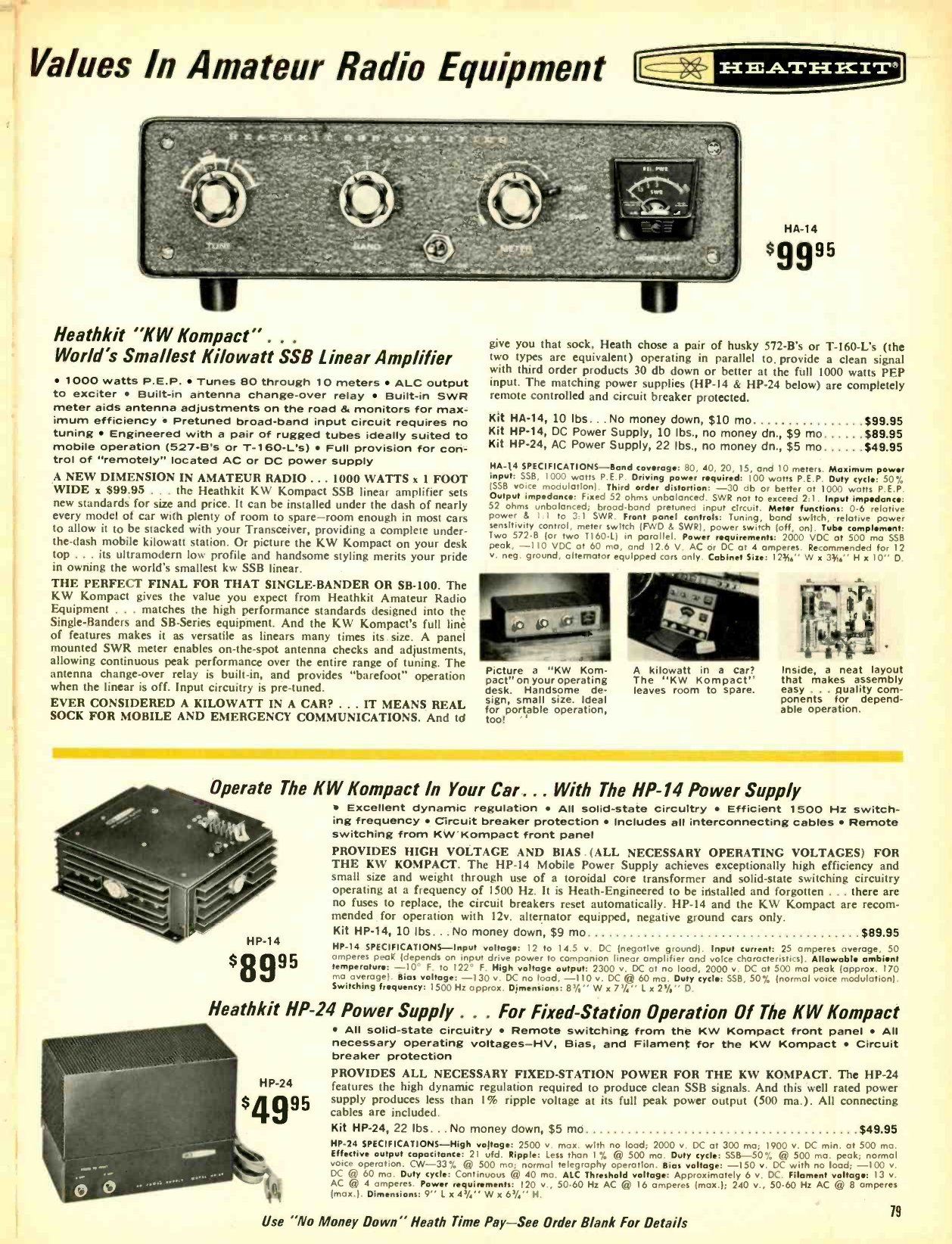
Heath’s amplifier line branched in 1965. The HA-14 “Kompact Kilowatt”, introduced in the May 1965 catalogue supplement at $99.95, used the SB-200’s pair of 572B tubes in a box 3 inches high and 7 lb in weight, with the supply outside: the HP-14 ($89.95) under the bonnet of a car or the HP-24 ($49.95) under the desk (Eckweiler, Heathkit of the Month #58). It was meant for mobile SSB with the Singlebanders and the SB-100, and it lasted until 1968.
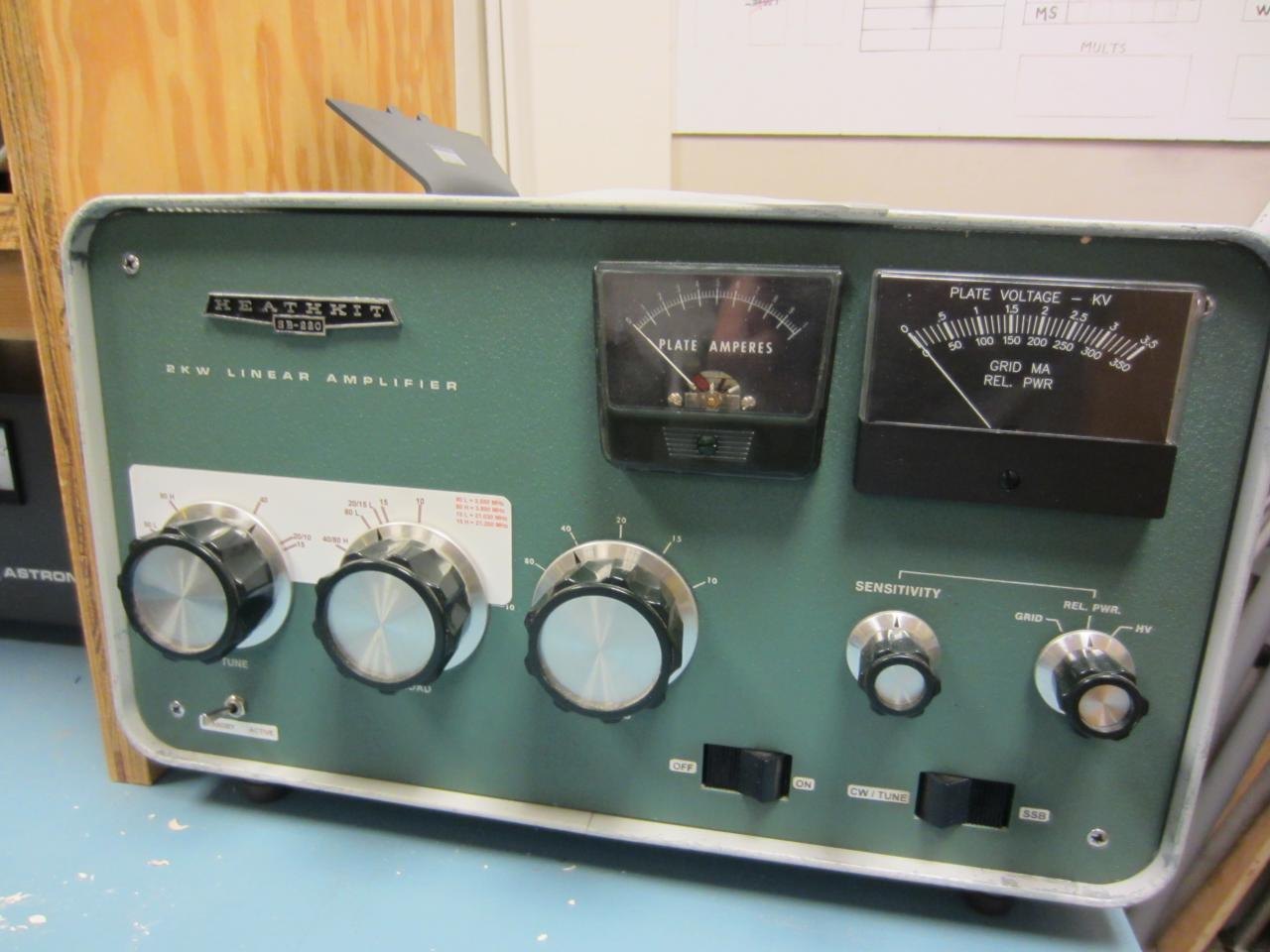
The SB-220 of late 1969 was the other extreme: a pair of Eimac 3-500Z triodes, 2,000 watts PEP input on SSB, the supply built in, at $349.95. Eckweiler bought one at the Heathkit store on Ball Road in Anaheim on 23 January 1970 and remembers paying $388.45 with sales tax, carrying out “two heavy boxes” because Heath shipped the plate transformer separately (Heathkit of the Month #49). The 1971 catalogue called it “the big new hot one from the Hams at Heath!”, and the 1972 catalogue paired it with the SB-102 as “the maxi-rig” (1971 catalogue; 810/72). Like the SB-200 it lost 10 metres in 1978, becoming the SB-221, and was sold until 1983. The whole amplifier lineage is charted in the Reference volume.
3.6 Station accessories and test gear
The accessory list of these years was long and cheap. The HM-15 SWR meter ($14.95) and HD-15 hybrid phone patch ($24.95) came in the low SB-style cabinet; the HD-10 electronic keyer was $39.95; the HM-10A tunnel-dipper replaced the old grid dipper; the HM-102 wattmeter ($29.95 in 1971) read up to 2,000 watts (catalogue 800/62; 810/72). The Cantenna, the HD-20 crystal calibrator and a code-practice oscillator stayed in every catalogue. Many of these were bought by owners of other makers’ rigs, and they are still common at swap meets.
3.7 The first QRP rig and the first FM rig
Two products of the early 1970s pointed towards the next decade. The HW-7 “Mini-Rig”, new in catalogue 810/73 (prices effective 10 August 1972) at $69.95, was a solid-state CW transceiver for 40, 20 and 15 metres with about 3 watts input and a direct-conversion receiver, small enough to run from batteries (catalogue 810/73). It was Heath’s first low-power (QRP) transceiver, and it began the line that the HW-8 and HW-9 would continue. The HW-202 of spring 1973, a crystal-controlled six-channel two-metre FM transceiver of 10 watts, was Heath’s entry into repeater operation. Gilmore concedes that Heath arrived “a little bit late” to FM, and that a product manager had to be persuaded it would sell (EEJournal, part 3).
3.8 A company of hams, and a market that was changing
Amateur radio was never Heath’s largest line by revenue. Schlumberger’s 1972 annual report ranked it third, after home entertainment and test equipment, and Brueschke and Mack report that ham products “once accounted for 40 percent of sales” before falling to 25 per cent by the late 1970s (company history, vol. 4). Its standing inside the company was larger than those figures. Gilmore, who joined Heath as a design engineer in 1966 and rose to run engineering, estimates that more than a quarter of Heath’s roughly 1,500 employees in the late 1960s and early 1970s were licensed amateurs. The company club had more than forty members and a Field Day station at Mud Lake, Michigan, and Heath issued QSL cards to employee hams (EEJournal, part 3). Engineering had a section of its own for amateur radio, one of six (company history, vol. 4).
The market around Heath was changing by the early 1970s. At the top of the market Collins still sold factory-built stations at about four times the price of an HW-101 (HW-101 dive). At the bottom, Japanese makers were arriving with a different idea. The Yaesu FT-101 of 1971 was a hybrid transceiver, solid-state except for its final amplifier tubes, with its power supply and speaker built in and its circuits on plug-in modules (Wikipedia, “Yaesu FT-101”). It needed no external supply, no speaker and no evenings at the kitchen table: it arrived working. Heath’s answer, a transceiver with no tubes at all, is where the next volume begins.
Sources
- Heath Company catalogues, World Radio History: 80-34, late 1963 · 800/53, March 1965 · 800/62, March 1966 (filed with 80-33) · 1966 · 1967 · June 1967 · 1968 · 1969 · Winter 1970 · 1971 · 810/72 · 810/73 · Fall 1979 · Winter 1981–82
- Eckweiler, Bob (AF6C). Heathkit of the Month, OCARC: #30 SB line · #33 SB-200 · #49 SB-220 · #58 HA-14 · #70 HW-12/22/32
- Leibson, Steven, with Chas Gilmore, Chuck Penson and Terry Perdue. “‘H’ is for Heathkits and Hams”, parts 2 and 3. EEJournal. Part 2 · Part 3
- Penson, Chuck (WA7ZZE). “Heathkit’s 50th: The Green Turns to Gold.” Electric Radio, January 1997; QST, April 1997. Heathkit Virtual Museum
- W2PA. “Collins S/Line Influence on Heathkit’s SB-Series.” Link
- Wikipedia. “Yaesu FT-101.” Link
- Site kit dives: SB-301/SB-401 · SB-102 · HW-101
Comments (0)