Test Equipment · Volume 5
The Heathkit Bench Today
Heath’s test equipment outlived the company that made it. Instruments built in the 1950s and 1960s still turn up at every radio flea market, and many are still in use, often on benches whose owners built them. Most of them were sturdy, simply designed and documented in full: every kit came with a schematic, a parts list with Heath part numbers, a voltage chart, a circuit description and a troubleshooting section. This volume describes how the instruments are collected, dated, restored and used today, and where the documents that make that possible are kept. Restoration procedures for individual instruments are in the kit dives; this volume gives the principles that apply across the line.
5.1 What survives, and why
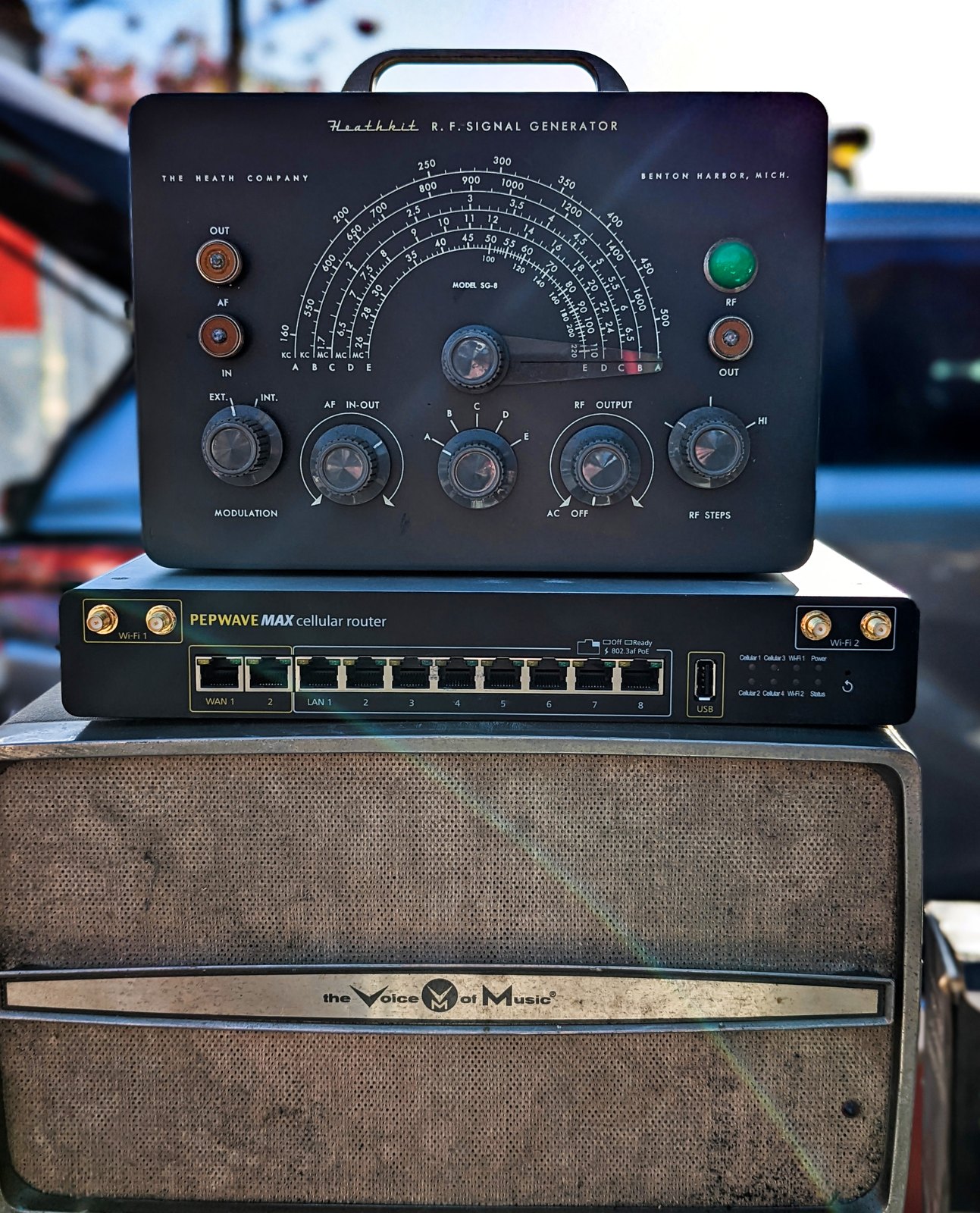
Three things explain why so many Heath instruments survive. They were made in very large numbers: Heath claimed more than 60,000 oscilloscope kits by 1954, called the IM-11 “the world’s largest selling VTVM” in 1962, and Chuck Penson’s figure of more than two million Heathkit voltmeters over the life of the line, though unverified, gives the order of magnitude (1954 catalogue, p. 4; VTVM dive). They were kept by their builders, who valued what they had made. And the service-bench instruments were built to be repaired: generous chassis, point-to-point wiring or simple single-sided boards, standard tubes and parts, and a manual that explained every stage.
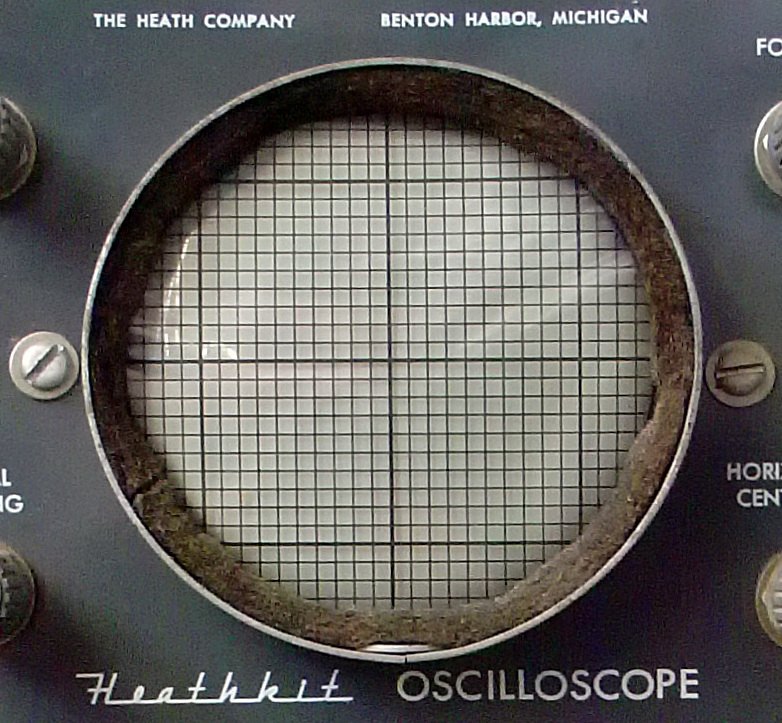
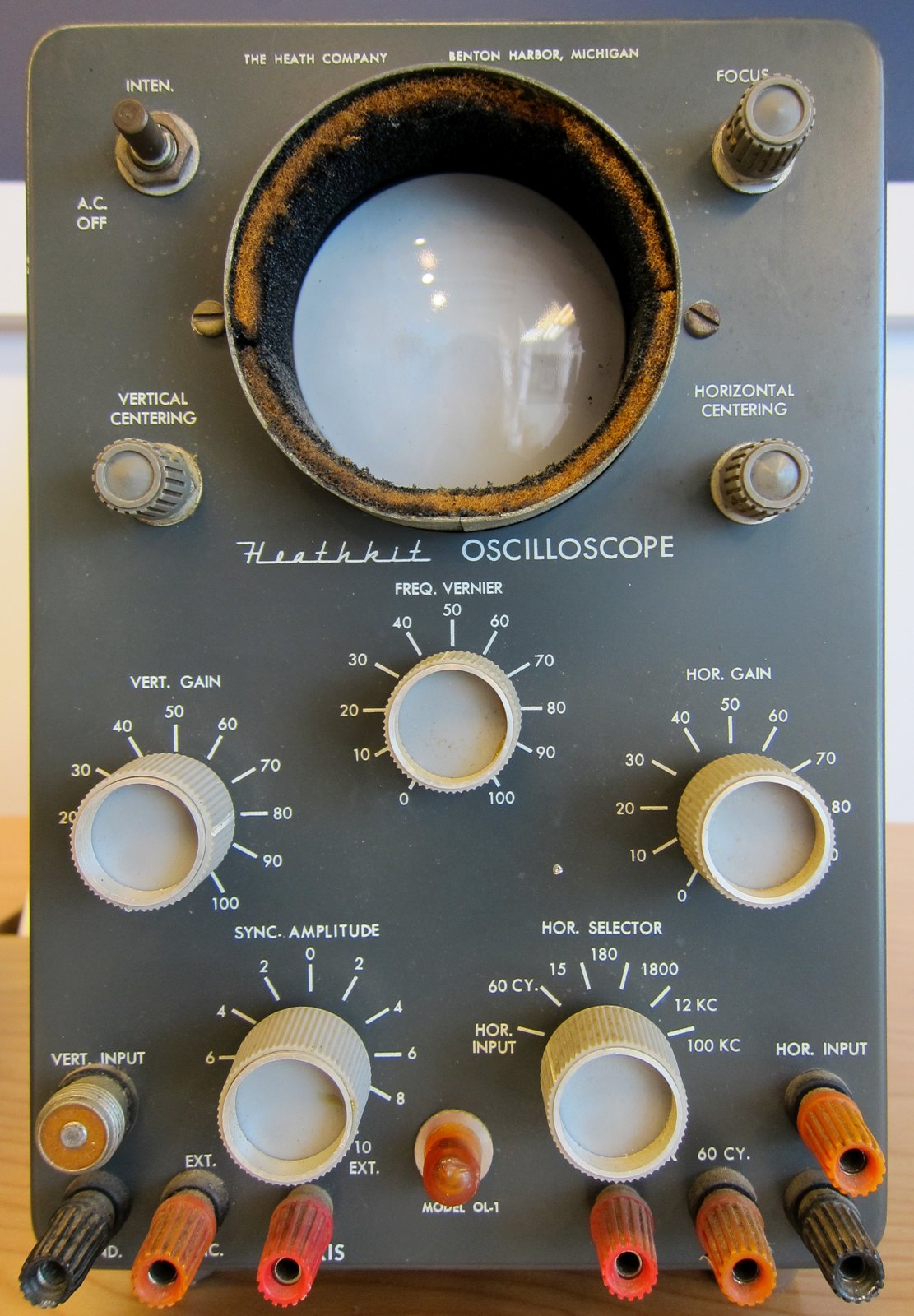
The instruments that turn up most often are the ones that sold longest: the V-7A and IM-11 voltmeters and their bench cousins, the IO-12 and IO-10 scopes, the SG-8 and IG-102 generators, the IT-11 and IT-28 capacitor checkers, the IT-12 signal tracer, the TC-series and IT-17 tube checkers, and the substitution boxes. The rarer instruments are the short-lived ones and those sold in small numbers: the O-1 and O-2 scopes, the V-3 battery voltmeter, of which Penson could find neither a photograph nor a manual (Eckweiler, review of Penson), the G-4 generator, which appeared in a single 1949 flyer, the OP-1 and IO-14 laboratory scopes, the TT-1 tube tester and the Malmstadt-Enke EU instruments. No market survey of prices was found, and none is given here.
5.2 Dating an instrument
A Heath instrument can usually be dated to within a few years from four things.
- The model number. One or two letters and a single digit (O-9, V-6, SG-8) belong to 1947–1961; the I-prefix with two digits (IM-11, IO-12) to 1961–1977; the I-prefix with four digits (IM-5218, IO-4510) to 1974 onwards. An S-prefix (SM-, SO-, SG-, SP-) marks a factory-assembled Heath/Schlumberger or Heath/Zenith instrument of the 1970s or 1980s. The prefix system itself is explained in the history dive’s field guide.
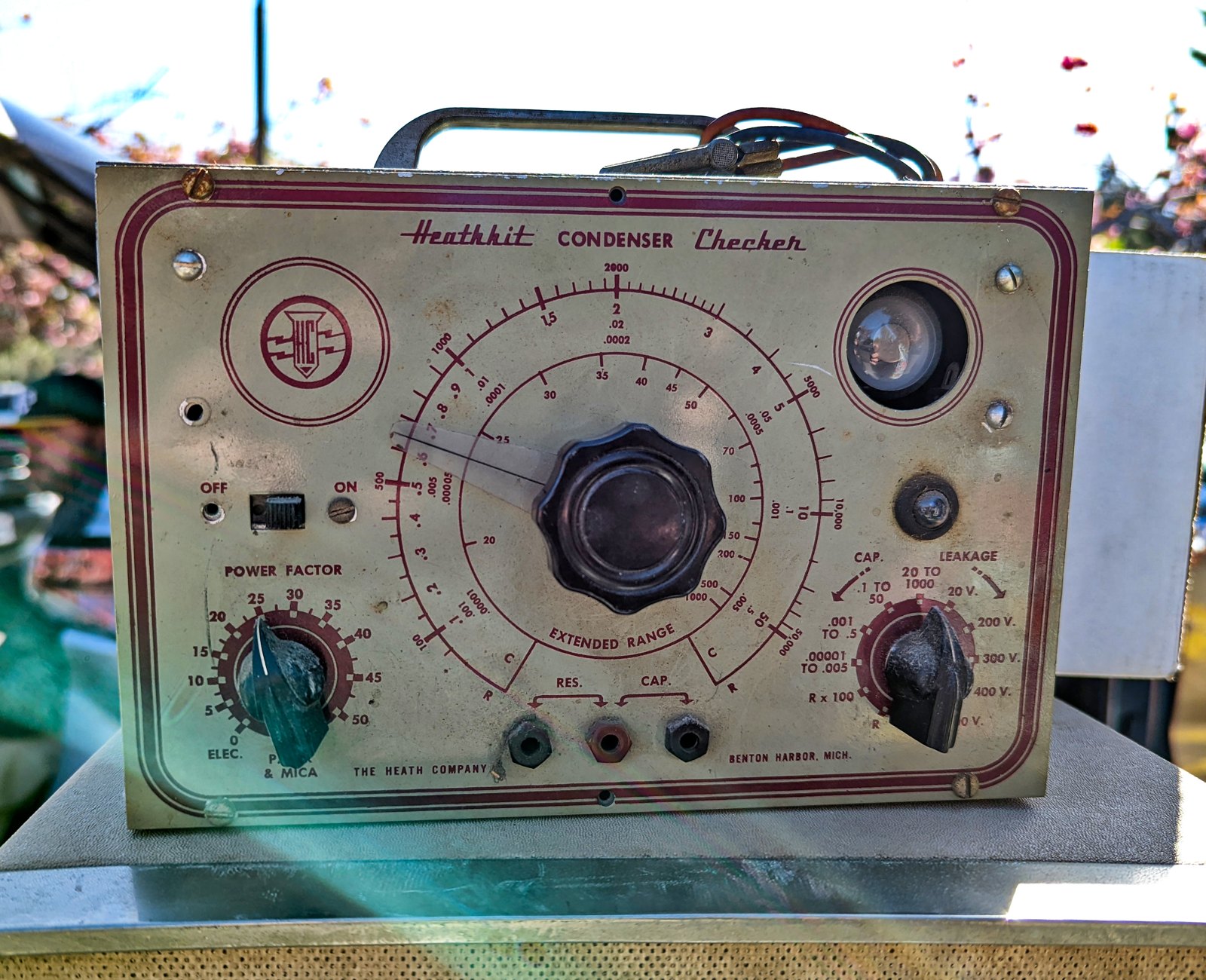
- The styling. Penson divides Heath test equipment into six styles: Pre-classic (cream and maroon panels, as on the O-1, G-1 and TC-1), Late Pre-classic, Classic I (dark panels from about 1954, as on the O-10, OL-1 and SG-8), Classic II (grey-and-silver panels from the 1961 restyle), New Look (beige and black, from about 1968) and Post New Look (from 1977). A styling change often came with a new model number and no circuit change (Eckweiler, review of Penson).
- The panel legend. “Heath Company, a subsidiary of Daystrom, Inc.” places a panel between 1955 and the early 1960s. “Heath/Schlumberger” and “Heath/Zenith” identify the assembled lines of the 1970s and 1980s.
- The manual. Heath manuals carry a 595- part number and a print date; the date of the latest printing of a manual only says when that edition was run, not when the model was introduced. The manual numbering system is described in the history dive’s field guide.
5.3 Restoring the instruments
The faults are few and predictable, and they follow the components rather than the model.
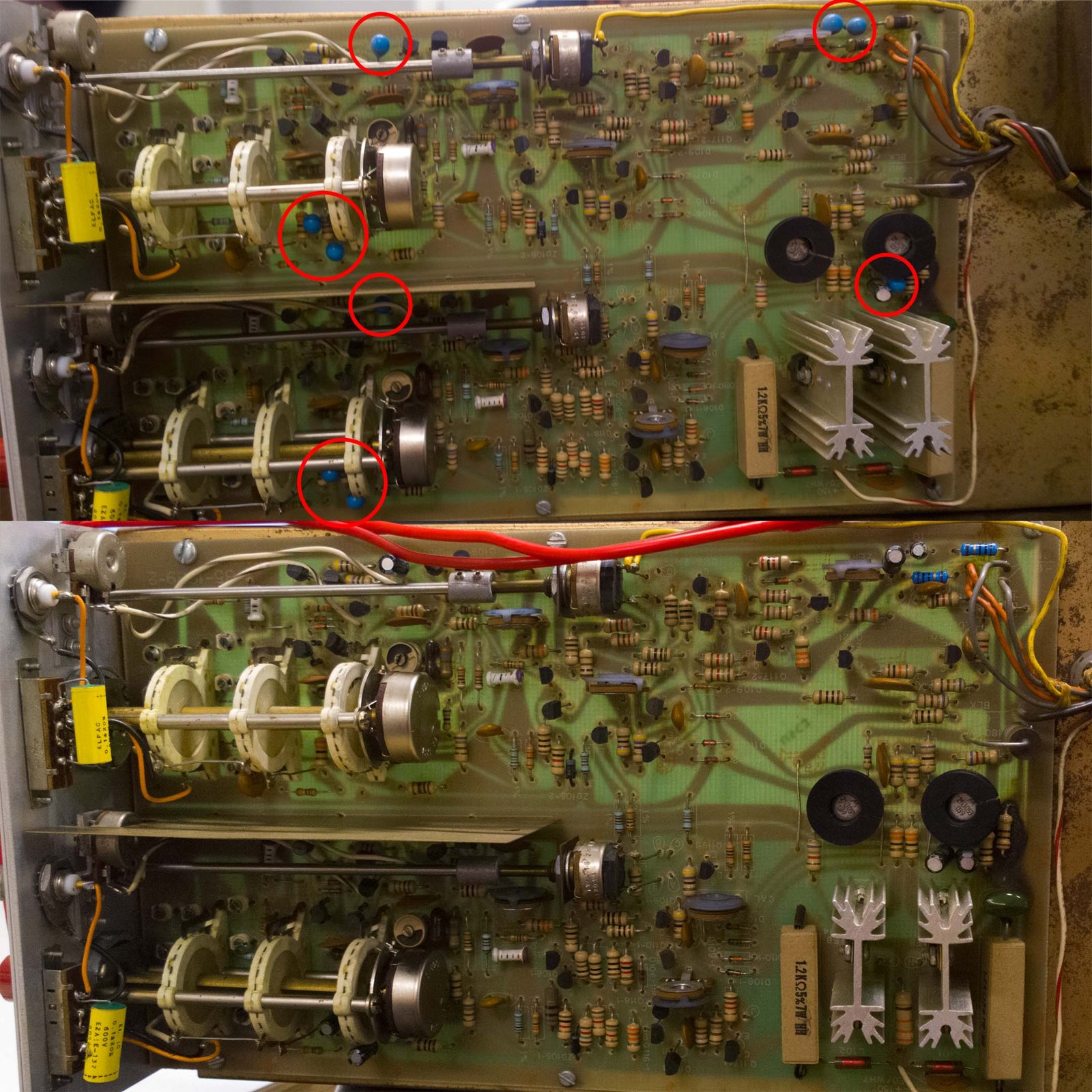
- Capacitors. Electrolytic filter capacitors in every tube instrument, and wax-paper coupling capacitors in those of the 1950s, are the first things to check. In the solid-state instruments of the 1970s and 1980s, dipped tantalum capacitors fail short. One restorer of an IO-4550 scope found and replaced a row of them across its boards.
- Selenium rectifiers. The V-4 voltmeter and its successors, the SG-6 to SG-8 generators and other instruments of the 1950s used small selenium rectifiers, which age, lose output and can fail with a noxious smell. They are normally replaced with a silicon diode and a small series resistor (Eckweiler #61; VTVM dive, volume 5).
- Switches and controls. Rotary and slide switches collect oxide and need cleaning; Eckweiler has published a method for repairing Heath slide switches (OCARC, Heathkit of the Month index).
- Batteries. Instruments with an internal cell, such as the VTVMs and VOMs, are often found with a leaked battery that has eaten the holder and nearby wiring.
- Cathode-ray tubes. The CRT is the one part that cannot easily be replaced in the older scopes. The surplus 5BP1 of the O-1 to O-7, the 5CP1 of the O-8, the 5UP1 of the O-9 to O-12 and the 3GP1 of the OL-1 are no longer made, and a scope with a worn or burned screen is worth much less than one with a good tube (Eckweiler #85, #87, #89).
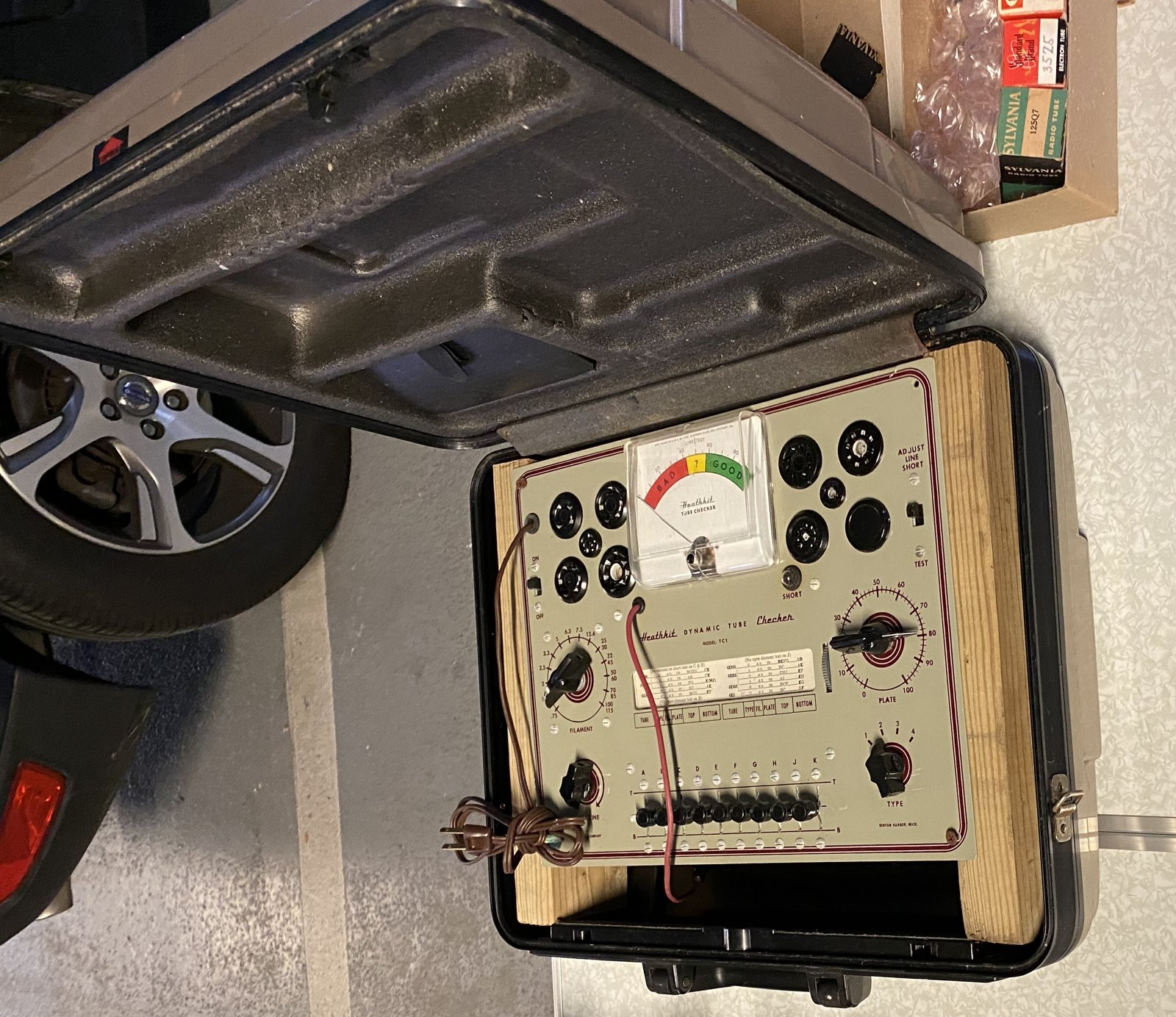
- Roll charts and tube data. The tube checkers depend on their roll charts. Heath sold updated charts every year ($1.50 for the TT-1A and $1.00 for the IT-21 and TC-series in 1966) and issued tube-data supplements for the TT-1 until 1978 (1966 catalogue; TT-1 dive).
Safety. Every mains-powered Heath instrument has lethal voltages inside it, and several have very high ones. The early oscilloscopes run the cathode-ray tube at about −900 to −1,300 volts (Eckweiler #87), and the later solid-state scopes use accelerating potentials of up to 10 kV. The IP-32, IP-17, IP-2717 and SP-2717A power supplies deliver up to 400 volts at 100 mA from front-panel binding posts, with about 600 volts on their internal filter capacitors (IP-32 dive; SP-2717A dive). Filter capacitors hold their charge after the instrument is unplugged. A first power-up should be made slowly on a variable transformer or through a series lamp, after the capacitors have been checked, and nobody should work inside a live instrument alone. Heath itself sold an isolation transformer, the IT-1, for working on AC-DC sets with a live chassis; its purpose has not changed (Eckweiler #18).
5.4 Using the instruments today
Many of the instruments remain useful for the work they were designed for, and some are still the best tools for it.
- Tube equipment. Anyone who restores tube radios, amplifiers or transmitters needs a high-voltage bench supply, a tube tester, a capacitor checker and a signal generator, and the Heath instruments of the 1950s and 1960s were designed for exactly that work. The IP-32 and SP-2717A dives describe the high-voltage supply on a modern bench; the TT-1 dive explains why a mutual-conductance tester finds tubes that an emission checker passes.
- Semiconductors. The IT-1121 and IT-3121 curve tracers draw transistor and diode characteristics on any oscilloscope with an X-Y input, including a modern digital one. Restorers have modified them to test power MOSFETs, and others have designed clones of them (Hackaday, 12 March 2023; Erickson, “Curve tracer”; IT-3121 dive).
- Voltmeters. The vacuum-tube voltmeter’s high, constant input resistance and its immunity to RF fields still make it useful on a radio bench, and the VTVM dive covers its use.
- Upgrades. The restarted Heathkit company of the 2010s and 2020s sells a small number of upgrade kits for classic instruments, among them distortion fixes for the IG-18 audio generator, numbered in the old accessory style (history dive, volume 7).
5.5 Communities and archives
The Heath test-equipment line is better documented today than when it was sold, almost entirely by volunteers.
- Heathkit of the Month. Bob Eckweiler (AF6C) has written an illustrated article on one kit or family for the Orange County Amateur Radio Club newsletter every month since 2008, 133 by 2026. Many are on test equipment, from the O-series scopes to the IT-17 tube checker, and many include restoration notes (OCARC index).
- Penson’s book. Chuck Penson (WA7ZZE), Heathkit Test Equipment Products (2014, ISBN 978-0-615-99133-7), has a paragraph and a photograph for, as far as Eckweiler could tell, every test instrument Heath sold in kit form in the United States, arranged in twenty-two chapters with indexes by model, type and date. It is the standard reference, and the source of the styling categories collectors use (Eckweiler, review).
- Model data. The Nostalgic Kits Central model matrix lists more than 1,400 Heath model numbers with catalogue years, prices and short descriptions, and links schematics for many instruments; some of its years are wrong by a year or more (Nostalgic Kits Central). The Heathkit Virtual Museum shows the instruments by category (heathkit-museum.com).
- Catalogues. World Radio History hosts Heath catalogues and flyers from 1947 to 1993, including the 1954 test-equipment catalogue and the Heath/Schlumberger instrument catalogues of 1974 and 1978 (World Radio History).
- Manuals. Free scans of most instrument manuals are on the Internet Archive, in the DLARC collection and the
heathkitmanualscollection (Internet Archive, heathkitmanuals). The current owner of the Heath name claims copyright in all Heath publications and sells paper reprints through Data Professionals; the history dive sets out the position (volume 7 and volume 9). - Lists. General Heathkit mailing lists on groups.io, successors to the Heathkit Owners and Collectors List, answer restoration questions (history dive, volume 7).
Sources
- Eckweiler, Bob (AF6C). “Heathkit of the Month,” including #18 (IT-1), #61 (SG-8), #85, #87 and #89 (O-series), #130 (IT-17), and the review of Penson’s Heathkit Test Equipment Products (A03). https://www.w6ze.org/Heathkit/Heathkit_Index.html
- Penson, Chuck (WA7ZZE). Heathkit Test Equipment Products. 2014. ISBN 978-0-615-99133-7.
- Nostalgic Kits Central, Heathkit model matrix. https://www.nostalgickitscentral.com/heath/products/alphabetical.html
- Heathkit Virtual Museum. https://heathkit-museum.com/
- World Radio History, Heathkit catalogues. https://www.worldradiohistory.com/Archive-Catalogs/Heathkit_Catalogs.htm
- Internet Archive,
heathkitmanualscollection. https://archive.org/details/heathkitmanuals - Hackaday. “Hack your Heathkit to trace MOSFET curves.” 12 March 2023. https://hackaday.com/2023/03/12/hack-your-heathkit-to-trace-mosfet-curves/
- Erickson, Dave. “Curve tracer.” https://www.djerickson.com/curve-tracer/
- Heathkit history dive, this site, volumes 7 and 9; related dives on the VTVM, TT-1, IP-32, IT-3121 and SP-2717A.
Comments (0)