Television · Volume 4
The Zenith Years and the Last Kits, 1979–1991
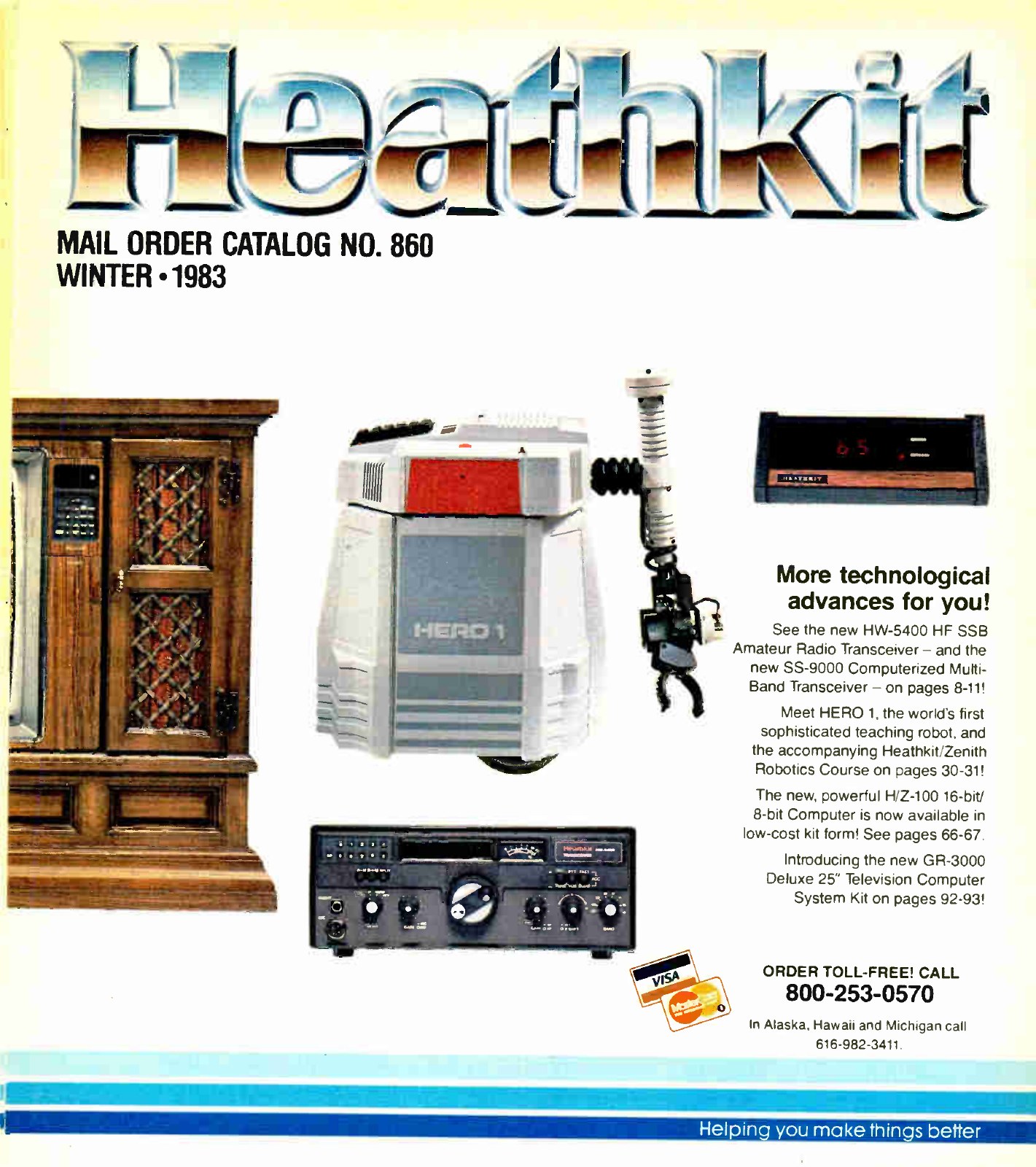
In October 1979 the Heath Company became a subsidiary of Zenith Radio Corporation, one of the last large American television makers. Zenith wanted Heath’s computers, and the company history tells how the computer business was moved into Zenith Data Systems while the kit catalogue shrank (Heath Company dive, volume 6). The television line followed a different path. For the next twelve years Heath went on selling television kits, but they were increasingly Zenith sets: Zenith chassis, Zenith picture tubes and Zenith remote controls, packed as kits with most of the circuit boards already built. They were sold next to assembled Zenith televisions and video recorders bearing Heath catalogue numbers. The last of them, a 20-inch stereo set that Heath had sold assembled under Zenith’s name a year before, appeared in the Winter 1991 catalogue.
4.1 “We like that”: the Zenith letter
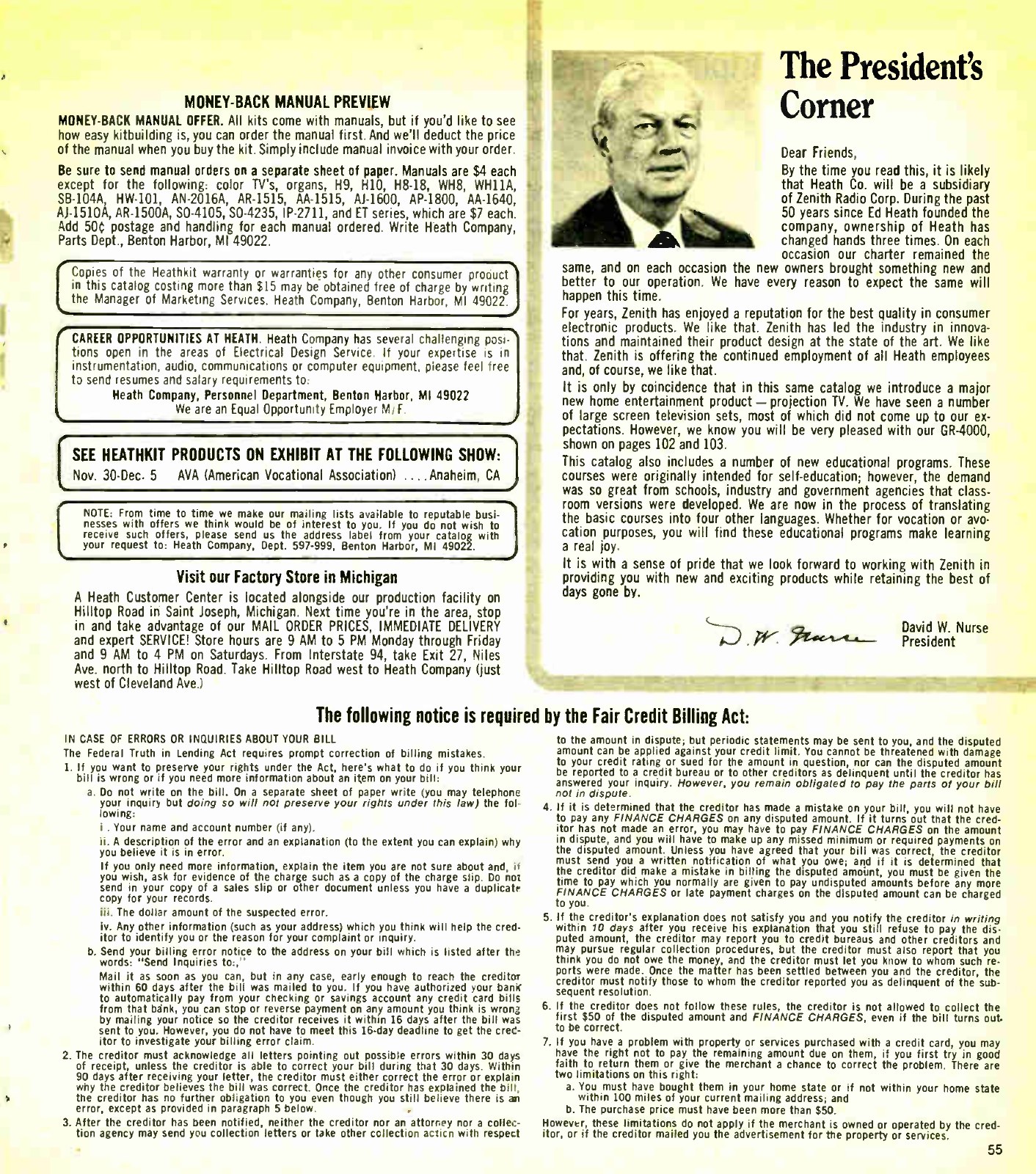
The Christmas 1979 catalogue went to press as the sale was closing. David W. Nurse, Heath’s president since 1966, used his letter to prepare customers:
“By the time you read this, it is likely that Heath Co. will be a subsidiary of Zenith Radio Corp. … For years, Zenith has enjoyed a reputation for the best quality in consumer electronic products. We like that. Zenith has led the industry in innovations and maintained their product design at the state of the art. We like that.”
He added that Zenith was offering continued employment to all Heath employees and, “only by coincidence”, that the same catalogue introduced Heath’s projection television, the GR-4000 (Heathkit Christmas 1979 catalogue, p. 55). The GR-4000 turned out to be the last television Heath designed for itself.
4.2 Zenith sets in the Heathkit catalogue
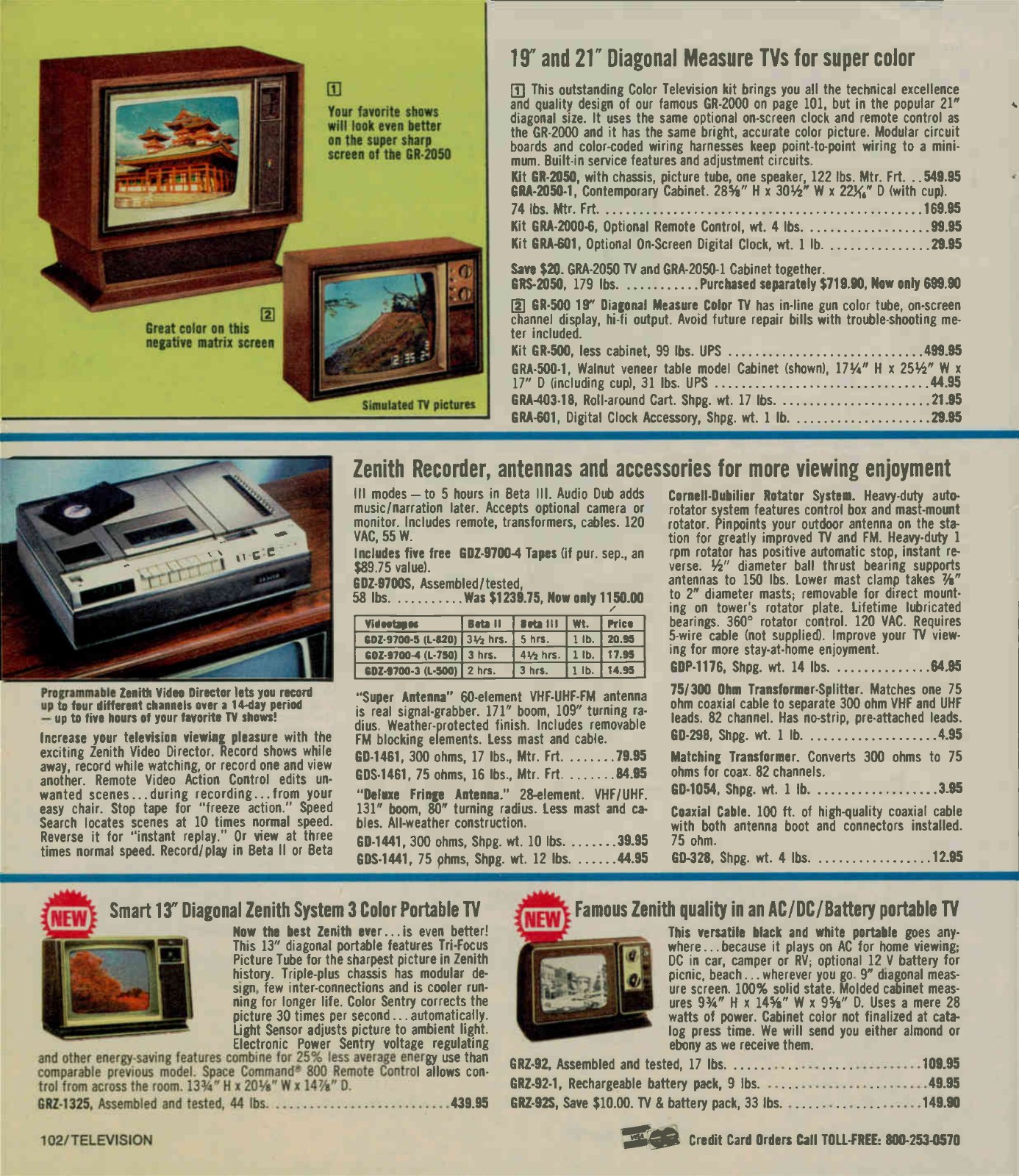
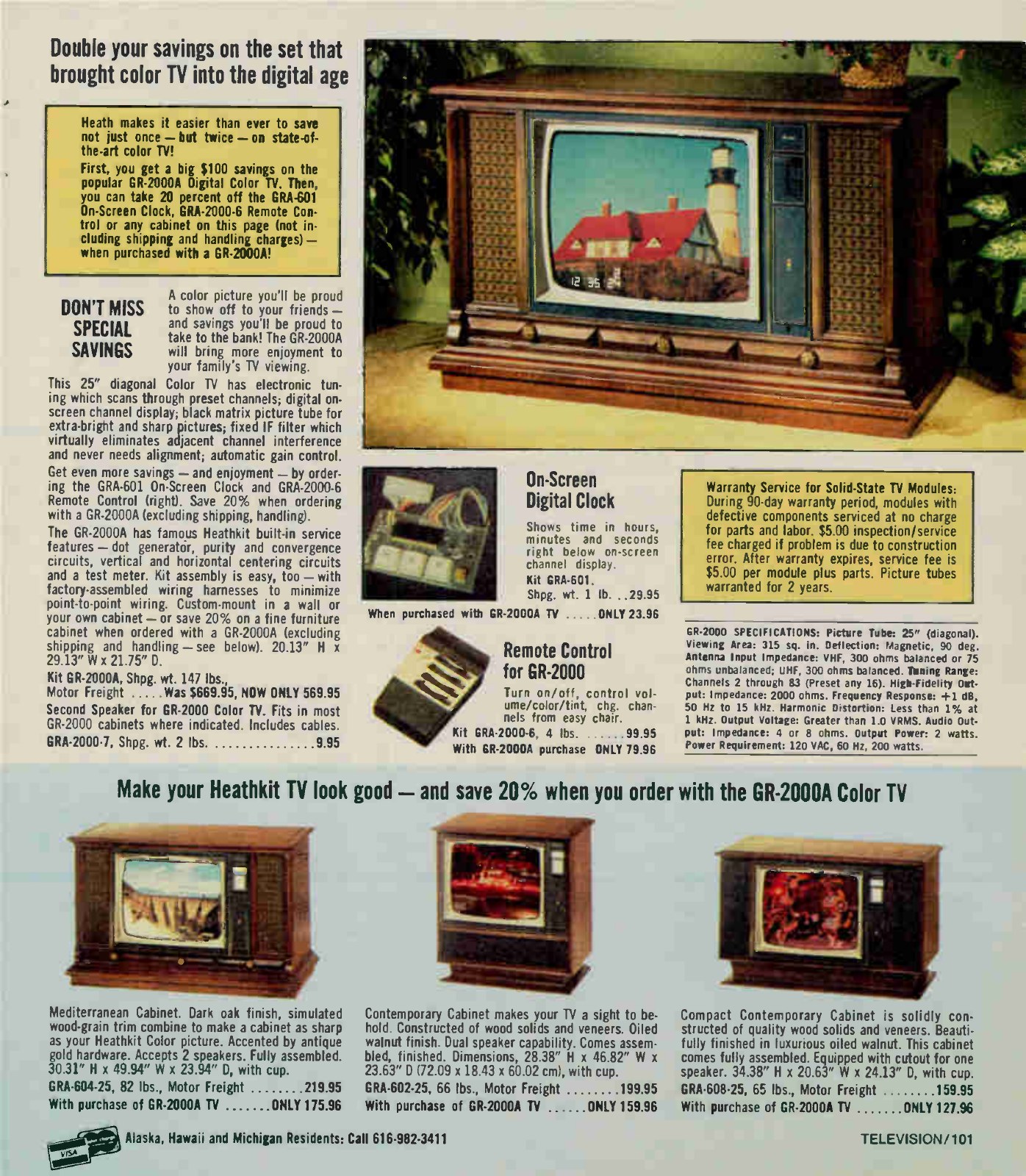
The first change was in the catalogue rather than on the workbench. By Christmas 1980 the television pages carried assembled Zenith products with Heath catalogue numbers in a new GRZ series. They included the GRZ-1325, a “smart 13-inch diagonal Zenith System 3 color portable TV” at $439.95, and the GRZ-92, a Zenith black-and-white AC/DC portable at $109.95. The Zenith Video Director video recorder had replaced the Sony Betamax Heath had recommended in the 1970s (Heathkit Christmas 1980 catalogue, p. 104). On the facing page the GR-2000A was reduced from $669.95 to $569.95, and the Heathkit cabinets were discounted by 20 per cent when bought with it. Heath was clearing its own sets as the Zenith ones arrived.
Over the next five years the GRZ series grew to include the GRZ-93 black-and-white portable, the GRZ-1327 and GRZ-1319 13-inch colour sets, the GRZ-5005 and GRZ-5010 miniature sets, and a Zenith colour video camera (GRZ-1600, $1,050). None of these was a kit. Like the Zenith furniture that the company history describes as coming from “unused capacity at Zenith’s TV cabinet operations”, they were Zenith products sold through Heath’s mail order and its stores.
4.3 The GR-2500: a Zenith chassis as a kit
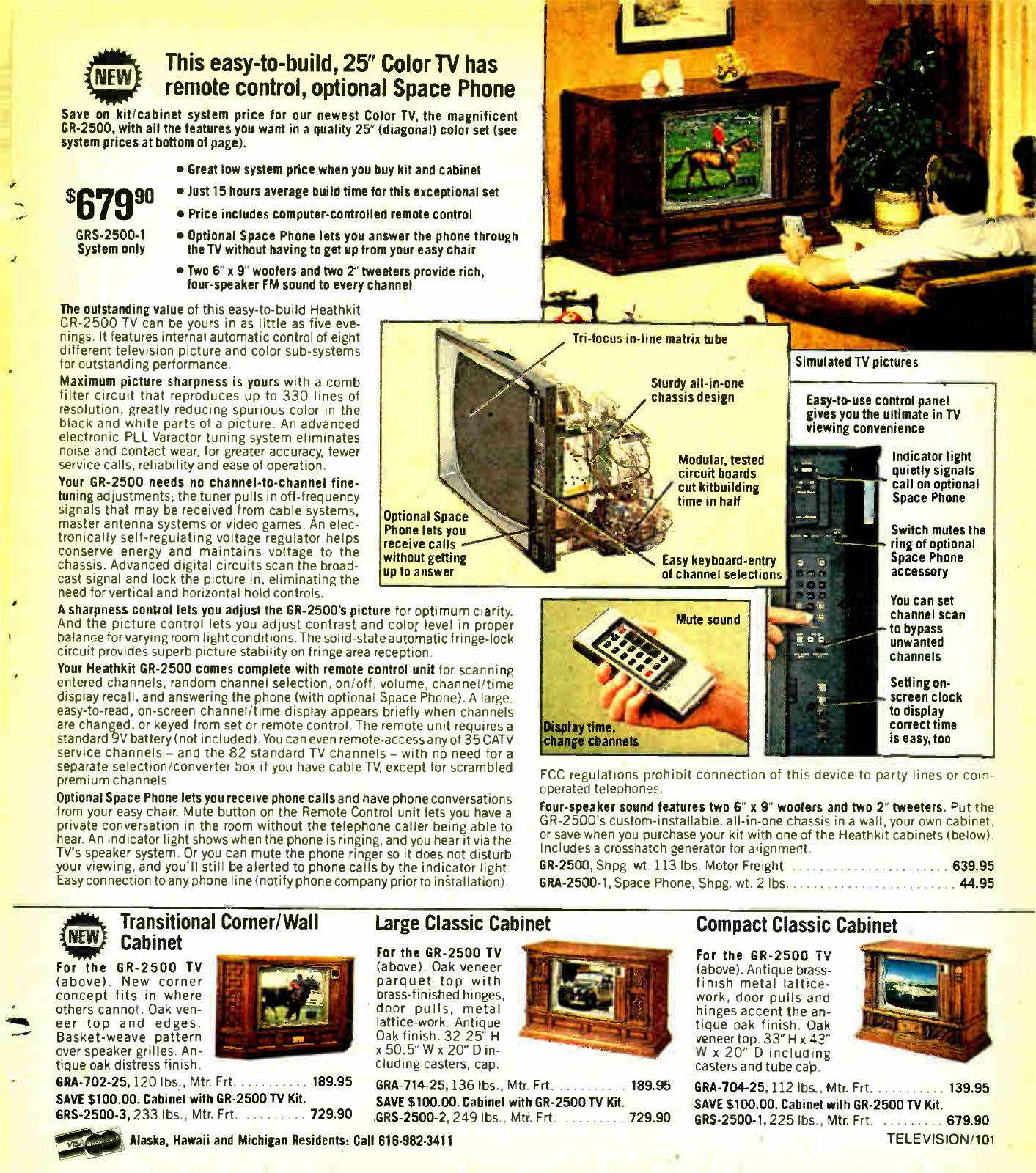
The first new Heathkit television of the Zenith era appeared in Christmas 1981. The GR-2500 was a 25-inch set at $639.95 without cabinet, or $679.90 with the compact cabinet. Almost none of the Heath language of the previous decade was left in its description. Its main features were:
- a “tri-focus in-line matrix tube” and a comb filter resolving 330 lines;
- PLL varactor tuning of the 82 broadcast channels and 35 cable channels, with no fine-tuning adjustment;
- digital sync lock with no hold controls;
- a computer-controlled remote that scanned channels, recalled an on-screen channel and time display, and could answer the telephone through the set’s speakers with the optional GRA-2500-1 “Space Phone” ($44.95);
- four-speaker sound.
What had changed most was the build. “Modular, tested circuit boards cut kitbuilding time in half”, and Heath quoted “just 15 hours average build time” or “as little as five evenings”. A crosshatch generator was included for alignment. The dot generator, the test meter and the service drawer were gone (Heathkit catalogue, Winter 1981–82, p. 101).
Heath did not say where the chassis came from, but the vocabulary identifies it. “Tri-Focus” is the name the same catalogues gave the picture tube of Zenith’s own assembled sets, such as the GRZ-1325 of Christmas 1980. “Space Command”, the name the GR-2501 remote carried a year later, was the name Zenith had used for its remote controls since Robert Adler’s ultrasonic Space Command of 1956 (Zenith, “Heritage”; Wikipedia, “Robert Adler”). The revised GR-2501 of Christmas 1982 ($639.95) came with the “Computer Space Command 3000” remote and 112-channel tuning. It was sold with three oak-finished cabinets, with $100 off when bought together.
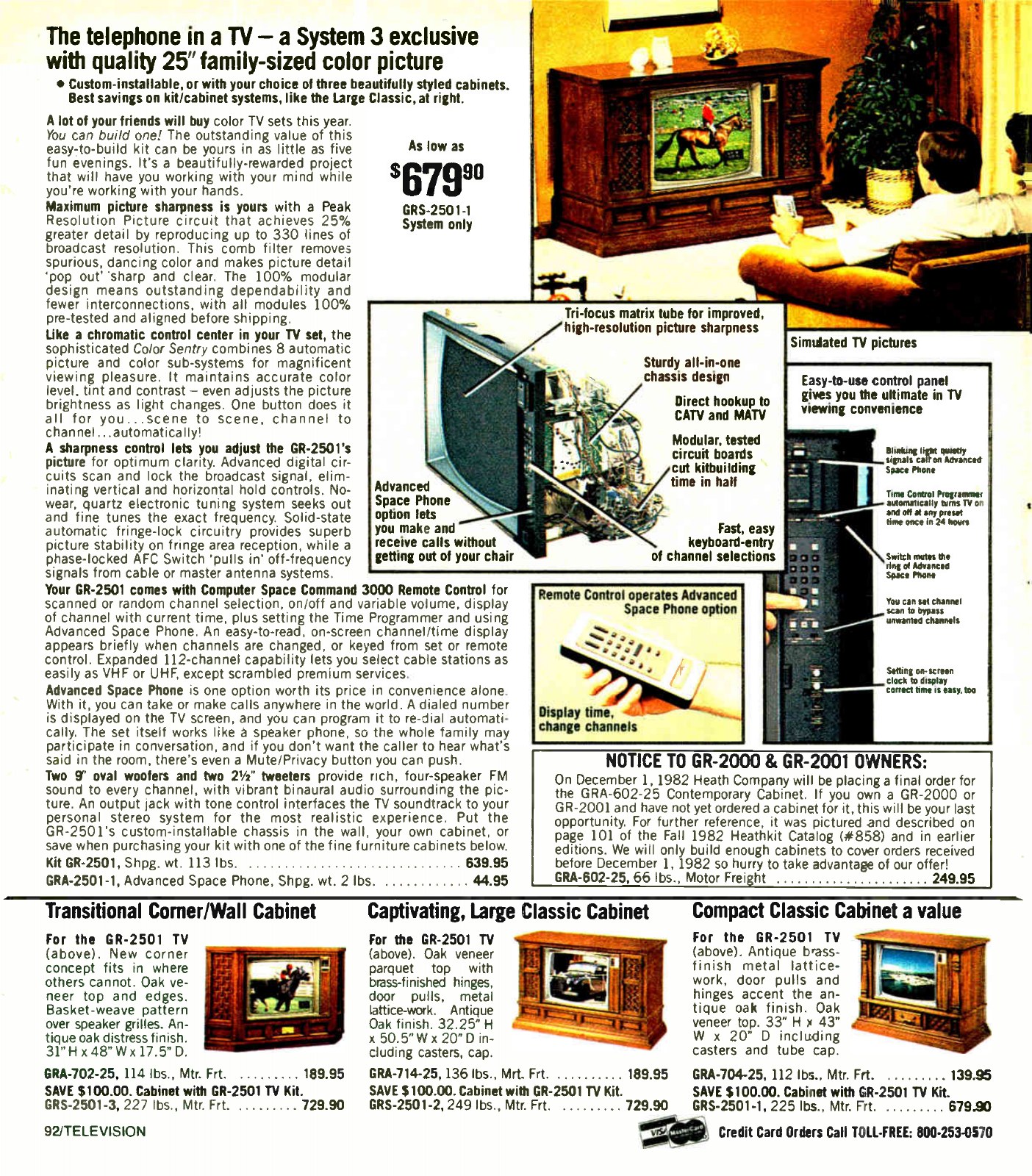
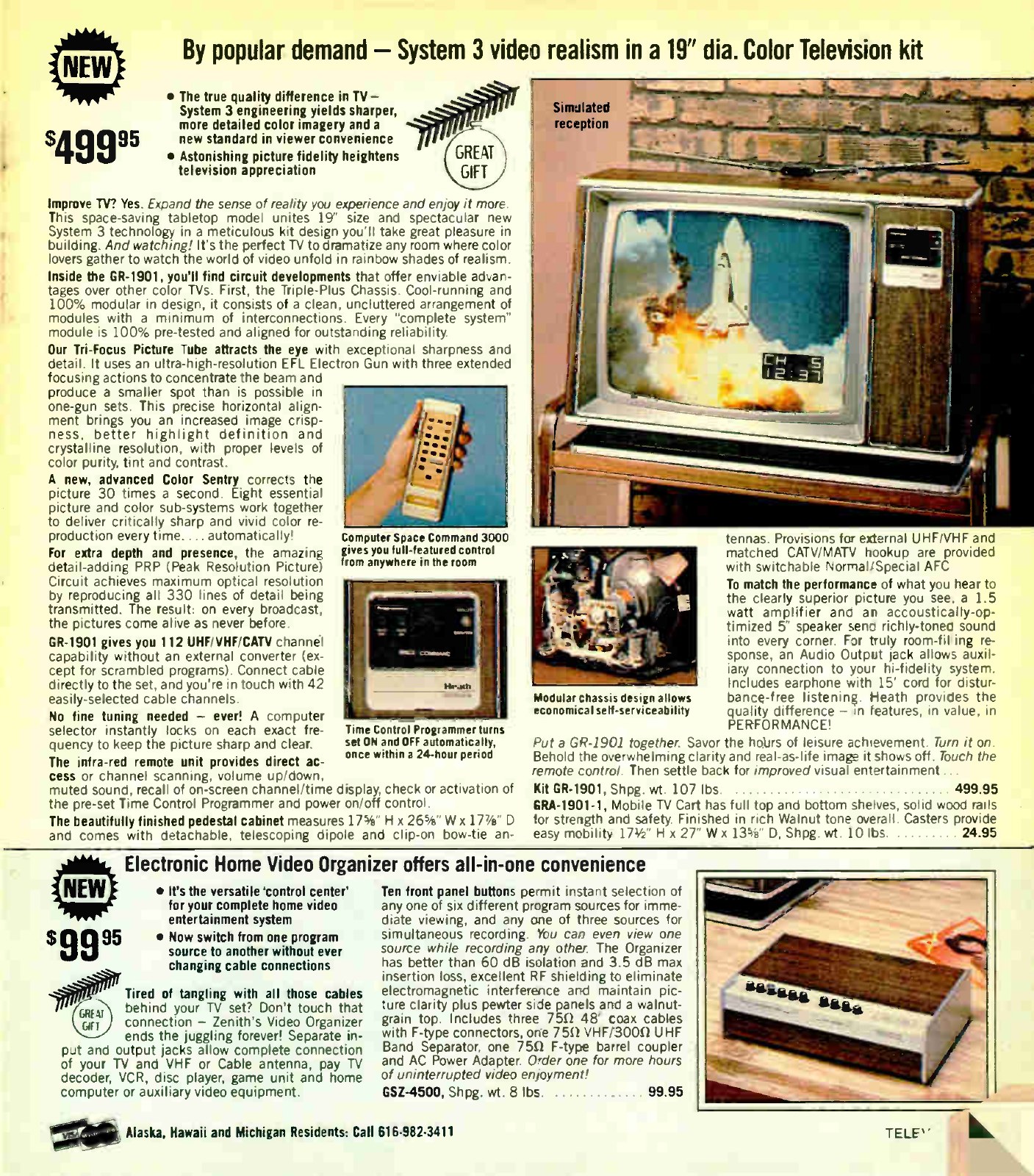
The same Christmas 1982 catalogue made the Zenith origin explicit. The GR-1901 was a 19-inch set at $499.95, headlined “By popular demand—System 3 video realism in a 19-inch dia. color television kit” (Heathkit Christmas 1982 catalogue, p. 87). “System 3” was Zenith’s modular colour chassis of 1978, which the company credits with its “continued strength in color television during the 1970s” (Zenith, “Heritage”). On the facing page the GR-2501 appeared under the headline “The telephone in a TV—a System 3 exclusive”. The same page carried a notice to GR-2000 and GR-2001 owners that Heath would place its final order for their GRA-602-25 cabinet on 1 December 1982. That notice is the last trace of the Heath-designed digital sets.
4.4 The GR-3000: a television that expected a computer
The one Heath television of the 1980s with a character of its own was the GR-3000, introduced in the Winter 1983 catalogue as the “Deluxe 25-inch dia. Television Computer System … for the age of personal video” at $1,099.95 (Heathkit catalogue No. 860, Winter 1983, pp. 92–93). It was built around a microprocessor and a card cage “on the chassis” for up to eight plug-in modules. The features that shipped with it were:
- a 56-key infrared remote control with a HELP key that brought up six screens of commands;
- a three-line on-screen display of channel, time and date, with a fourth line for the function in use;
- a “Message Center” that showed up to 24 lines of 40 characters at a preset time, in any of sixteen text and background colours;
- a “Learn” mode that stored eight sequences of commands in 94 bytes of memory;
- a password lock on picture settings, and “censor-mute” of sound or picture;
- battery-backed memory, with three AA cells holding the settings for up to a year;
- built-in purity, colour-bar, crosshatch and dot patterns for setting the set up after assembly.
The first accessory module, the GRA-3000-2 Auto-Rotor ($19.95), searched for the best aerial heading for each of the 82 channels and remembered it. This was the GR-2001’s rotor idea done in software. Three more modules were announced as “under development”: a serial interface to reach The Source, CompuServe and Dow Jones and to use the set as a colour graphics terminal; a directory dialer and modem phone interface that turned the television into a speaker-phone; and a programmer for weekly viewing schedules. The page ended with a prediction: “Within a very short time, you’ll probably be able to turn on your GR-3000 and view the On-Line Heathkit Catalog!”
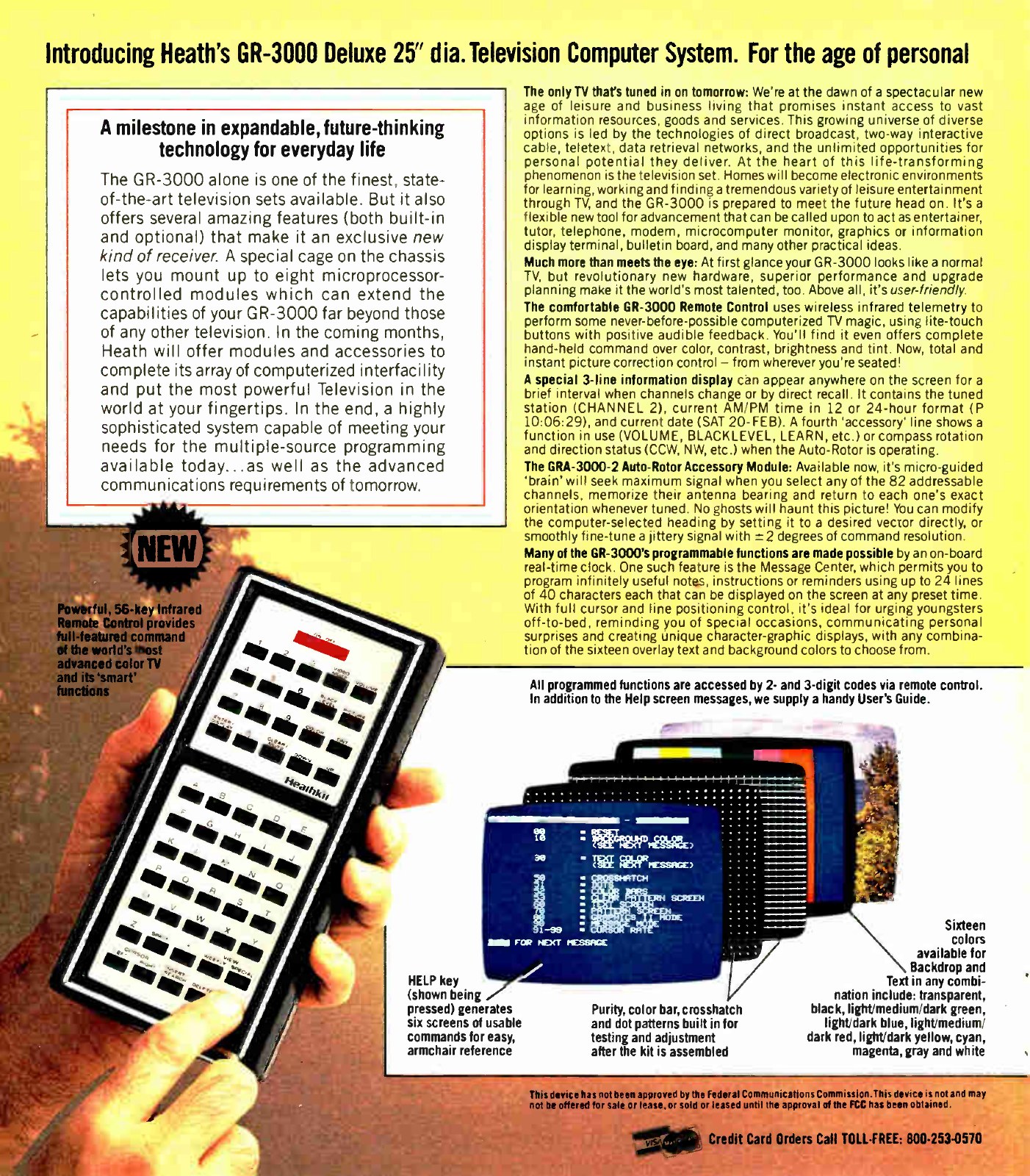
The fine print was less confident. The first announcement carried the standard notice that “this device has not been approved by the Federal Communications Commission” and could not be sold until it had been. No catalogue found for this dive offers the serial, modem or programmer modules. The price fell to $999.95 by Christmas 1984 (p. 10), $799.95 in Spring–Summer 1985 (p. 12) and $699.95 in Fall 1985 (p. 4), the last appearance found. The GR-3000 anticipated teletext, on-line services and the “smart” television by some years, and was sold by a company whose parent was about to become one of America’s largest personal-computer makers. It does not appear to have sold well, though no figures have been found.
4.5 The last black-and-white kit: the GR-5005
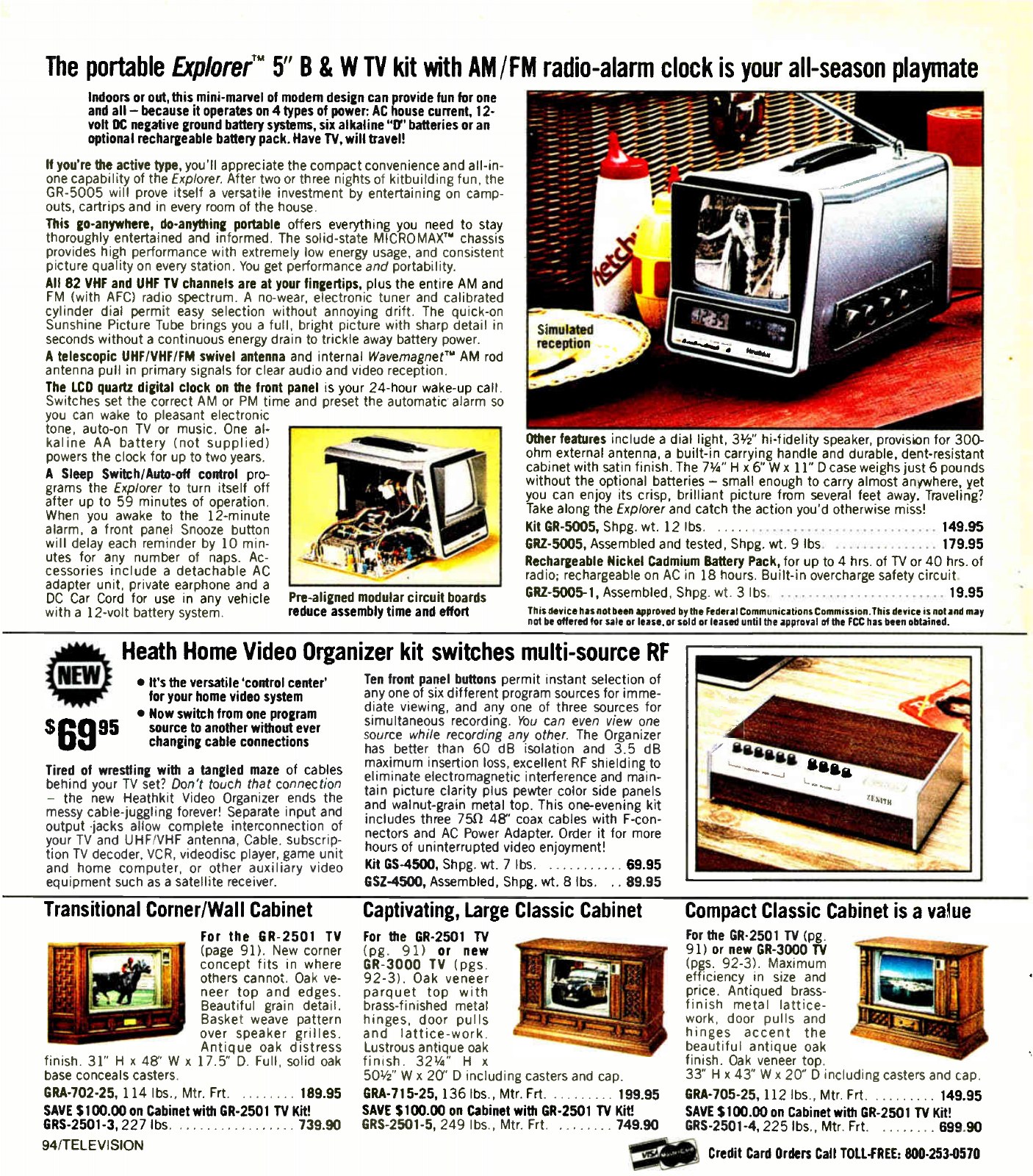
At the other end of the scale was the GR-5005 of Winter 1983: a 5-inch black-and-white television combined with an AM/FM radio and an LCD alarm clock, at $149.95 as a kit or $179.95 assembled (GRZ-5005). It ran on mains, a car’s 12-volt supply or batteries (Heathkit catalogue No. 860, Winter 1983, p. 94). The assembled version had appeared first, in Christmas 1981 at $199.95, so this was a Zenith product turned into a kit rather than the reverse. The kit was last seen in Christmas 1984 at $139.95. It was Heath’s last black-and-white television.
4.6 Advanced System 3 and stereo, 1984–1988
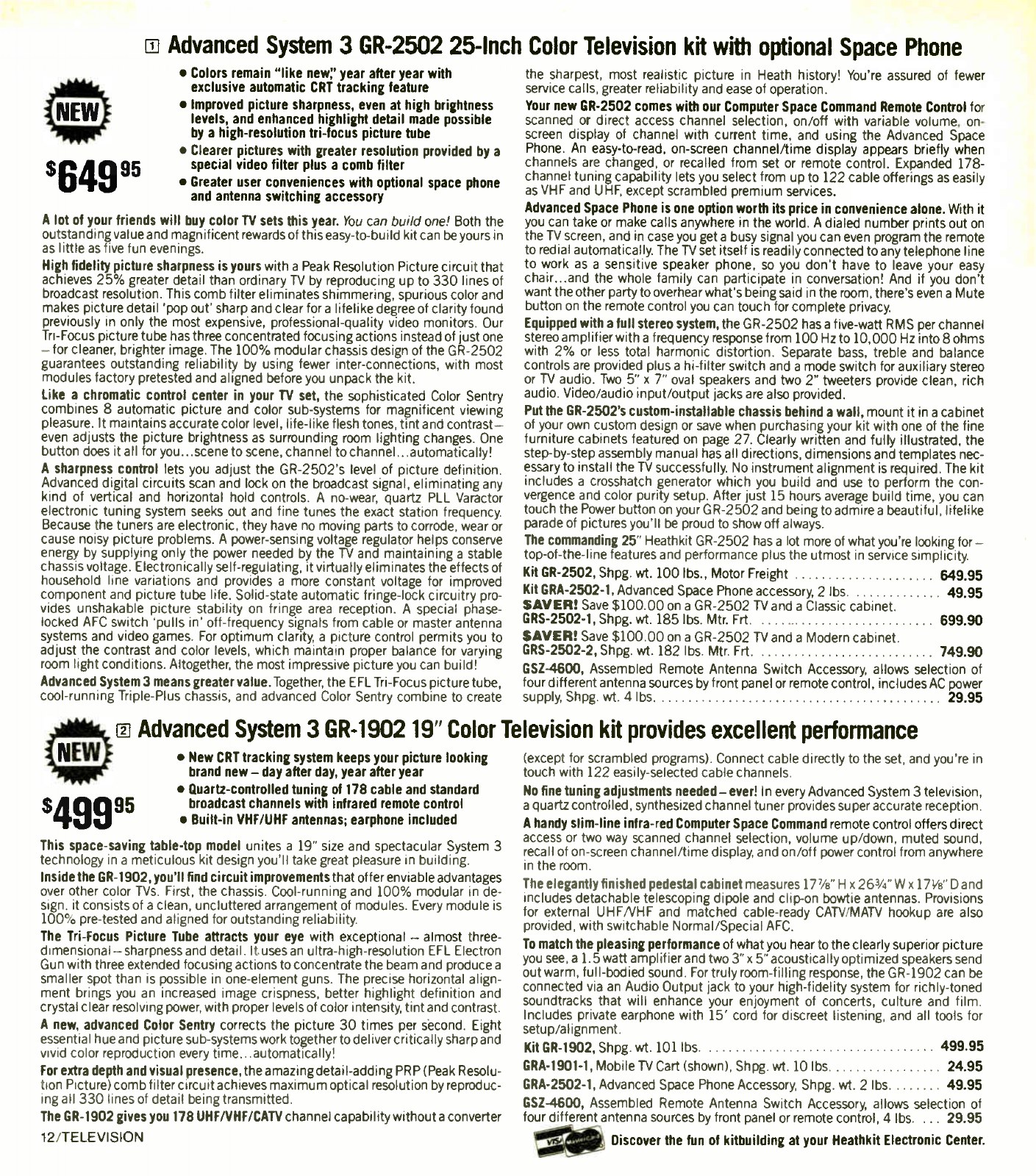
From Fall 1984 the kits were named after Zenith’s current chassis. The “Advanced System 3” GR-2502 25-inch set ($649.95) and GR-1902 19-inch set ($499.95, cut to $399.95 by Fall 1985) had quartz-controlled tuning of 178 broadcast and cable channels, “EFL Tri-Focus” tubes, the Computer Space Command remote and, on the GR-2502, the Space Phone option. The build time was “just 15 hours” (Heathkit catalogue, Fall 1984, p. 26; Christmas 1984, p. 12). Heath also sold a Zenith TV stereo adaptor for “Heath GR-2502 or Zenith TVs with an ‘IF tap output’”, with adapter kits for older Heath sets back to the GR-2000.
Spring–Summer 1986 brought the last generation, all with multichannel television sound (MTS) stereo. The same sentence appeared in each description: all but one circuit board preassembled.
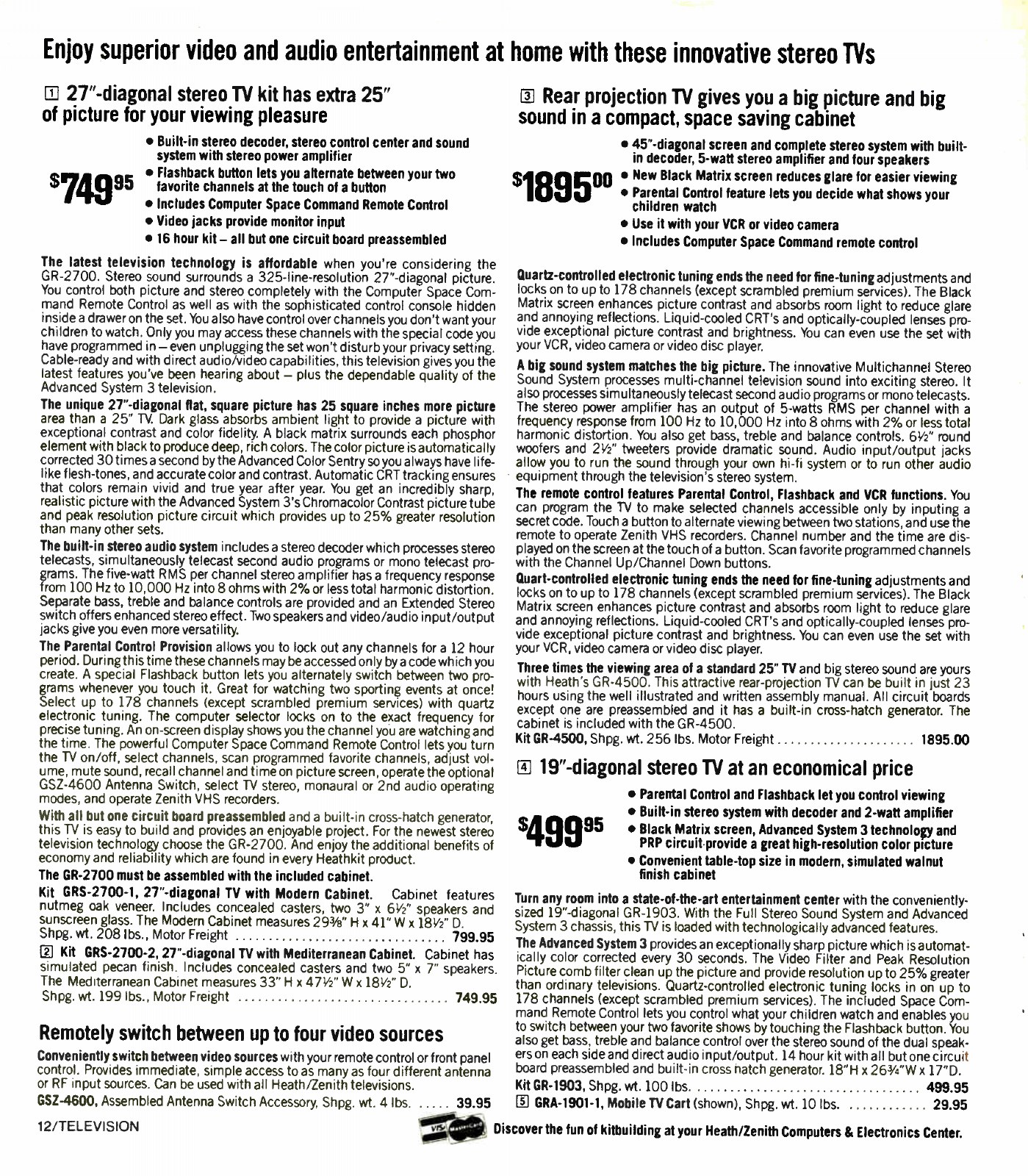
- GR-2700. A 27-inch set with a flat, square “Chromacolor Contrast” tube, a stereo decoder and amplifier, and a remote that also worked Zenith VHS recorders. It was “a 16 hour kit” and was sold only with a cabinet: Modern (GRS-2700-1, $799.95) or Mediterranean (GRS-2700-2, $749.95). By Fall 1987 Heath said it could be built “in just 2 evenings”.
- GR-4500. A 45-inch rear-projection set at $1,895 with the same stereo system, “built in just 23 hours”.
- GR-1903. A 19-inch table stereo set at $499.95, a 14-hour kit (Heathkit catalogue, Spring–Summer 1986, p. 12).
“Chromacolor” was Zenith’s black-matrix tube of 1969 (Zenith, “Heritage”).
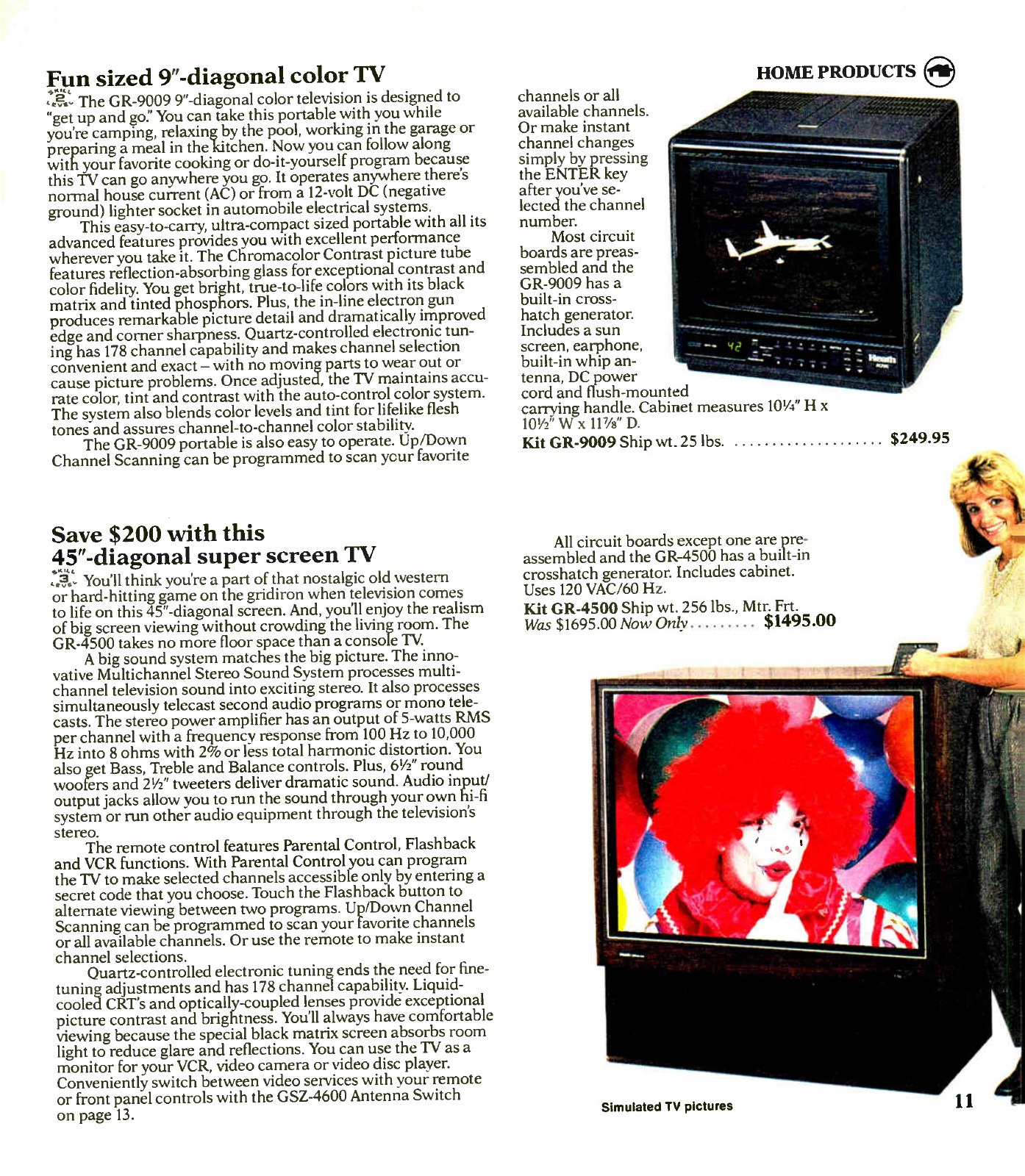
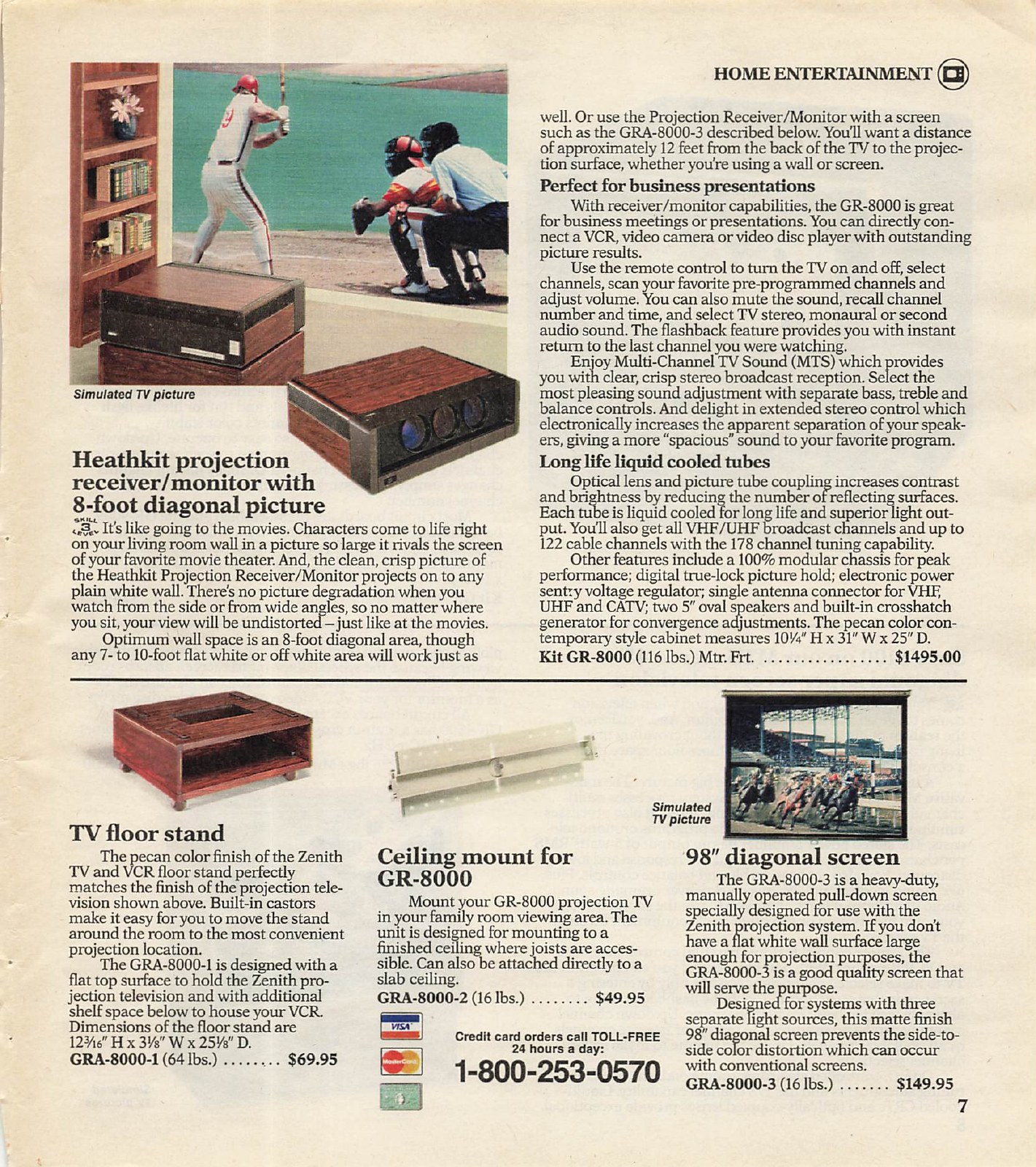
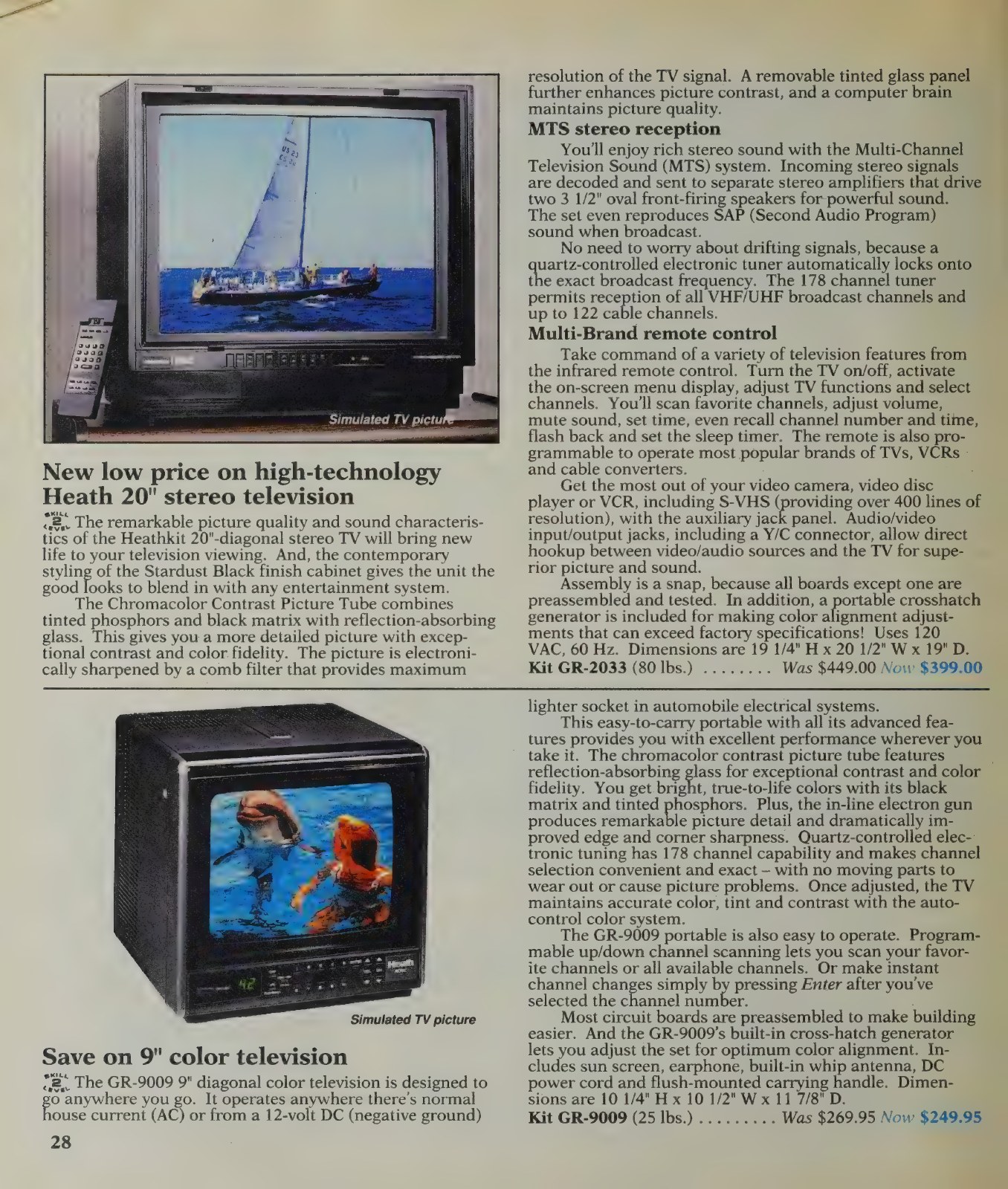
Two more sets followed. The GR-9009 of Fall 1987 was a 9-inch colour portable for mains or a car’s lighter socket, at $249.95. It had quartz tuning of 178 channels, a Chromacolor tube, a built-in crosshatch generator and a claimed build time of “3 quick evenings” (Heathkit catalogue, Fall 1987, p. 20). The GR-8000, found in Spring 1988 at $1,495, was a front projector that threw an 8-foot picture onto a white wall from 12 feet away. The catalogue named its maker without hesitation: “Turn your living room or family room into your own private theater with the Zenith projection remote control color TV” (Heathkit catalogue No. 211, Spring 1988, p. 11; the World Radio History scan has no text layer and was read by OCR).
4.7 The Bull years and the last kits, 1989–1991
In late 1989 Zenith sold its computer business, and Heath with it, to Groupe Bull. Zenith kept its televisions and its trademark (Heath Company dive, volume 6). The television kits carried on regardless, now bought in from a company that no longer owned Heath.
The GR-2701 27-inch “digital TV” was a revision of the GR-2700. Its assembly manual (part 595-4261-01, copyright 1989) is on the Internet Archive, and it refers owners to “your Zenith dealer” for accessories such as a Zenith teletext printer and a Zenith cable decoder (Heathkit GR-2701 manual, Internet Archive). The Spring 1990 catalogue offered it in two cabinets, GR-2701-H at $849.00 and GR-2701-P at $799.00. The same catalogue had the GR-8000 at $1,495, the GR-4500 cut to $1,195 and the GR-9009 at $249.95. Beside them was an assembled “high-technology Zenith 20-inch stereo receiver/monitor” (SE-2033-Y) at $449.00 (Heathkit catalogue, Spring 1990, pp. 5–8; scan without a text layer, read by OCR, World Radio History).
A year later that Zenith set had become a Heathkit. The Winter 1991 catalogue offered the “Heath 20-inch stereo television” as Kit GR-2033, reduced from $449 to $399, with the same Chromacolor Contrast tube, MTS stereo, 178-channel quartz tuner, S-video (Y/C) input and multi-brand remote. As with the other late sets, “all boards except one are preassembled and tested”, and a portable crosshatch generator was included “for making color alignment adjustments that can exceed factory specifications!” Beside it the GR-9009 was cut from $269.95 to $249.95 (Heathkit catalogue, Winter 1991, p. 28). These are the last Heathkit televisions found.
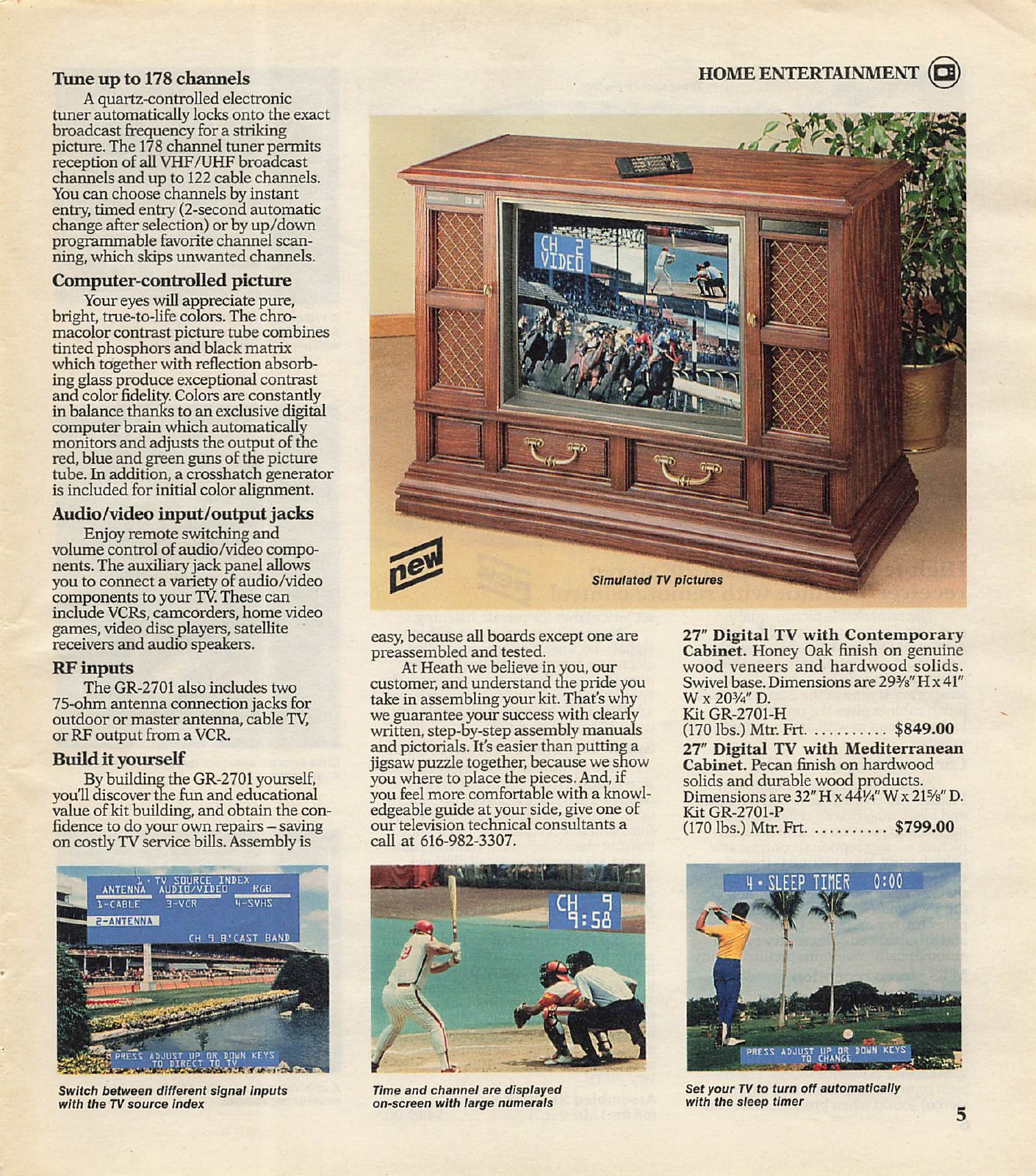
In March 1992 Heath closed its stores and announced that it was leaving the kit business (Heath Company dive, volume 6). No catalogue later than Winter 1991 has been examined for this dive. The research notes for the company history record a last catalogue of late 1991, of 72 pages, which has not been traced. The GR-2033 and GR-9009 are therefore the last television kits documented, not proven to be the last sold.
4.8 How the line ended
The Zenith years can be read in two ways, and both are supported by the catalogues.
As decline. Between 1981 and 1991 Heath designed no new television. The sets were Zenith chassis with Zenith names (System 3, Tri-Focus, Space Command, Chromacolor). The built-in service instruments that had defined the Heathkit colour set gave way to a crosshatch generator. The builder’s work shrank from forty hours of wiring in 1964 to “2 evenings” of assembling pre-tested boards in 1987. The last set was an assembled Zenith sold a year later as a kit.
As adaptation. Television had become an integrated product that a customer could not usefully wire from components. The chassis relied on custom integrated circuits, quartz synthesis and comb filters, and needed factory alignment. Heath’s answer was the one it had given in 1963 on a smaller scale: build the critical parts at the factory and let the customer do the rest. In 1963 the pre-built parts were the tuner, the i.f. strip and the high-voltage supply. By 1986 they were every board but one. A kit buyer in 1986 could still install a 27-inch stereo set into a cabinet himself, set it up with a pattern generator and understand how the chassis fitted together.
In either reading the line was one of Heath’s most durable. Television kits were in the catalogue from 1963 to 1991, twenty-eight of Heath’s forty-five years in the kit business, and they were still being offered in the last full catalogue examined for this dive.
Sources
- Heathkit catalogues, World Radio History: Christmas 1979, pp. 55, 100–105; Christmas 1980, pp. 102–105; Christmas 1981, pp. 90–92; Winter 1981–82, pp. 100–102; Christmas 1982, pp. 86–88; No. 860, Winter 1983, cover, pp. 81–86, 92–94; Fall 1984, pp. 26–28; Christmas 1984, pp. 10–14; Spring–Summer 1985, pp. 12–16; Fall 1985, pp. 4–8; Spring–Summer 1986, p. 12; Fall 1986, pp. 16–18; Fall 1987, pp. 20–23; Christmas 1987, pp. 13–15; No. 211, Spring 1988, pp. 11–13 (OCR); Spring 1990, pp. 5–8 (OCR); Winter 1991, p. 28.
- Heathkit GR-2701 27-inch digital TV manual, 595-4261-01 (1989), Internet Archive.
- Zenith, “Heritage” (Space Command, Chromacolor, System 3).
- Wikipedia, “Robert Adler”.
- Heath Company dive, volume 6 (the Zenith purchase, the Bull sale and the end of the kits).
Comments (0)