Heathkit · Volume 6
Zenith, Bull and the End of the Kits
In October 1979 the Zenith Radio Corporation bought the Heath Company from Schlumberger for $64.5 million. Zenith wanted the computers. It got a mail-order kit business, an educational division, a plant of more than half a million square feet in St. Joseph, Michigan, and about fifty retail stores as well. Over the next decade the computer business, renamed Zenith Data Systems, grew into a billion-dollar supplier to the United States government. The kit business shrank. In late 1989 Zenith sold its computer operations, Heath included, to the French state-controlled Groupe Bull. In March 1992 Heath closed its stores and announced that it was leaving the kit business after forty-five years. This volume follows those thirteen years: the purchase and its motives, the stores, the thinning catalogues, the Bull sale, the end of the kits, and the long argument over whether the owners killed the Heathkit or the economics of electronics did.
6.1 The purchase
6.1.1 Date and price
BYTE reported the deal in its November 1979 news column: “Heath Co, a leader in the consumer electronic kit business, was sold by Schlumberger Ltd to Zenith Radio Corp for $64.5 million” (BYTE vol. 4 no. 11, November 1979, “BYTE News”). The independent Heath/Zenith magazine Sextant dated the acquisition to October 1979 (Walker & Johnstone, Sextant no. 1, Spring 1982). Chas Gilmore, then a senior Heath engineer, gave the same $64.5 million figure in a 2025 interview (EEJournal, “‘H’ is for Heathkits and Hams, Part 4”), as do Brueschke and Mack in the Antique Wireless Association’s history (AWA Review vol. 32, 2019, p. 151) and the FundingUniverse history of Zenith (FundingUniverse).
The English Wikipedia article on Heathkit gives $63 million and cites the same November 1979 BYTE page. The BYTE text says $64.5 million, so the $63 million figure appears to be a transcription error (Wikipedia, “Heathkit”).
6.1.2 What Zenith was, and what it wanted
Zenith was one of the last large American television makers. It was losing ground to Japanese manufacturers and looking for ways out of a market that was turning into a commodity. It had already begun making video monitors for computer terminals and cable-television converters (BYTE, November 1979). Heath offered a working microcomputer line that had grown from nothing in 1977 to about 40 percent of Heath’s sales. The Zenith executive who arranged the purchase, Jerry K. Pearlman, later ran Zenith’s computer group and became the company’s chairman. At the first national Heath Users’ Group conference, in August 1982, he joked about the courtship: “Three years later, are we still in love?” (Zimmerman, Sextant no. 4, Winter 1983).
Accounts differ on what else Zenith valued. The FundingUniverse history calls the deal “shrewd and inexpensive”, made months after Apple’s debut and just as Heath was becoming a computer maker (FundingUniverse, Zenith). Brueschke and Mack stress that Zenith could “bypass the computer development phase” by buying a company that already had a successful product line. They add that Zenith “had no particular interest in the non-computer kit product line… but to make the deal it had to buy all of Heath” (Brueschke & Mack, p. 151). Sextant pointed to Zenith’s idle plant capacity. The first new Heathkit line of the Zenith era was ready-to-assemble furniture, “prompted by unused capacity at Zenith’s TV cabinet operations” (Sextant no. 1).
6.1.3 Why Schlumberger sold
Schlumberger had acquired Heath almost by accident in 1962, when it bought Daystrom to get the Weston instrument company (see Volume 3). By the late 1970s Heath was its only consumer business. Brueschke and Mack say that in the autumn of 1978 Schlumberger wanted to buy Fairchild Camera and Instrument, and that the Federal Trade Commission required it to sell Heath as a condition (Brueschke & Mack, pp. 150–151). The FTC’s own record does not support that detail. The Commission’s 1980 annual report describes the consent agreement that followed its investigation of the Fairchild purchase. Under it, Schlumberger agreed to divest its minority stock in Unitrode Corporation, because both Fairchild and Unitrode made diodes. Heath is not mentioned (FTC Annual Report 1980). The Fairchild purchase and the sale of Heath did happen in the same year, and Schlumberger may well have wanted to sell a small, slow-growing consumer subsidiary while it bought a large semiconductor company. On the available evidence, however, the FTC did not order the sale of Heath.
BYTE’s 1979 note offers a plainer motive: “Heath sales for the last several years have declined at a 3 to 5% rate” (BYTE, November 1979). Computers were growing quickly, but the older kit lines were already shrinking before Zenith arrived.
6.2 Heath inside Zenith, 1979 to 1983
6.2.1 The corporate shape
Zenith set up Zenith Data Systems Corporation (ZDS) in October 1979 to sell assembled computers. The plan Heath had announced a few weeks earlier as “H/S Data Systems” (see Volume 5) went ahead under the Zenith name. ZDS’s sales and marketing offices were in Glenview, Illinois. Manufacturing and engineering stayed at the Heath plant in St. Joseph, which received a $2 million addition in 1981–82 that brought it to 540,000 square feet (Sextant no. 1). Donald P. Moffet was president of ZDS, and William E. (Bill) Johnson was president of Heath by 1982. David W. Nurse, who signed the “President’s Corner” letters in the 1979 and early-1980 catalogues, had retired by 1982 (Sextant nos. 3 and 4; Heathkit catalogue No. 848).
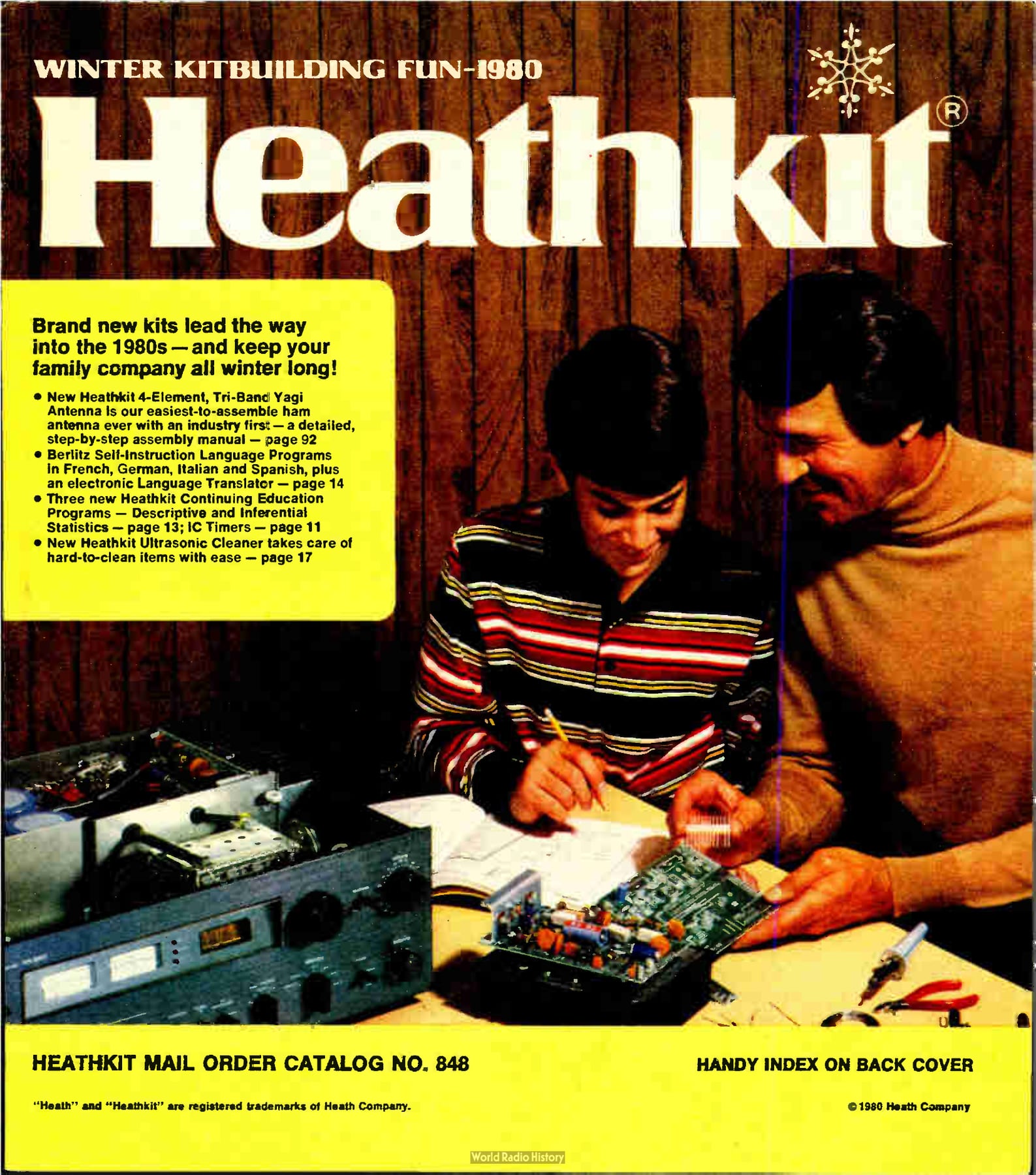
Kits kept the Heathkit name, and assembled computers took the Zenith name: the H89 became the Z-89, the H19 the Z-19, and so on. According to Pearlman, the ZDS name on those products was requested “not from Zenith… [but] from senior Heath management, in order to connote quality assembled products” (Sextant no. 4). Zenith products began to appear in the Heathkit catalogue. Catalogue No. 848 of early 1980 offered the Zenith VR-9700 “Video Director” Beta video recorder, assembled, at $1,249.95 (No. 848, p. 27). Zenith also made a 12-inch green monitor, the ZVM-121, in an “orchard brown” cabinet styled to match the Apple II. Sextant compared it to “Mercedes-Benz turning out spare parts for Chryslers” (Sextant no. 1).
6.2.2 Investment or contempt?
The two sides tell this period very differently.
Management’s version was delivered in person to about a thousand Heath computer owners at the first national HUG conference, held on 6–8 August 1982 at the Hyatt Regency O’Hare. Heath president Bill Johnson said that “Zenith’s investment in the company has been greater than that of any prior ownership by a factor of four”. Pearlman said that since the acquisition Zenith had “added more than 100 people to hardware and software engineering” and “invested literally millions of dollars in new production facilities”. He added, “We’ve also been proving our love with our checkbook” (Sextant no. 4).
The version told by Heath staff, as Brueschke and Mack record it decades later, is darker. “Only the Heath computer capability was of interest to Zenith. Nothing else at Heath mattered.” They write that staff felt “regarded with contempt by Zenith”, that “budget cuts and layoffs of 15% every year began in 1980”, and that Zenith “began drawing off large amounts of cash and resources” (Brueschke & Mack, p. 151). The Heathkit Legacy page at Ohio University says that “Zenith was mainly interested in Heathkit’s computer division and gave short shrift to the kit business”, and that kit sales “steadily declined after 1981” (The Heathkit Legacy).
The two accounts do not have to conflict. Heavy investment in the computer side and cuts on the kit side can both be true, and the product counts later in this volume suggest that both were.
The workforce also changed. Gilmore told Leibson that the union succeeded at Heath around 1978–1980 after thirteen or fourteen failed attempts (EEJournal, “The Rise and Fall of Heathkit, Part 4”). Secondary sources describe the St. Joseph computer workforce as represented by the United Steelworkers and as perhaps the only unionised personal-computer builders in the world (Wikipedia, “Zenith Data Systems”).
6.3 Veritechnology and the stores
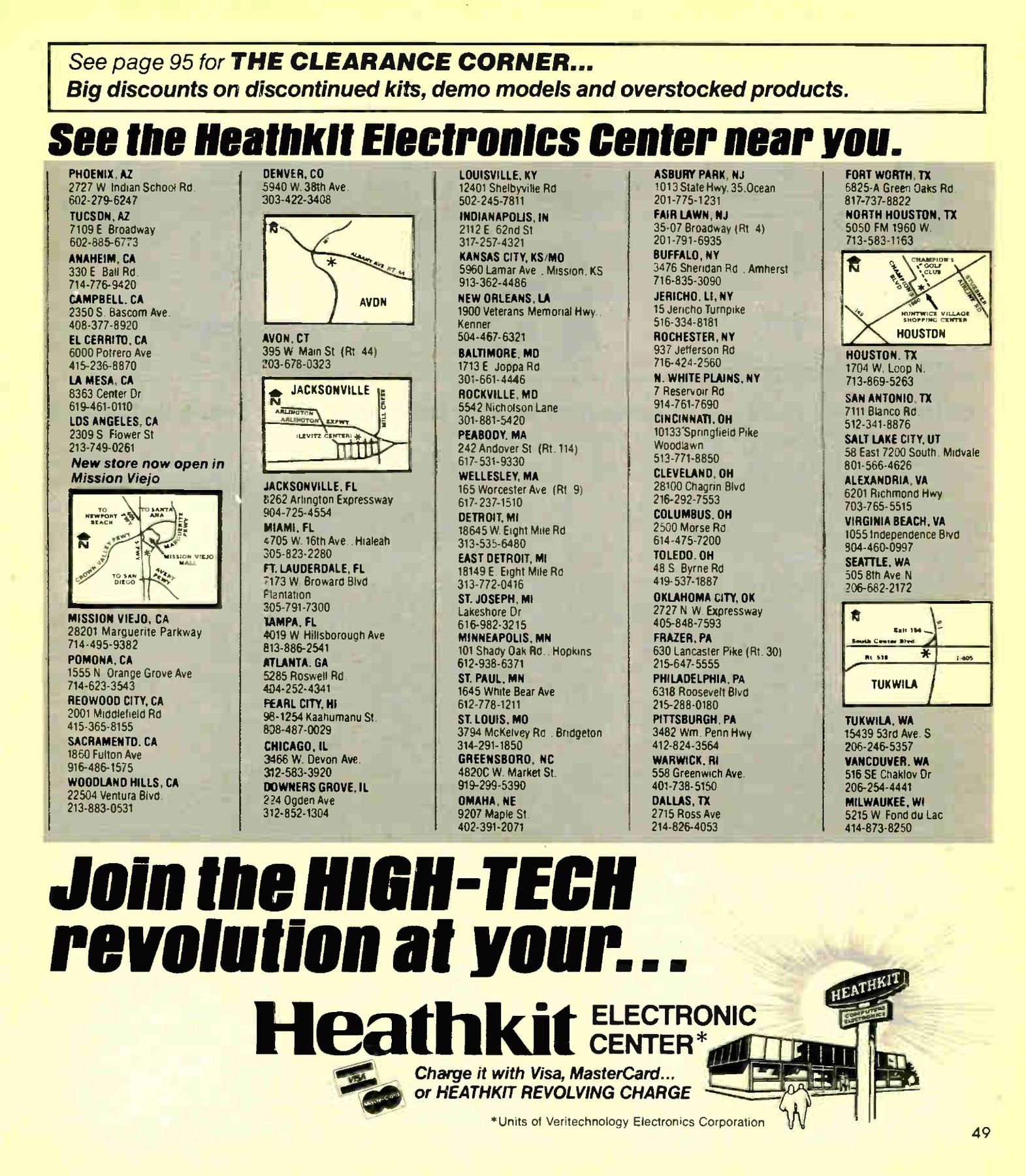
Heath had sold through its own retail stores since the early 1960s (see Volume 4). The stores’ corporate owner changed at the time of the Zenith purchase. The Fall 1977 catalogue lists “49 Heathkit Electronic Centers coast to coast (Units of Schlumberger Products Corporation)”, with more opening that autumn in Alexandria, Virginia, and San Jose, California (catalogue 817, Fall 1977, p. 50). By early 1980 the store directory reads “Units of Veritechnology Electronics Corporation” (No. 848, p. 67). The Fall 1979 catalogue, printed just before the sale closed, still has no Veritechnology name.
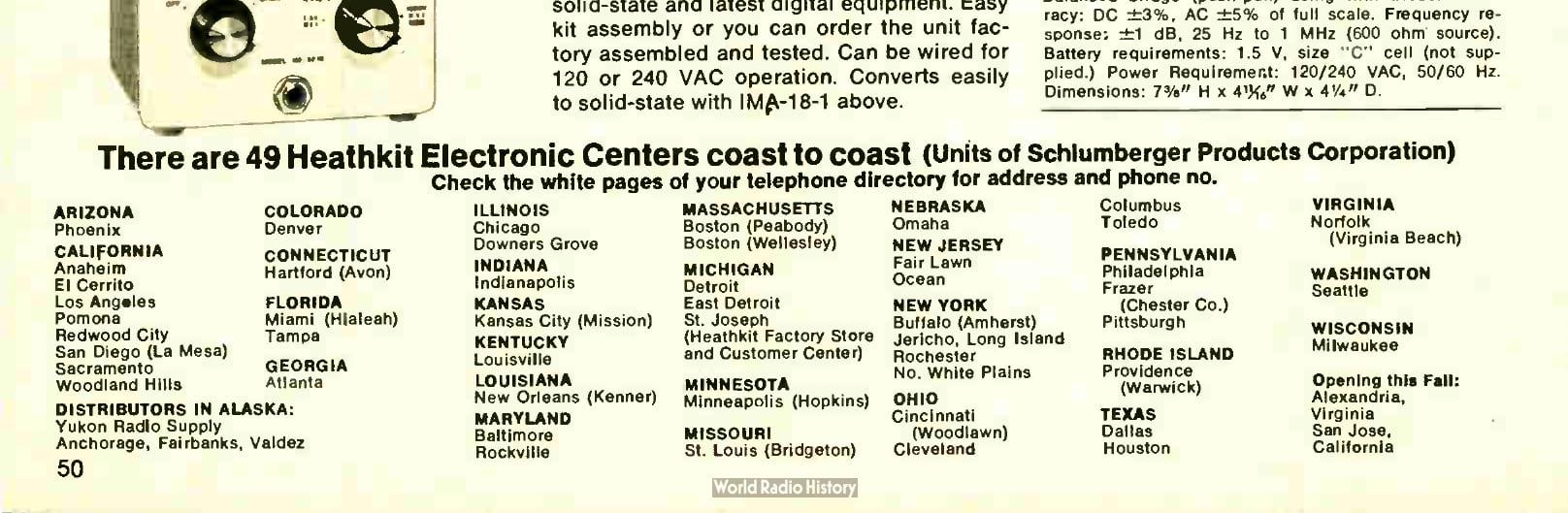
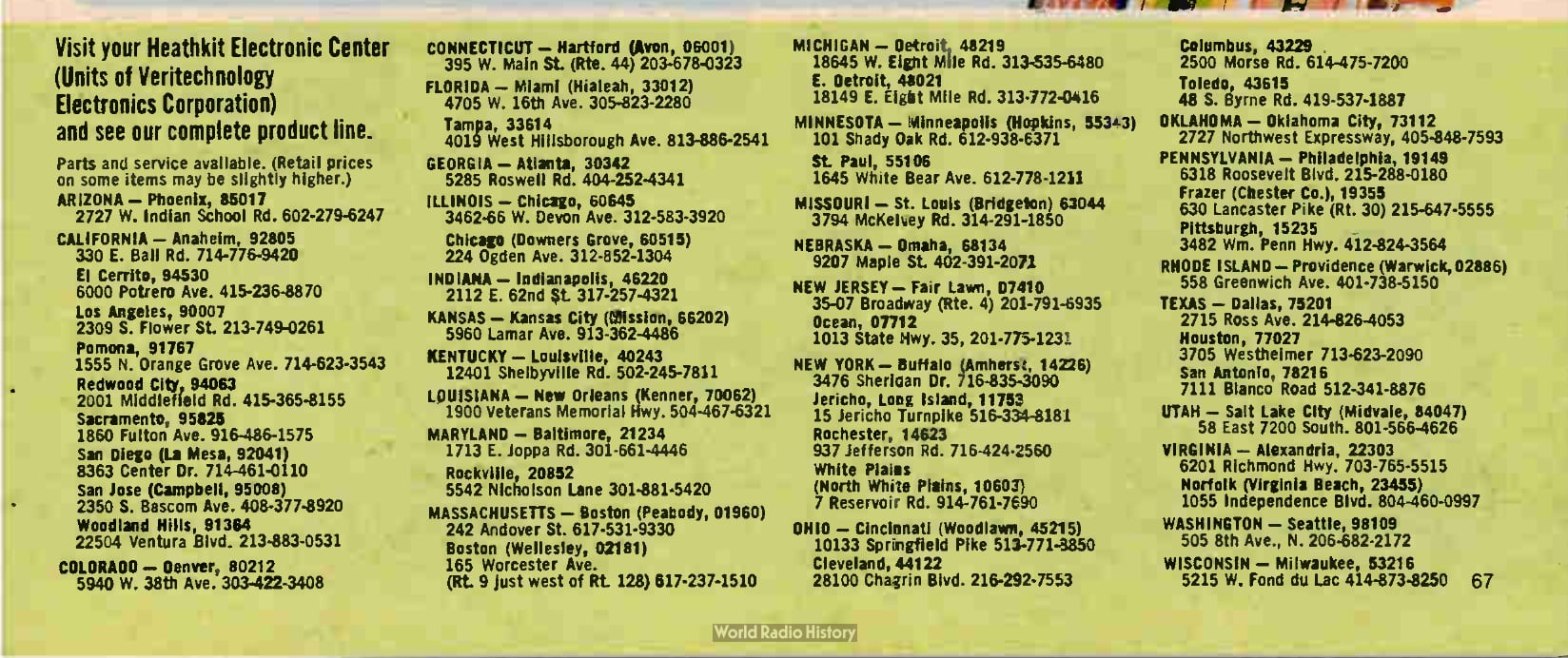
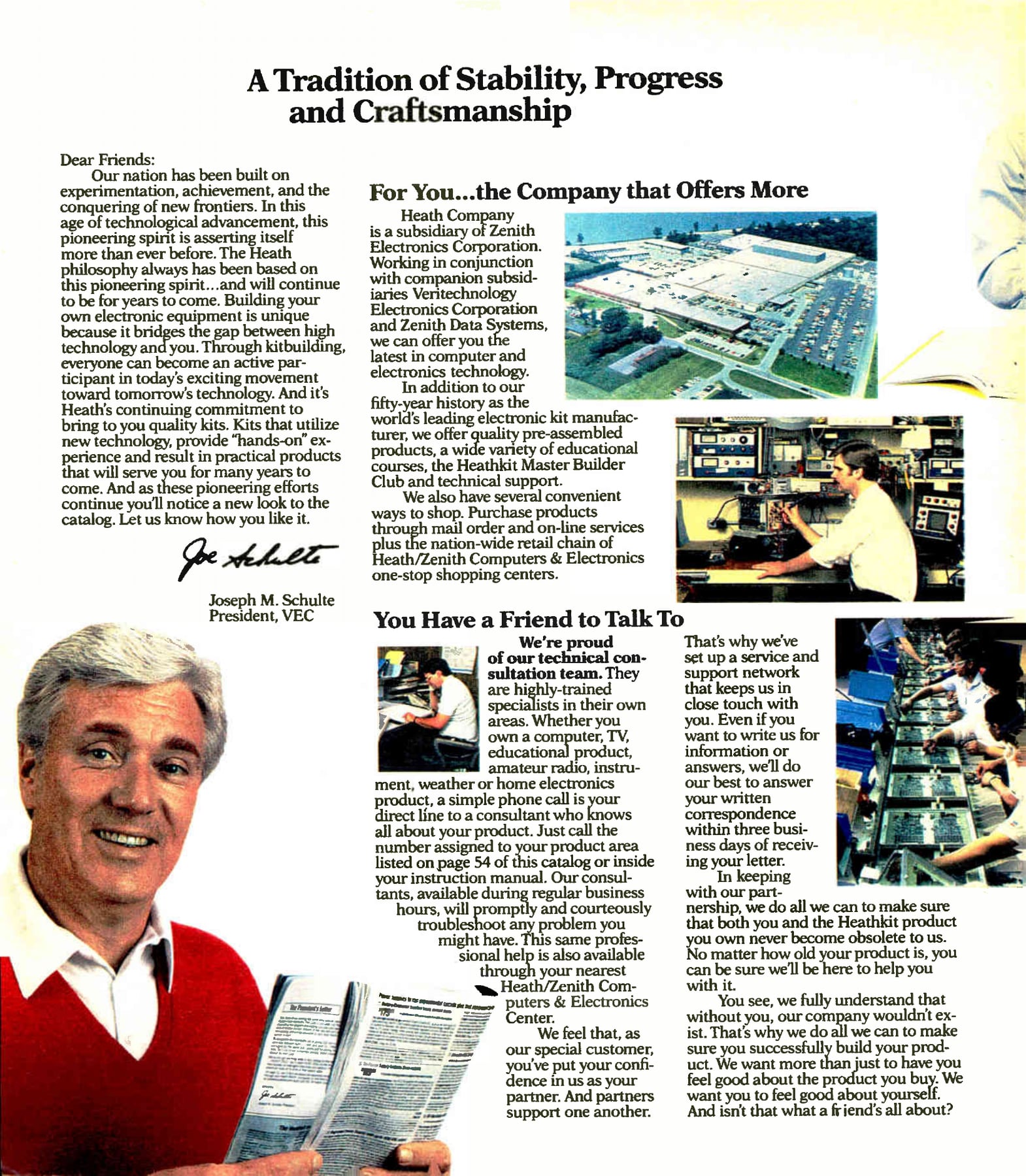
The name is Veritechnology Electronics Corporation (VEC), not “Vera Technology” as it is sometimes rendered. Brueschke and Mack attribute the creation of VEC to Schlumberger. The catalogues show it appearing only after the sale to Zenith, so the date and parentage of its formation remain uncertain (Brueschke & Mack, p. 149). Its president through most of the 1980s was Joseph M. Schulte. He spoke at the 1982 HUG conference as “president of Veritechnology Electronics Corporation, which owns the Heathkit Electronic Centers”, paid the conference’s Saturday lunch bill of about $12,500, and told users that “in every location where we have a store, there is a warm and amicable relationship between the HECs and HUGs” (Sextant no. 4). Four years later, his signature, not the Heath president’s, appeared on the opening letter of the Fall 1986 catalogue (Fall 1986, p. 2).
6.3.1 How many stores
Counts of the chain vary with the source and the year:
Table 1 — Counts of the chain vary with the source and the year
| Date | Stores | Source |
|---|---|---|
| Summer 1977 | 47 | Heathkit Legacy |
| Fall 1977 | 49, plus 2 opening | Catalogue 817, p. 50 |
| Fall 1979 | about 53 listed | Fall 1979 store directory, p. 101 (count of listed telephone numbers) |
| Early 1980 | about 54 listed | No. 848, p. 67 (same method) |
| Spring 1982 | ”more than 70 retail stores” (includes Canada and Europe) | Sextant no. 1 |
| Christmas 1982 | about 57 US stores listed | Christmas 1982, p. 57 (same method) |
| Fall 1983 | about 63 US stores listed | Fall 1983, p. 45 (same method) |
| Christmas 1987 | about 58 US stores listed | Christmas 1987, p. 49 (same method) |
| 1989 | 56 “Heath/Zenith Business Centers” | Heathkit Legacy |
The “about” counts were made for this volume by counting the telephone numbers printed in each catalogue’s store directory, so each could be off by one or two. The “60+ stores” figure often quoted for the peak is consistent with the early-1980s directories.
6.3.2 From kit shop to computer store
The stores’ name tracked their purpose. By Fall 1985 the catalogues invited readers to “discover the fun of kitbuilding at your Heath/Zenith Computers & Electronics Center” (Fall 1985). The Spring–Summer 1986 retail catalogue described the kit department as “The Kit Center”, one of four sections alongside computers, service and training (Wikipedia, “Heathkit”, citing Retail Catalog No. 202R). By 1989 ZDS had shifted its emphasis from retail to outside sales.
Nick Holland, who worked from 1982 as a systems engineer in one of the stores, describes the end state. The sales floor had largely become office space, and “the kits were gone. Our doors were open, private people could walk in, and could buy a computer… but our money was made in two and three digit quantity sales” to businesses and institutions (Holland, “The closing of Heathkit”). By then the “Heathkit store” was in practice a Zenith corporate sales office in a retail building.
6.4 Zenith Data Systems becomes the business
The computer group grew faster than anyone had predicted in 1979, and its growth changed Heath’s place inside Zenith. Moffet told Sextant that computer sales were $43.6 million in 1980 and would reach $65–70 million in 1981 (Sextant no. 1). The later figures come from company histories and trade-press summaries, not filings examined for this volume:
Table 2 — The computer group grew faster than anyone had predicted in 1979, and its growth changed Heath's place inside Zenith. Moffet told Sextant that computer sales were $43.6 million in 1980 and would reach $65–70 million in 1981 ([Sextant no. 1](https://archive.org/details/sextantissue1spring1982)). The later figures come from company histories and trade-press summaries, not filings examined for this volume
| Year | ZDS / Zenith computer sales | Source |
|---|---|---|
| 1979 | computers 1.4% of Zenith sales | FundingUniverse, Zenith |
| 1980 | $43.6 million | Sextant no. 1 |
| 1981 | more than $65 million (forecast) | Sextant no. 1 |
| 1983 | $135 million (FundingUniverse); “$225 million” (Gilmore) | FundingUniverse; EEJournal |
| 1985 | $352 million | FundingUniverse |
| 1986 | $548 million (29% of Zenith sales) | FundingUniverse |
| 1988 | $1.4 billion | Encyclopedia.com, ZDS |
| 1989 | ”very close to $1.5 billion” (Gilmore) | EEJournal |
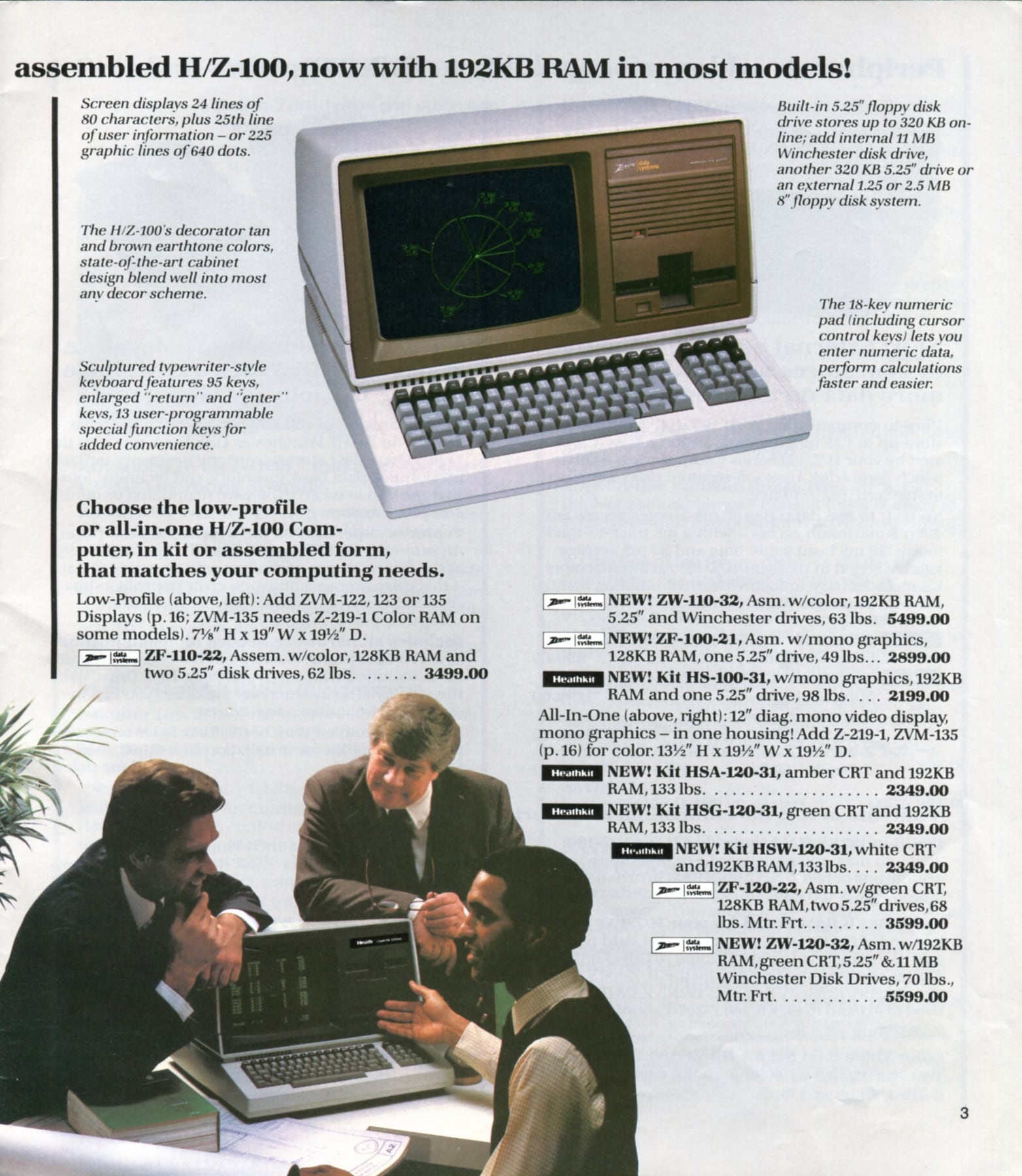
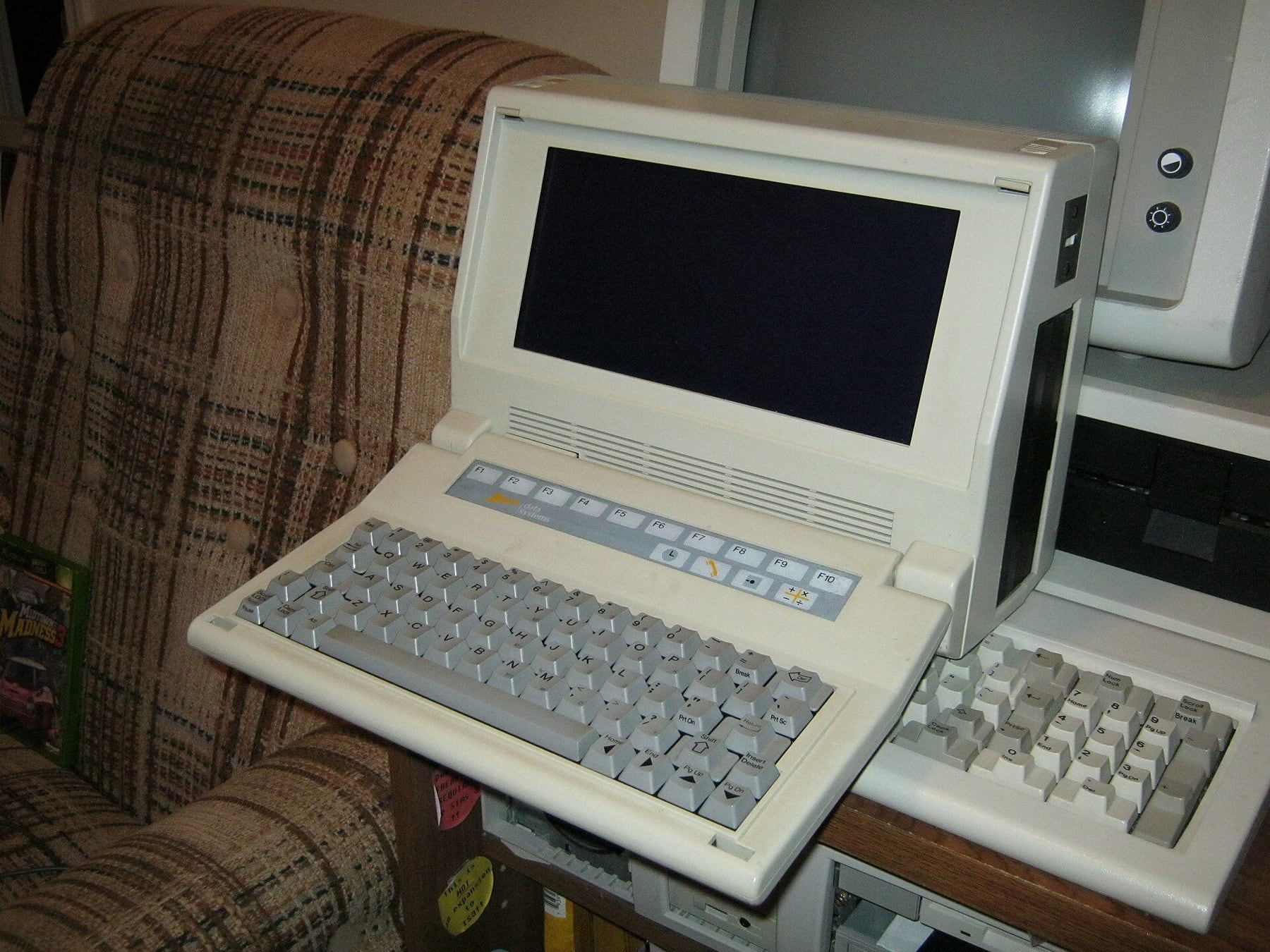
Most of that growth came from IBM-compatible PCs and portables sold to the federal government, schools and companies. The Z-100 went to Clarkson College as a computer for every freshman from 1983. The Z-150 and Z-200 won large Defense Department contracts. The Z-171 portable beat IBM for an Internal Revenue Service contract in 1986. The SupersPort laptops of 1988 made ZDS the leading American portable-computer vendor (Wikipedia, “Zenith Data Systems”). The Heath kits of these machines, sold in the catalogue and the stores, were a very small part of this business. In 1988–89 the Heath Company’s own sales were, in Gilmore’s estimate, “probably around $75 million” (EEJournal), against ZDS sales of $1.4–1.5 billion.
6.5 The thinning catalogue
6.5.1 Counting the kits
The clearest evidence of what happened to the kit business is in the catalogues. For this volume, the number of distinct model numbers printed next to the word “Kit” was counted in the OCR text of each World Radio History scan examined. Accessory codes whose prefix ends in “A” were excluded. Missed OCR lines make the method undercount: Heath itself claimed “more than 400 kit products” in 1982 and “over 450 different products” (kit and assembled) in its Christmas 1982 catalogue. The absolute numbers are therefore low, but the method is the same for every catalogue, so the trend is meaningful.
Table 3 — Counting the kits
| Catalogue | Approx. distinct kit models | Owner |
|---|---|---|
| Christmas 1976 (No. 813) | 254 | Schlumberger |
| Fall 1977 (No. 817) | 253 | Schlumberger |
| Fall 1979 | 256 | Schlumberger / Zenith |
| Early 1980 (No. 848) | 258 | Zenith |
| Christmas 1982 | 172 | Zenith |
| Fall 1983 (No. 862) | 176 | Zenith |
| Fall 1985 | 128 | Zenith |
| Fall 1986 | 130 | Zenith |
| Christmas 1987 | 149 | Zenith |
| Spring 1988 (No. 211) | 143 | Zenith |
| Summer 1990 (No. 221) | 66 | Bull |
| Winter 1991 (No. 223) | 59 | Bull |
Sources: World Radio History scans of each catalogue, listed under Sources. The 1976, 1988 and 1990 scans have no text layer and were OCR’d for this count.
Two sharp falls stand out. The first comes between 1980 and 1982, when the kit range lost about a third of its models in the first years of Zenith ownership. The second comes between 1988 and 1990, when it halved again around the sale to Bull. In between, from 1985 to 1988, the count held roughly steady at 130 to 150. The small rise in 1987 is mostly new computer kits. Gilmore gave a matching figure for new products: Heath introduced about 300 new products a year in the mid-1970s and about 50 by 1984 (EEJournal, “The Rise and Fall of Heathkit, Part 4”).
Page counts do not show the decline, because assembled goods filled the space. The Fall 1986 catalogue had 94 pages and the Christmas 1987 catalogue 108, and in both, assembled products were listed about as often as kits.
6.5.2 Amateur radio: the SS-9000
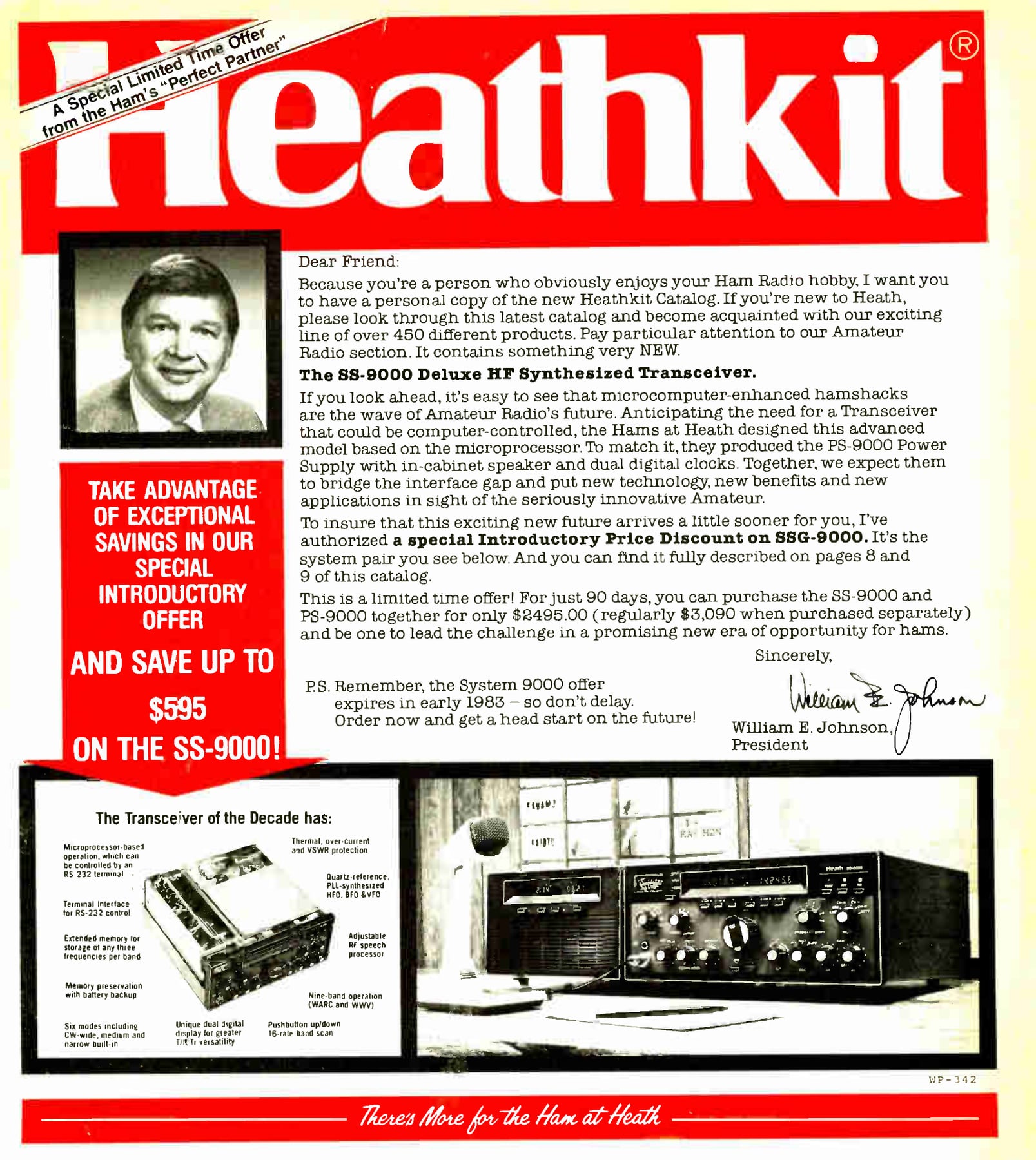
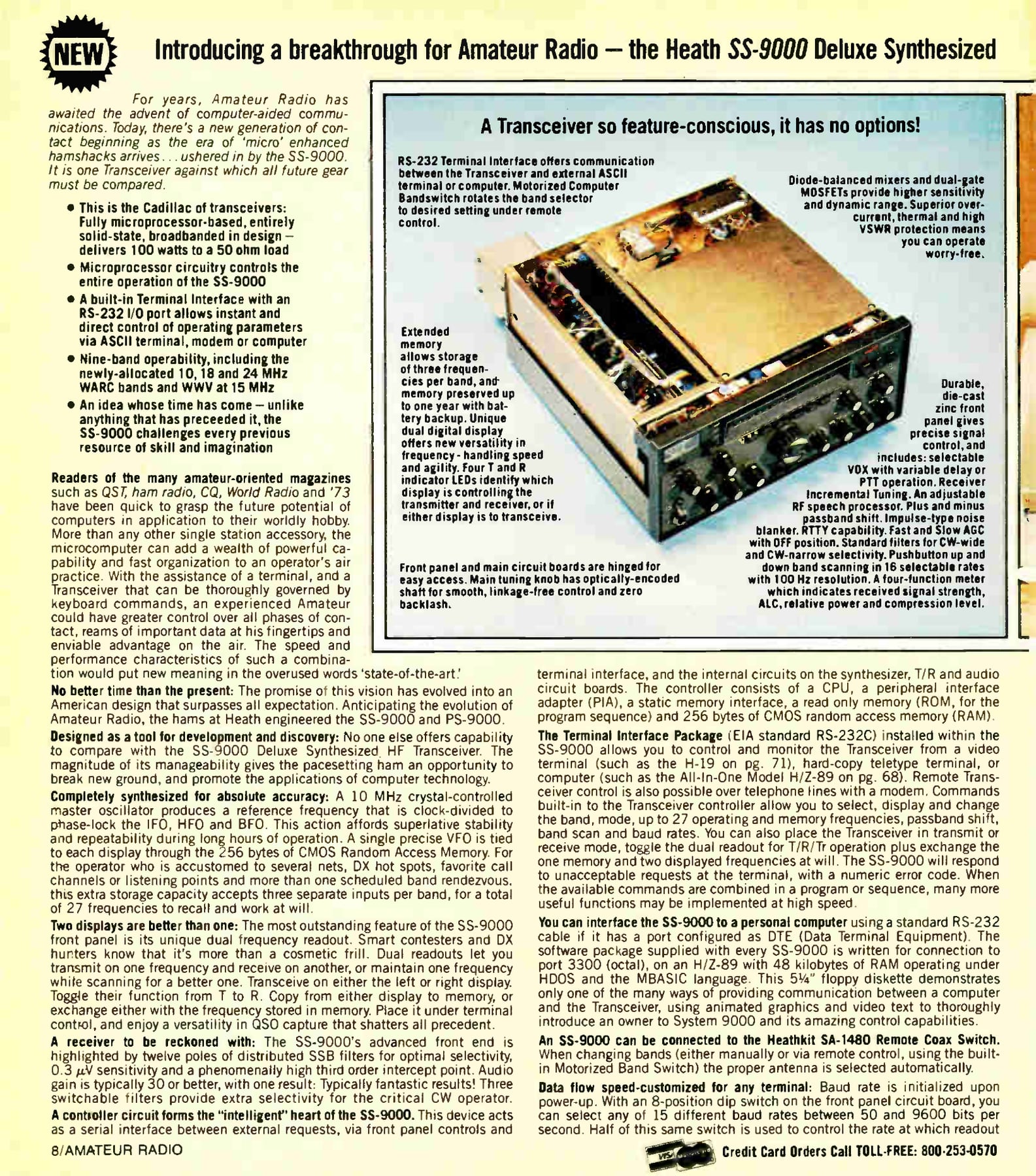
Amateur radio shows the decline most clearly. Heath’s ham gear had been its prestige line since the DX-35 and the SB series. The SS-9000 Deluxe Synthesized HF Transceiver was introduced in the Christmas 1982 catalogue with a letter from William E. Johnson to amateur customers, and it summed up the new situation. It was microprocessor-controlled, solid-state and broadbanded, with an RS-232 terminal interface for computer control. It was sold only assembled: $2,795 for the SS-9000 and $295 for the matching PS-9000 power supply, or $2,495 for the pair under a 90-day introductory offer (Christmas 1982, pp. 3 and 10–11).
Brueschke and Mack explain why it was not a kit. Heath had been “having trouble with its SS-8000 transceiver due to complexity and parts density”, eventually “redesigned the kit form of SS-8000 and replaced it with the fully assembled rig, SS-9000”. They note that “competing transceivers cost half as much”, and put production at “only about 2,000” (Brueschke & Mack, p. 152). Gilmore called the $2,800 rig “non-competitive” and said it lasted “only a couple of years” (EEJournal). The Fall 1985 catalogue was clearing remaining stock at $999.95 (“Was $1649”) (Fall 1985).
The claim that the SS-9000 was a factory-built rig of the kit business’s final days, with 375 made, conflicts with these sources. The rig belongs to 1982–85, not 1992, and the only production figure found is Brueschke and Mack’s “about 2,000”.
6.5.3 The HW-5400 and the last ham kits
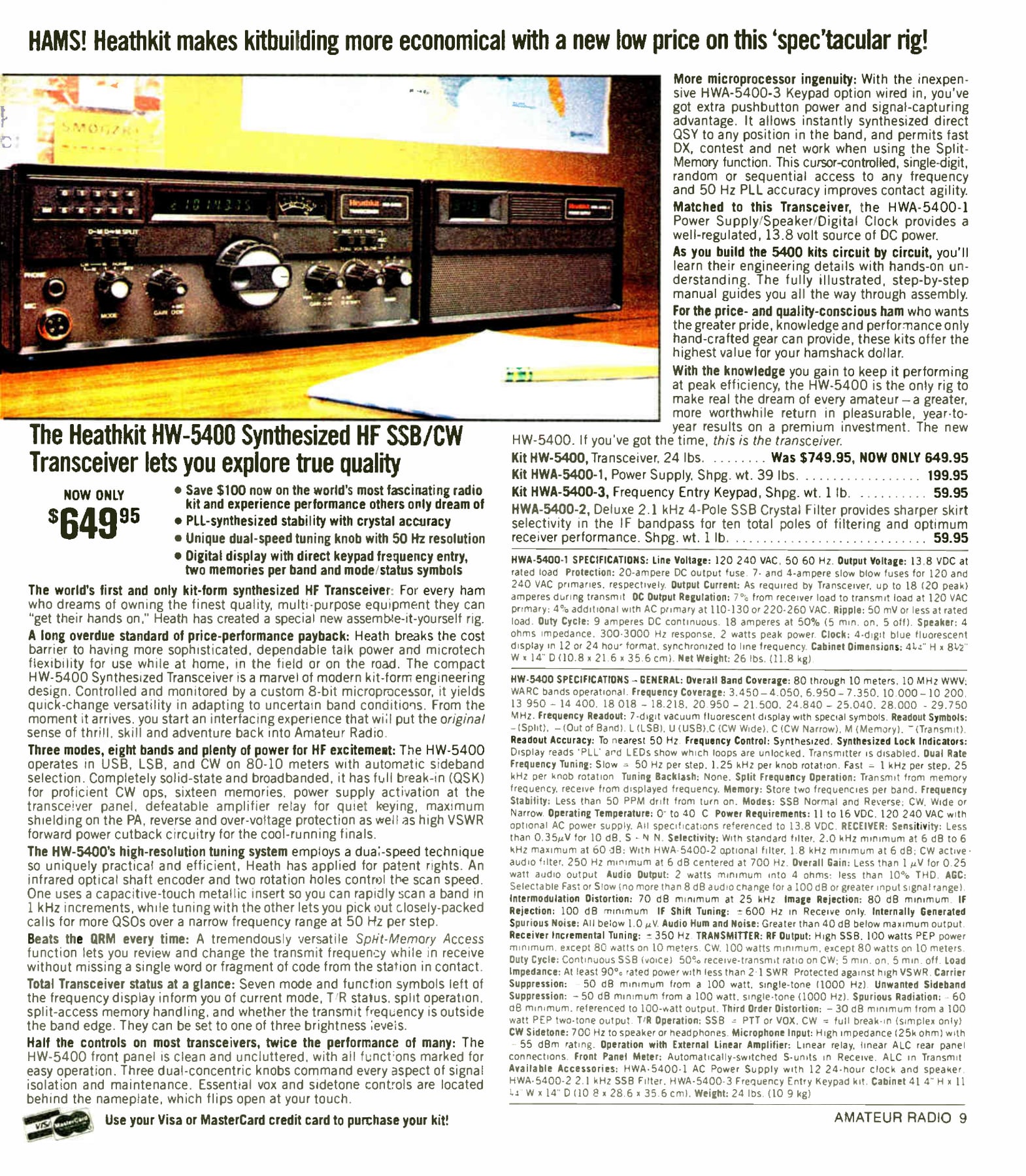
The last major Heath-designed HF kit was the HW-5400 synthesized SSB/CW transceiver of 1983. It had fourteen circuit boards and took about 100 hours to build, and Brueschke and Mack report that “near the end of production the units were shipped preassembled”. The Fall 1983 catalogue offered it at $649.95 (reduced from $749.95), and by Fall 1984 it was $499.95 (Fall 1983, p. 7; Fall 1984; Brueschke & Mack, p. 152). Gilmore dates its discontinuation to “late 1984 or early 1985” (EEJournal). Brueschke and Mack write that “by 1985, all new product development ceased” in the amateur-radio group, and that the few engineers left worked on “electronic Christmas tree ornaments, light dimmers, and the like”.
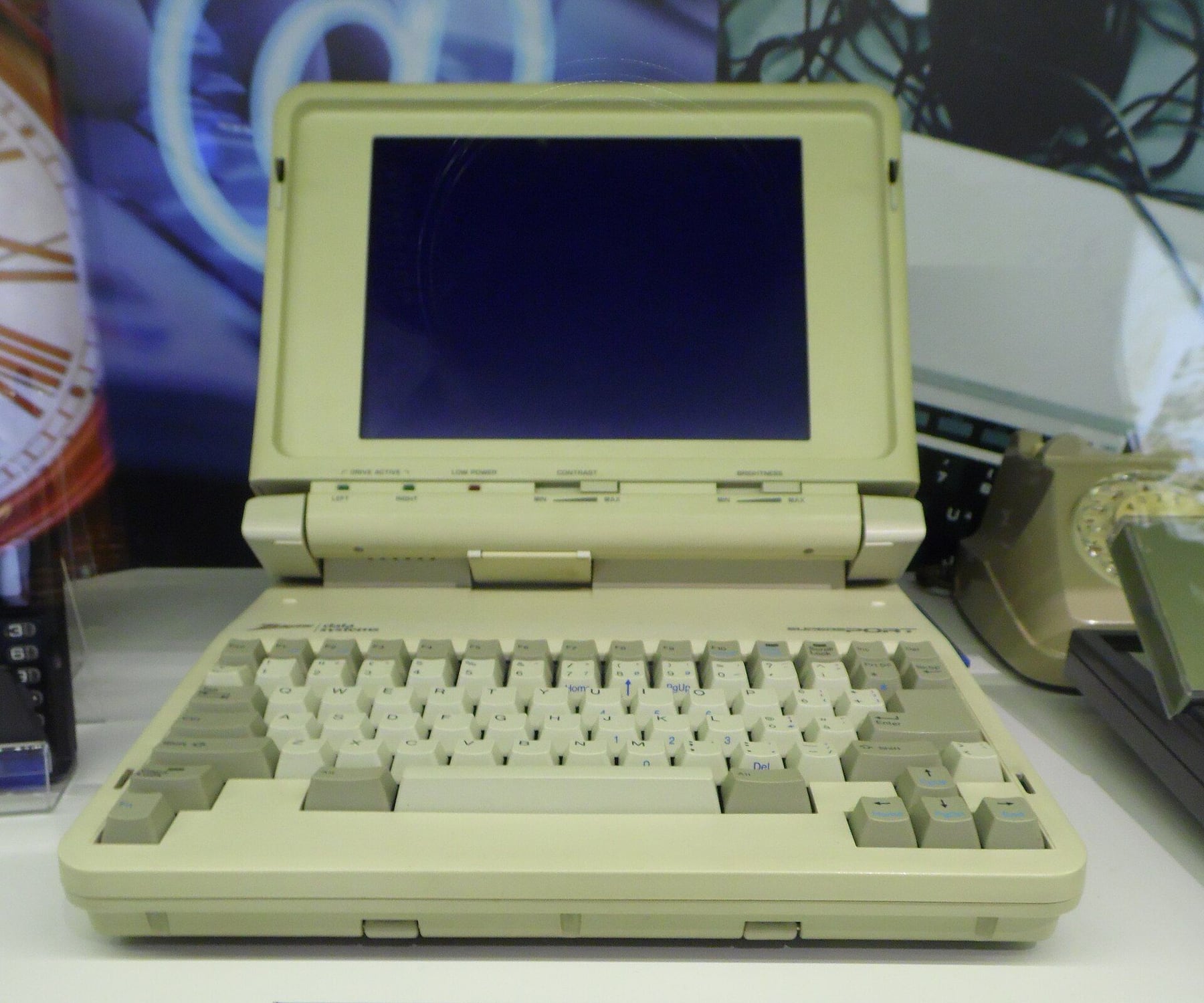
Small ham kits survived longer. The HW-9 QRP CW transceiver, introduced in 1984 at $249.95, was still in the Winter 1991 catalogue at the same price (Winter 1991; WD8RIF, “Heathkit HW-9”). So were packet-radio controllers (HK-232-B), antenna accessories, the HD-1418 filter and the HD-1780 “Intellirotor”. The main HF radio in the 1991 catalogue was the SB-1400, which revived a famous Heath model prefix but was an assembled transceiver based on the Yaesu FT-747GX, sold from about 1988 to 1991 (RigPix, “Heath SB-1400”). The HW-24-T handheld in the same catalogue was also sold assembled.
6.5.4 Where the kits came from
Around 1988, according to Brueschke and Mack, Heath management moved kit sourcing and packing to a small Hong Kong company, Heath Prokit, to reduce overhead. Prokit also did “limited design work”, and “delays of up to a year were experienced for less popular items” (Brueschke & Mack, p. 153). This was the reverse of the model the Anthonys had built in Benton Harbor, where Heath had designed, sourced, packed and written the manuals for every kit under one roof.
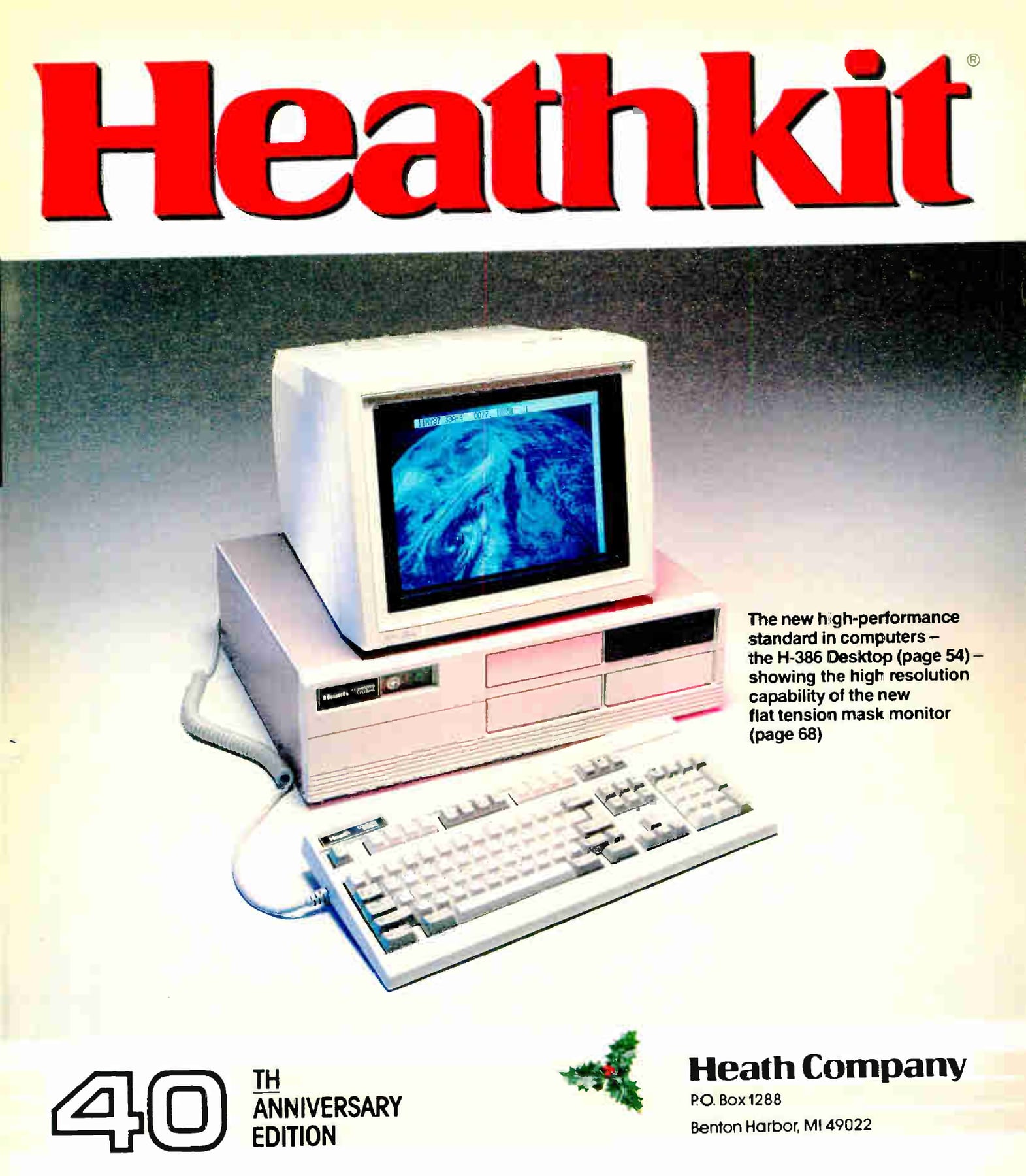
6.5.5 The 40th anniversary
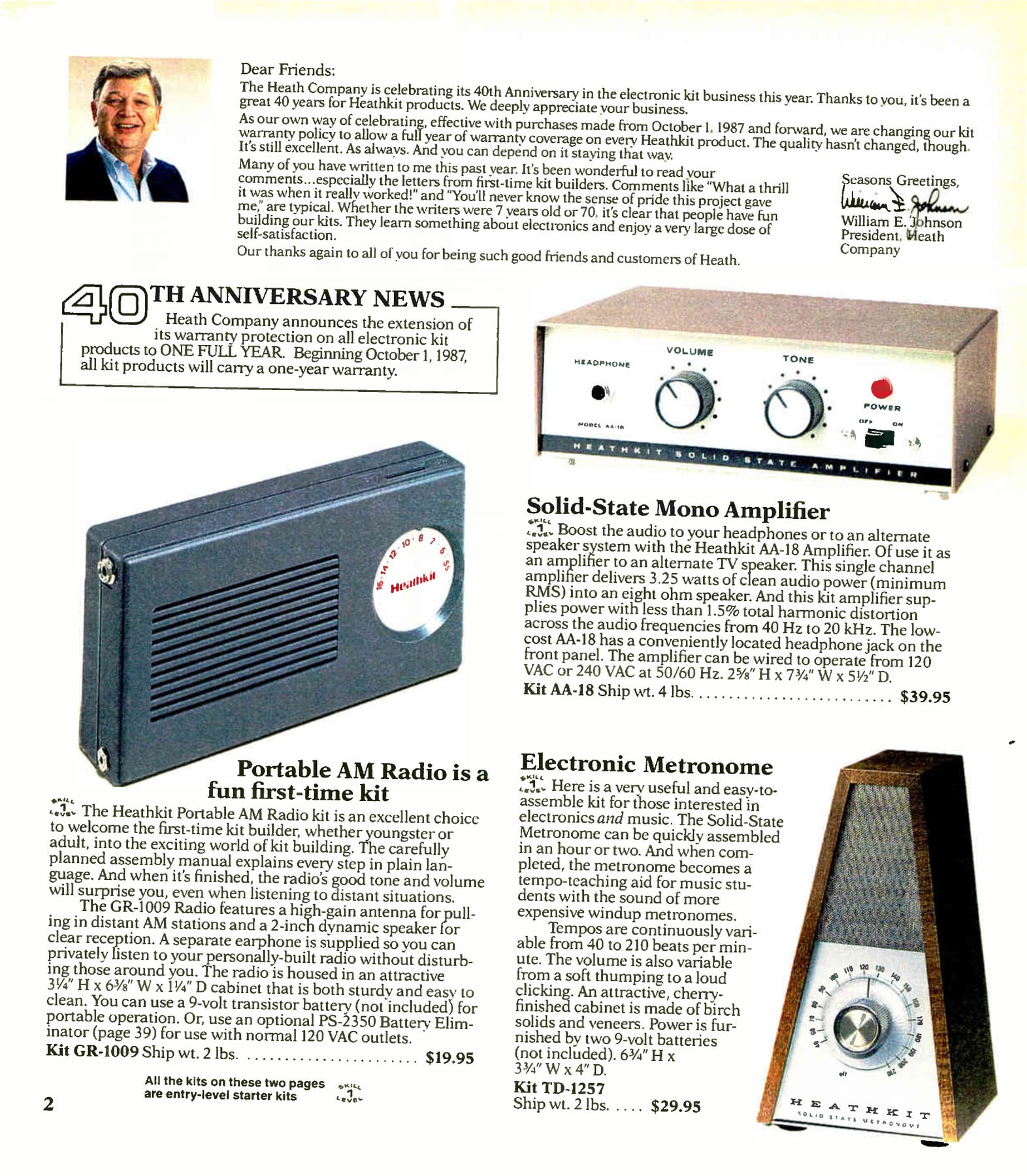
The Christmas 1987 catalogue was billed as the “40th Anniversary Edition”, counting from the O-1 oscilloscope of 1947. Johnson’s letter announced that every kit bought from 1 October 1987 would carry a full one-year warranty, and quoted first-time builders: “What a thrill it was when it really worked!” (Christmas 1987, p. 4). The cover product, though, was the H-386 desktop computer, and the catalogue’s “NEW!” labels were almost all on computer kits and Zenith accessories. The new kits were the HS-148-H compact PC, the HS-158-H, the HS-248-SX and the HS-386-A 80386 desktop kit at $3,349.95.
6.5.6 Kits of Zenith computers
Computers were the one area where Heath kept introducing new kits. They were versions of assembled Zenith machines, however. By December 1984 BYTE found that the kit H-150 cost about $100 more than an assembled Z-150 from some dealers and still needed about twenty hours of work (BYTE, December 1984, cited in Wikipedia, “Heathkit”). PC Magazine noted in 1989 that the kit version of the SupersPort 286 laptop weighed a pound more than the factory one (same source). The New York Times was still writing about Heath computer kits in March 1989 (Lewis, “Loving Hands at Home”, 28 March 1989, as cited in Wikipedia, “Zenith Data Systems”). In the Winter 1991 catalogue the kit computers were the HS-5100 286 and 386SX machines and the HS-3629-B 386 desktop, with a two-page “It’s Easy” spread of photographs showing the assembly steps. The customer mainly installed the motherboard and drives into the case, and the copy promised “you can proudly say, ‘I built it myself!’” (Winter 1991, pp. 10–11).
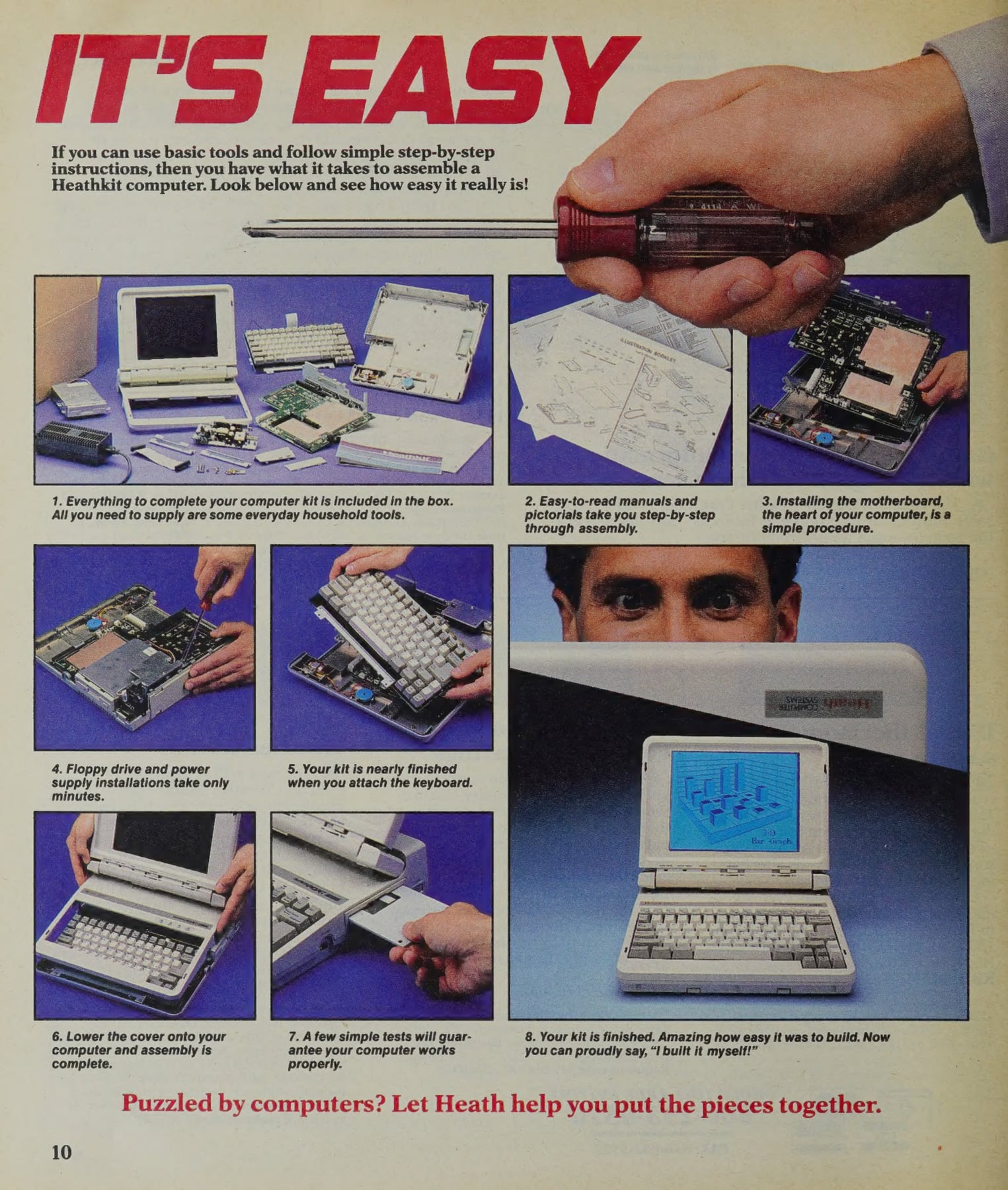
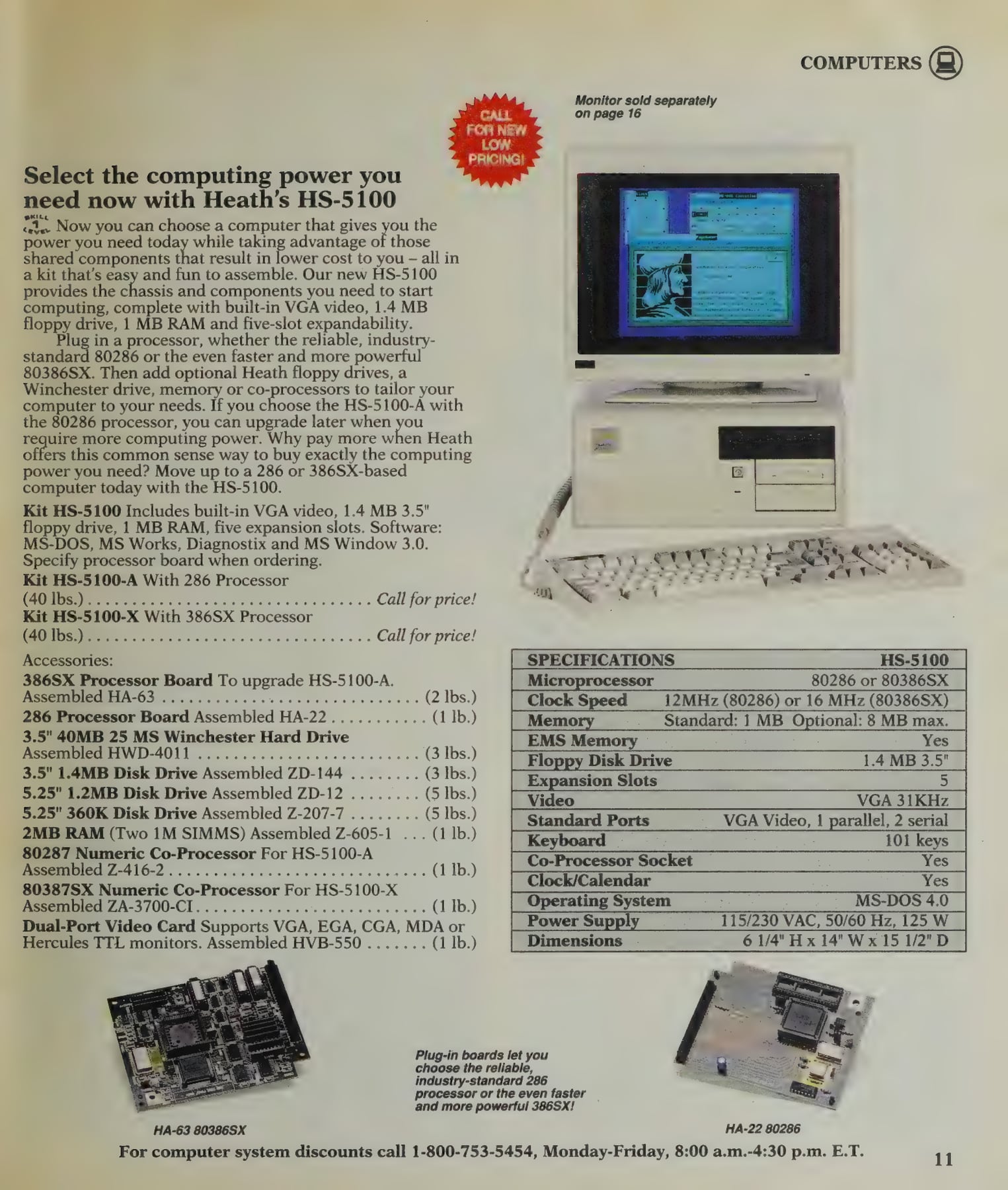
The kit computers also refute a claim that circulates online, that Heath released no new kits after 1986. The Christmas 1987 and Winter 1991 catalogues introduce several new computer kits, and packet-radio and weather-station kits continued into 1990–91. The narrower statement is true: very few new kits of Heath’s own design appeared after the mid-1980s.
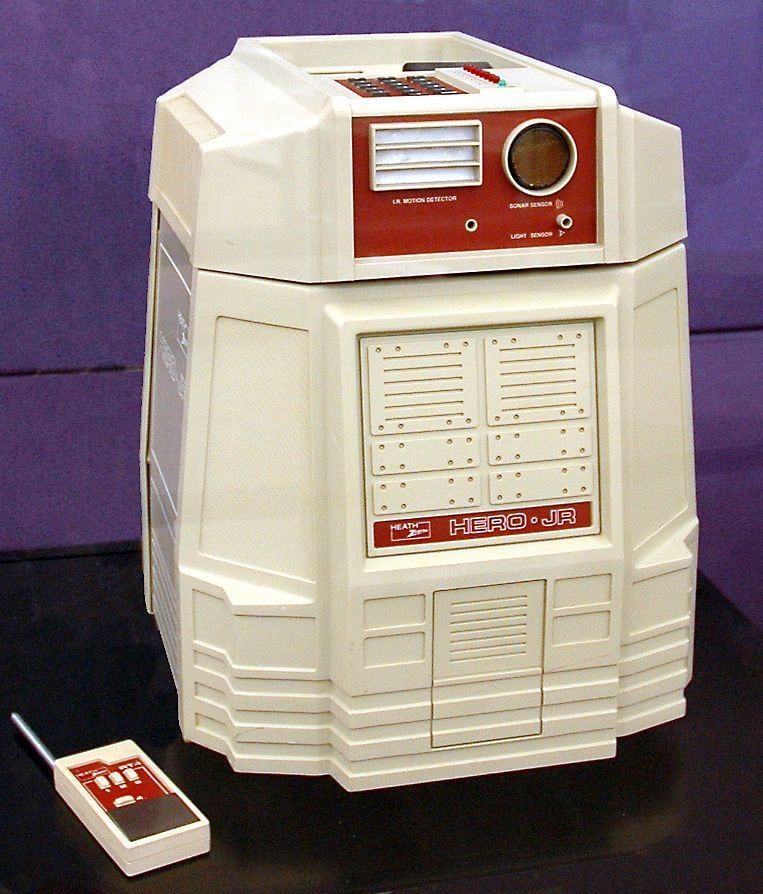
6.6 Groupe Bull, 1989
6.6.1 Why Zenith sold
By the late 1980s Zenith Electronics had one profitable business and one failing one. ZDS earned an estimated $70 million in operating income on about $1 billion in sales in 1987, while Zenith as a whole lost money on television (Wikipedia, “Zenith Data Systems”). Zenith lost money in every year from 1985 to 1988 (FundingUniverse, Zenith). ZDS also faltered in 1989. It lost a $700 million military desktop bid to Unisys, dealers revolted against a policy that forced them to stock desktops alongside laptops, and research spending was cut ahead of a sale. Zenith put the computer business up for sale and kept televisions.
6.6.2 The deal
Compagnie des Machines Bull, known as Groupe Bull, was France’s national computer company. It was about 75 percent owned by the French state, with France Telecom, NEC and IBM as minority shareholders (Encyclopedia.com, ZDS). Bull announced the purchase in the autumn of 1989 and completed it in December 1989. The price is variously given as $511 million, $511.4 million, “approximately $500 million” and a range of $511–635 million. The last range probably reflects adjustments between announcement and closing (FundingUniverse; Encyclopedia.com; EEJournal; Wikipedia, ZDS). Zenith used the $511.4 million to pay off short-term debt and some long-term obligations (FundingUniverse).
6.6.3 What exactly Bull bought
The deal is usually summarised as “Bull bought ZDS”. The fuller answer matters for Heath. Brueschke and Mack list the Heath entities included: “the Heath Zenith lighting and security business, Heathkit Educational Systems, Veritechnology (which operated Heath’s retail stores), and Prokit, based in Hong Kong” (Brueschke & Mack, p. 153). The Heathkit Legacy page states that “Zenith sold Heath, Zenith Data Systems and Veritechnology with its 56 Heath/Zenith Business Centers, to Groupe Bull” (Heathkit Legacy). Gilmore, who was a Heath vice-president at the time, describes Heath’s sales then as about $75 million inside a ZDS approaching $1.5 billion (EEJournal).
Zenith Electronics kept the television business and the Zenith trademark. Heath’s consumer lighting and security products continued to be sold as “Heath/Zenith”. A 1998 SEC filing by a later owner records that “Heath Company uses the name Zenith(R) in its Heath/Zenith business pursuant to a perpetual, royalty-free license from Zenith Electronics Corporation” (DESA International, Form S-4/A, 1998).
One discrepancy is unresolved. The Heathkit Virtual Museum’s history, by Randy Kaeding, says that after the kit line ended “ZEC sold these groups, the K-mart building, and the Heath Company name to HIG out of Miami”, which implies that Zenith Electronics, not Bull, was the seller (Heathkit Virtual Museum, “A Heathkit Story”). Brueschke and Mack, and the Wikipedia articles that follow them, have Bull selling Heath to H.I.G. in 1995. H.I.G.’s own portfolio page says only that it “invested 1994” (H.I.G. Capital). The weight of the sources favours Bull as the owner from December 1989 to the mid-1990s. The seller to H.I.G. and the exact date are covered in Volume 7.
6.6.4 After the sale
Bull moved ZDS’s headquarters from Michigan to a new office tower in Buffalo Grove, Illinois, and kept the St. Joseph plant as an engineering and desktop-manufacturing site. ZDS employment peaked in 1990 at about 3,800, with 1,800 in St. Joseph, and US shipments fell by nearly half that year (Wikipedia, ZDS). Heath, now a small subsidiary of a French computer group, left the St. Joseph plant in early 1991 for a converted former K-mart building in Benton Harbor (Heathkit Virtual Museum; Heathkit Legacy).

6.7 The end of the kits, 1991 to 1992
6.7.1 The last catalogues
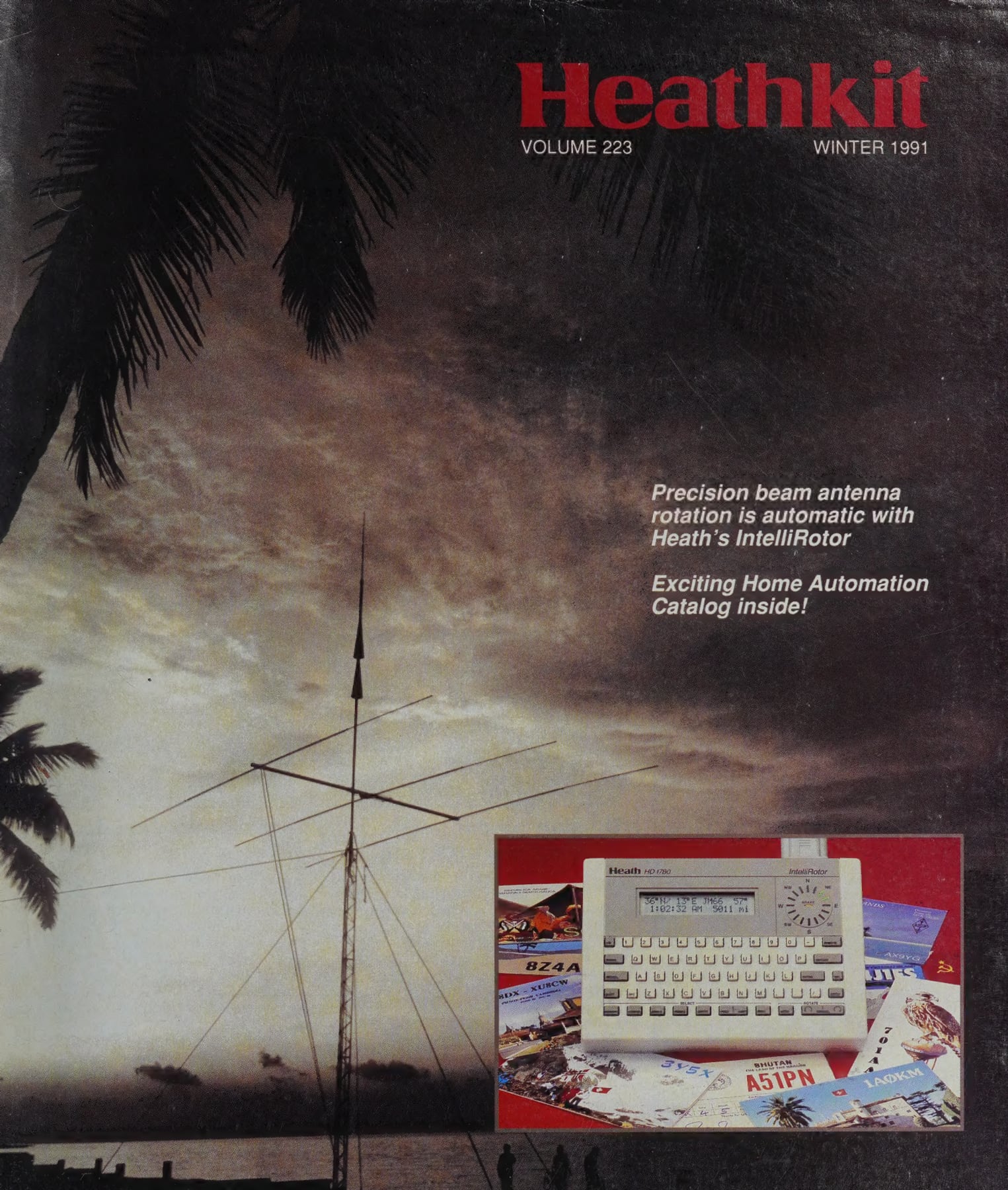
The Winter 1991 catalogue (Volume 223) is the last general Heathkit catalogue in the World Radio History archive. Collectors’ indexes list three 1991 catalogues, one of them a 72-page issue not in that archive (Nostalgic Kits Central catalogue matrix). The Winter 1991 range still covered a lot of ground: home automation and security, weather instruments (the ID-5001 Advanced Weather Computer), clocks (the GC-1000 “Most Accurate Clock”), test equipment, the educational trainers, computers and amateur radio accessories. But many items were small “SK” starter kits at $8.95–$24.95 (a sound-activated switch, a metronome, a mini burglar alarm), and more than half of the priced items were assembled (Winter 1991).
6.7.2 March 1992
The stores went first. Nick Holland recalls an unexpected meeting of all store managers in Chicago in March 1992, at which staff learned that every Heath/Zenith Computers store would close. Most employees were let go, and a small team stayed for several weeks to dispose of the assets. His own last day with the clean-up crew was 20 April 1992 (Holland, “The closing of Heathkit”). The Encyclopedia.com company history likewise dates the closing of the “Heath/Zenith Computer chain of retail outlets” to March 1992 (Encyclopedia.com, ZDS). The Heathkit Virtual Museum says the end of the kit line “in turn killed off Veritechnology” (Heathkit Virtual Museum).
The kit decision was announced the same month. “We announced that decision in March 1992,” Gilmore recalled (EEJournal). On Monday, 30 March 1992, The New York Times ran Lawrence M. Fisher’s story “Plug Is Pulled on Heathkits, Ending a Do-It-Yourself Era” on the front page of its business section (pp. C1, C10). The story is cited by the University of Houston’s Engines of Our Ingenuity (episode 679) and by Brueschke and Mack. According to those retellings, Heath was selling out its last kits to concentrate on home products and educational materials. Kit sales had fallen almost to nothing as factory-built electronics became cheaper. And the paper quoted Barry Goldwater, then 83, who had built about a hundred Heathkits and lamented the change. Frank Beacham, writing in Radio World that year, recorded that Heath’s president, William E. Johnson, was too busy to take press calls. He listed what remained in the last catalogue: a DC power supply, a mini burglar alarm, an infrared motion sensor and an electronic “fish caller” (Beacham, “So Long Heathkit”). The Times article itself could not be read for this volume, and these details come from the retellings.
Heath had been, in the Times’ reported framing, the last sizable survivor of a dozen American kit makers of the 1960s, outlasting Knight-Kit, Dynaco, Allied and Eico (Wikipedia, “Heathkit”, citing Fisher, 1992).
6.7.3 What was left
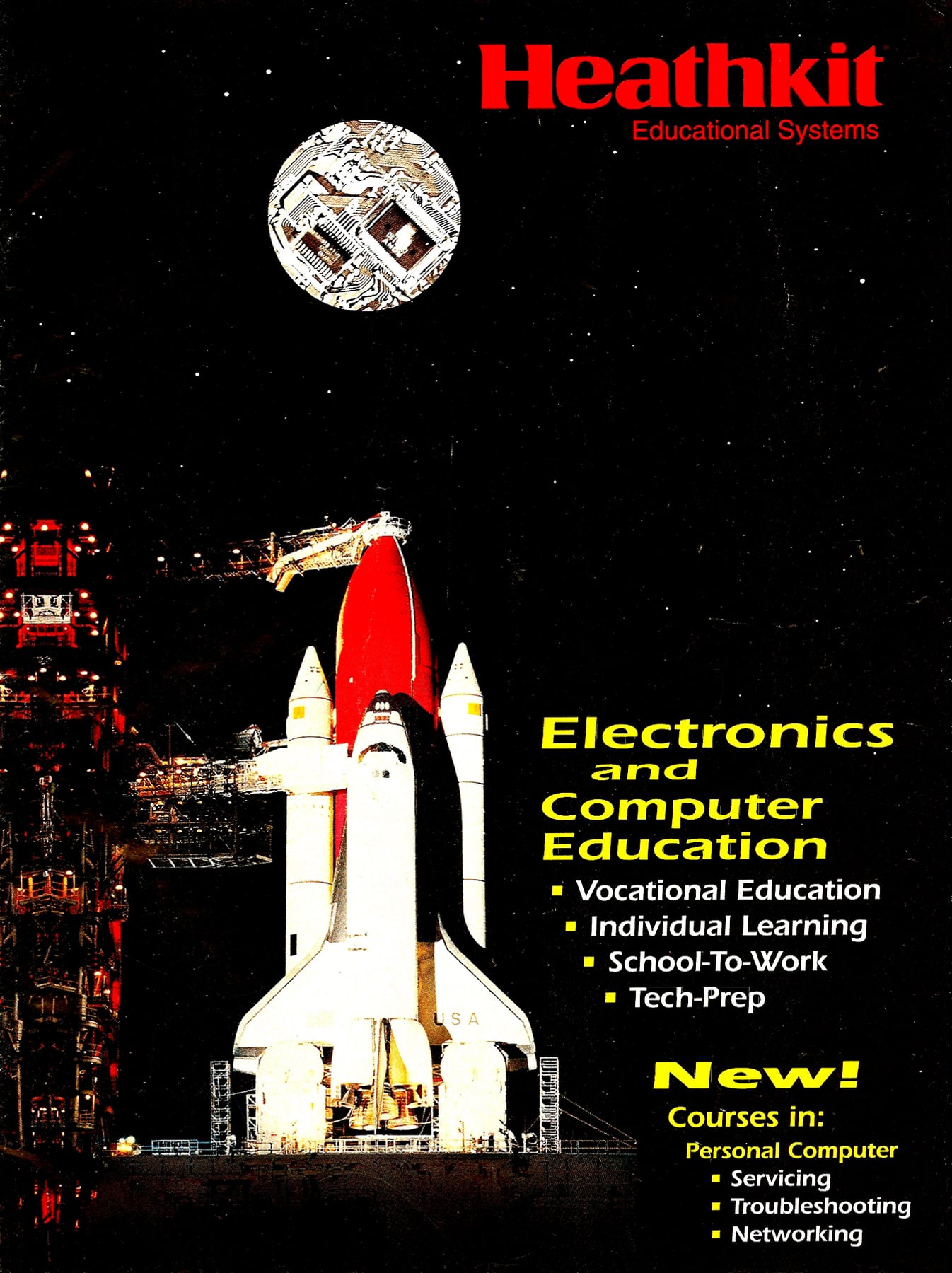
The Heath Company did not close in 1992. It stopped designing and selling hobby kits. What remained were Heathkit Educational Systems, which sold trainers, courses and classroom equipment to technical schools, and the Heath/Zenith lighting and security business. The lighting business sold motion-sensor floodlights and wireless doorbells made in Asia through home-improvement retailers. Gilmore, who had returned to Heath in 1983–84 as vice-president of engineering and marketing, told Leibson that the lighting and wireless-doorbell division grew to about $75 million, and that the educational business stayed reasonably profitable (EEJournal, “The Rise and Fall of Heathkit, Part 4”). The later owners of those businesses, and the revivals of the Heathkit name, are the subject of Volume 7.
6.8 Two readings: neglect or economics
Two explanations for the end of the kits have been argued ever since 1992. Both can be stated from the evidence above.
6.8.1 The neglect reading
On this reading, Heath died because its owners valued only one of its products. Zenith bought Heath for its computers and then moved the valuable part, assembled computers, into ZDS. From 1980 Zenith cut the kit side by about 15 percent a year, according to Brueschke and Mack. It filled the catalogue with Zenith televisions, video recorders and furniture from idle Zenith plants. It turned the stores into computer outlets. It then sold the whole thing to a French computer company that had no reason to want electronic kits at all. The catalogue counts support the timing. The kit range held at about 250 models through 1980 and fell by a third within two years of the Zenith purchase. It halved again in the two years around the Bull sale. In the Brueschke and Mack list of causes, the last three are: “the repeated sale of the company brought new owners with little interest in the Heathkit operation other than computers”; the customer base aged; and customer loyalty weakened (Brueschke & Mack, p. 153).
6.8.2 The economics reading
On the other reading, no owner could have saved the kit, because the economics that created it had disappeared. Gilmore told Leibson that labour had been about 50 percent of manufacturing cost in the late 1960s and only 4 to 5 percent by the late 1970s. A kit’s main saving, the customer’s unpaid assembly labour, had therefore almost vanished (EEJournal, Part 4). Surface-mount components and large-scale integrated circuits made hand assembly harder and machine assembly cheaper. Japanese and other Asian manufacturers sold finished transceivers, stereos and computers for less than Heath could sell the parts. Frenzel, a former Heath product manager, adds a cost unique to kits: writing and illustrating the assembly manual cost about as much as engineering the product itself. That roughly doubled development costs and slowed Heath’s response to new technology (Frenzel, Electronic Design, 2009). The market had also changed. Many of the technically minded customers who once built Heathkits were now writing software instead. Complex products also needed alignment and test equipment that the ordinary buyer did not own. Heath’s own “prime directive” had assumed that the customer had neither.
The economics reading also has its dates. BYTE recorded Heath’s sales declining at 3–5 percent a year before Zenith bought it (BYTE, November 1979). Brueschke and Mack’s example of a kit too complex to build reliably, the SB-104 transceiver of 1974–77, dates from the Schlumberger years (Brueschke & Mack, p. 150). By 1984 BYTE found a Heath computer kit costing more than the assembled equivalent. Rival kit makers such as Knight-Kit, Dynaco and Eico, which had no Zenith to blame, did not outlast Heath.
6.8.3 Weighing them
The two readings describe the same events from different ends. The economic pressure was real and started before 1979, and it would have shrunk the catalogue under any owner. Ownership decided how fast the shrinking happened and what was left. Zenith took the growth business and moved it out of Heath, and each change of owner was followed by a sharp fall in the kit count. Gilmore’s own summary, speaking as the executive who later ran Heath’s remaining businesses, gives weight to both: “The kits were just no longer profitable within a large corporate structure, and the interest in building kits had decayed rather substantially” (EEJournal).
6.9 Claims checked
Table 4 — Claims checked
| Claim (as commonly repeated) | Verdict | Evidence |
|---|---|---|
| Zenith bought Heath in October 1979 | Confirmed | Sextant no. 1; BYTE November 1979 |
| Price $64.5 million | Confirmed | BYTE November 1979; Gilmore; Brueschke & Mack. Wikipedia’s “$63 million” misreads the BYTE page it cites |
| FTC forced Schlumberger to sell Heath | Not supported | The FTC’s 1980 consent order after the Fairchild purchase concerned Unitrode stock, not Heath |
| ZDS reached $1.4 billion by 1988 | Confirmed from secondary sources | Encyclopedia.com / FundingUniverse; Gilmore says “very close to $1.5 billion” by 1989 |
| Stores renamed “Vera Technology” | Name wrong | Veritechnology Electronics Corporation (VEC), from the 1980 catalogues; president Joseph M. Schulte |
| 60+ stores | Broadly consistent | 49 in 1977; about 53–63 listed in US directories 1979–83; “more than 70” including overseas in 1982 (Sextant); 56 in 1989 |
| No new kits after 1986 | Refuted as stated | New computer kits in 1987 (HS-148-H, HS-158-H, HS-248-SX, HS-386-A) and 1990–91 (HS-5100, HS-3629-B). Few new Heath-designed non-computer kits after about 1985 |
| Groupe Bull bought ZDS and Heath in 1989 | Confirmed, with a discrepancy noted | Brueschke & Mack and the Heathkit Legacy include Heath, VEC, Heathkit Educational Systems, the lighting business and Prokit; the Heathkit Virtual Museum names Zenith as the later seller to H.I.G. |
| Kits ended March 1992 | Confirmed | Gilmore; NYT 30 March 1992 (as cited); stores closed March 1992 (Holland) |
| SS-9000 was a factory-built rig of 1992, 375 made | Refuted | Introduced Christmas 1982, assembled only, $2,795; cleared at $999.95 in 1985; about 2,000 made (Brueschke & Mack) |
Sources
- Heathkit catalogues, scanned by World Radio History: Christmas 1976 (No. 813); Fall 1977 (No. 817); Fall 1979; No. 848, early 1980; Computer catalogue No. 801MO; Christmas 1982; Fall 1983 (No. 862); Fall 1984; Fall 1985; Fall 1986; Christmas 1987; Spring 1988 (No. 211); Summer 1990 (No. 221); Winter 1991 (No. 223); Educational Systems No. 279, 1993.
- “Heath Acquired by Zenith”, BYTE News, BYTE vol. 4 no. 11, November 1979.
- John Walker and David Johnstone, “Heath/Zenith Computers: An Interview and Overview”, Sextant no. 1, Spring 1982.
- Frederick Zimmerman, “HUGCon 1”, Sextant no. 4, Winter 1983.
- Federal Trade Commission, Annual Report 1980 (Schlumberger Ltd. consent agreement).
- DESA International, Form S-4/A, 1998 (Heath/Zenith licence).
- H.I.G. Capital, “Heath Company” portfolio page.
- Erich E. Brueschke and Michael Mack, “The History of the Heath Companies and Heathkits: 1909 to 2019”, AWA Review vol. 32 (2019), pp. 125–164, Internet Archive copy.
- Steven Leibson, “‘H’ is for Heathkits and Hams: Part 4 — The 1980s, 1990s, and the end”, EEJournal, 12 February 2025 (interview with Chas Gilmore).
- Steven Leibson, “The Rise and Fall of Heathkit, Part 4: The Demise of Heathkit”, EEJournal, 25 November 2024.
- Lou Frenzel, “Whatever Happened To Heathkit?”, Electronic Design, 18 February 2009.
- Nick Holland, “The closing of Heathkit”, 2021.
- Frank Beacham, “So Long Heathkit”, Radio World, 1992 (web reprint).
- John H. Lienhard, “Heathkit”, The Engines of Our Ingenuity, episode 679 (cites Fisher, New York Times, 30 March 1992, pp. C1, C10).
- Randy Kaeding, “A Heathkit Story (Past & Present)”, Heathkit Virtual Museum.
- “The Heathkit Legacy”, Ohio University.
- FundingUniverse, “History of Zenith Electronics Corporation” and “History of Zenith Data Systems, Inc.”; Encyclopedia.com, “Zenith Data Systems, Inc.”.
- RigPix, “Heath SB-1400”; WD8RIF, “Heathkit HW-9”; Nostalgic Kits Central, catalogue matrix.
- Wikipedia, for leads and citations to sources that could not be read directly: “Heathkit”; “Zenith Data Systems”.
- Photographs from Wikimedia Commons, credited in each figure caption.
Comments (0)