Heathkit · Volume 7
After the Kits
In March 1992 the Heath Company stopped selling electronic kits. The company itself did not stop. For the next three decades the Heath name, the Heathkit trademark, the educational business and the old manuals passed through a private-equity firm, a heater manufacturer, a former president who bought the remnant back, a bank, a Silicon Valley restart and finally a small North Dakota technology company. The lighting products went one way, the schools business another, the paper archive a third, and the great plant on Hilltop Road a fourth. Following each piece separately is the only way to answer the question most often asked about the brand: who owns Heathkit now?
The short answer, verified from the companies’ own announcements, is that since August 2023 the Heath Company has been a subsidiary of Kirkwall, a Fargo, North Dakota technology firm, with William (Will) Cromarty as chief executive of both. The long answer follows.

7.1 The company that was left in 1992
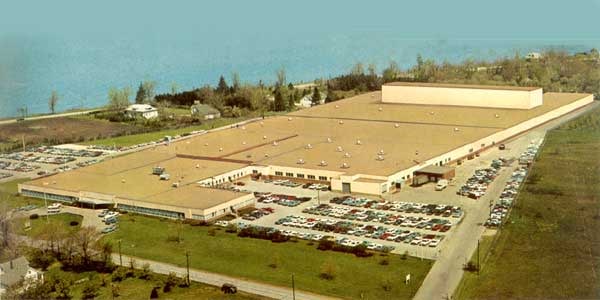
By the time the kits ended, “Heath” no longer meant a single business. An account written by Randy Kaeding (K8TMK), a long-serving employee who described himself as “one of the Hams (still) at Heathkit”, sets out the structure from the inside. The Heath Company building in St. Joseph housed several sub-companies: the Heathkit Company (the kit line), Heathkit Educational Systems (which had begun as Heath Scientific Instruments), and Veritechnology (the retail store operation). Zenith Data Systems shared the building and several support groups but, in Kaeding’s words, “did not at any time own Heathkit or any of the other product groups.” A lighting and security group, selling under the Heath/Zenith and Reflex names, was added later (Kaeding, Heathkit Virtual Museum).
The sharing was lopsided. Computers carried the profits, so computer work took priority over everything else in the shared support departments. Heath’s answer was to move out. A former Kmart building in Benton Harbor was renovated, and early in 1991 everything except Zenith Data Systems moved into it (Kaeding). The Herald-Palladium later gave the address as 455 Riverview Drive and recorded that the company had 350 employees when it moved in (Herald-Palladium, 7 September 2008).
When the kit line was discontinued (Kaeding dates the decision to late 1991; the public end came in March 1992), Veritechnology died with it. What remained in the Riverview Drive building were two businesses: Heathkit Educational Systems (HES), selling training courses and trainers to schools, and the lighting and security group (Brueschke and Mack, AWA Review, 2019, p. 153; Kaeding).
Chas Gilmore, who had returned to Heath in 1984 as vice-president of engineering and marketing and later became general manager, left in 1993 “after we closed the kit business.” His summary of what survived matches Kaeding’s: “kits were phased out, leaving Reflex lighting and Heathkit Educational Systems” (Electronic Design, 30 November 2020).
7.1.1 Where Bull fits
Groupe Bull of France bought Zenith Data Systems in late 1989, and the Heath businesses went with it. Brueschke and Mack list the Heath entities included in that purchase as the Heath Zenith lighting and security business, Heathkit Educational Systems, Veritechnology, and Prokit, a small Hong Kong company formed around 1988 to handle sourcing and packing (Brueschke and Mack, pp. 152–153). The Bull period itself, and the end of the kits, belong to the previous volume. For this volume the important point is that Bull did not keep Heath long.
7.2 H.I.G. and the split, 1995–1998
The next owner was H.I.G. Capital, a Miami private-equity firm. H.I.G.’s own portfolio page lists Heath Company, Benton Harbor, as a realised investment made in 1994, and describes the two businesses it held: the Reflex Brand Group, “the leading manufacturer of motion-sensory floodlights, decorative lighting, halogen lights, and wireless home-control devices sold through national do-it-yourself retailers such as Home Depot”, and Heathkit Educational Systems Group, “the largest supplier of electronics courseware and training materials to vocational technical schools” (H.I.G. Capital). An audited note filed with the SEC three years later gives the acquisition date precisely as 25 January 1995 (DESA International Form S-4/A, 1998). The likeliest reading is a deal agreed in 1994 that closed in January 1995.
Kaeding’s account says Zenith sold directly to H.I.G. That sequence is contradicted by Brueschke and Mack and by the SEC chronology, and is not followed here. His other details (the building, the split between lighting and education) agree with the filings.
Employment kept falling. Don Desrochers, who became president and CEO in 1995, told the Herald-Palladium that the 350 people of 1991 had dropped to 125 by 1995 (Herald-Palladium, 2008).
7.2.1 The lighting business goes to DESA
On 4 February 1998 DESA Holdings Corporation of Bowling Green, Kentucky, a maker of specialty tools and heaters, bought all the stock of Heath Holding Corp. for $42,365,000 ($40,365,000 in cash and a $2 million junior subordinated note). The filing is explicit that the purchase covered “Heath Company (excluding Heathkit Division)”: the motion-sensor lighting and wireless doorbell business, plus Heath Limited, a 99.5 percent-owned Hong Kong company that supervised subcontracted manufacturing and sold only to Heath/Zenith. The Zenith name was used under “a perpetual, royalty-free license from Zenith Electronics Corporation” (DESA S-4/A).
The same filing puts numbers on the lighting business that Heath had built in its last Zenith years. Heath/Zenith dated its own “inception” to 1987. Its net sales, excluding the Heathkit Division, were $44.4 million in 1996 and $58.3 million in 1997, with operating income of $5.2 million in the latter year. On a pro-forma basis it would provide about a third of DESA’s combined sales (DESA S-4/A). By the late 1990s, in other words, the motion-sensor floodlight was a far larger business than anything with a Heathkit label.
Desrochers recalled that another 70 jobs went with the Heath-Zenith sale (Herald-Palladium, 2008). In a later interview he put the sale in 1999 and said the buyer moved it out of state (Herald-Palladium, 19 July 2012). The SEC filing’s date is used here.
7.2.2 Heath Zenith today
The lighting line has outlived everything else from Benton Harbor. HeathCo LLC, at 2445 Nashville Road, Bowling Green, Kentucky, still makes and markets Heath Zenith motion lights, doorbells and push buttons through “over 10,000 retail outlets”. Its history page acknowledges the ancestry: HeathCo originated “from the Heath Company, best known for designing and marketing electronic kits”, and “in the 1980’s, as part of the Zenith Electronics Corporation, Heath began marketing products under the brand name of HeathZenith” (HeathCo, About). Gilmore noted in 2020 that the Reflex Heath/Zenith line “had multiple owners” and was then part of Ferguson (Electronic Design). DESA itself filed for bankruptcy in December 2008 (Brueschke and Mack, p. 154). HeathCo has no connection to the present Heathkit company.
7.3 Heathkit Educational Systems, 1998–2012
With the lighting business gone, “Heathkit” meant only the educational company. Kaeding described the new owners as “only interested in the educational product”. They sold the Heath name and the lighting group to DESA and the Riverview Drive building to Advantage Schools, which opened the Benton Harbor Charter School in it. HES rented back about half the building (Kaeding). Kaeding also wrote that HES “is quite profitable”, that it “still owns all of the trademarks, manual copyrights, etc.”, and that at least six employees from the kit company still worked there.
Brueschke and Mack describe the 1998–2005 owner only as “another investment group” and admit that “for years there was a paucity of information” about who held the remnants (Brueschke and Mack, p. 154). The name of that group could not be confirmed from any primary source.
What is documented is that Don Desrochers, president and CEO from 1995 to 2000, moved to Texas in 2000 and then bought Heathkit when it was offered for sale in 2005, while continuing to live in Dallas (Herald-Palladium, 2012).
7.3.1 What HES sold
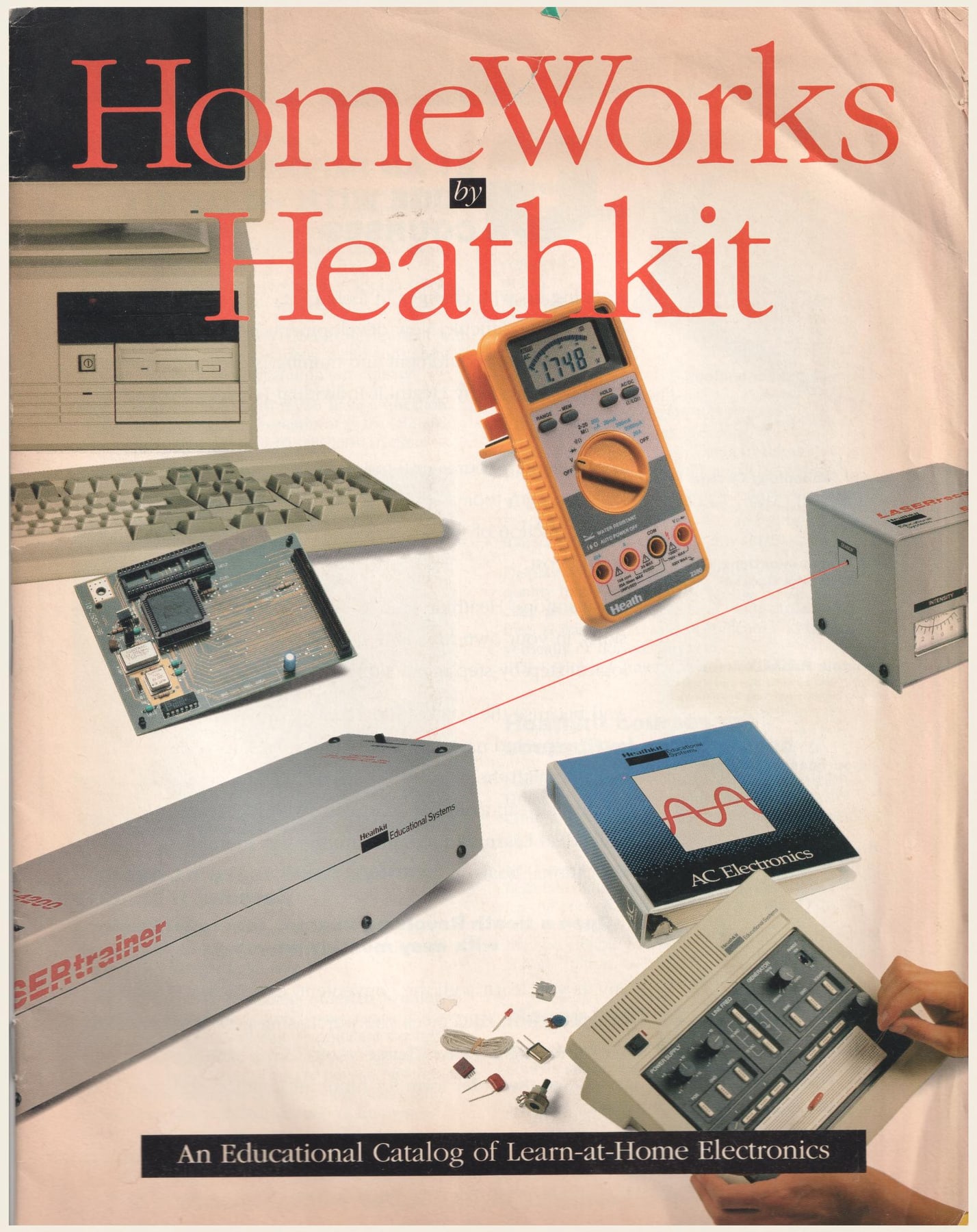
HES was the direct descendant of the manuals. The 2008 Herald-Palladium article explains that the company “began selling educational systems in 1974 as an outgrowth of the instructions that accompanied its electronic kits” and by then concentrated on “hardware and manuals for career and vocational training” (Herald-Palladium, 2008). The company’s website in January 2012 shows the range: PC technology and A+ certification preparation, networking and fibre optics, RFID, residential automation, robotics (including the HE-RObot mobile robot), biomedical instrumentation, wind and renewable energy, and the core electronics series (DC, AC, semiconductors, digital techniques, microprocessors) sold as “Individual Learning” courses with trainers. It advertised “The Heathkit Approach to Learning” and claimed to have been “preparing people for success in technology careers for over 75 years” (heathkit.com, archived 5 January 2012).
7.3.2 The 2008 move and the sale of the archive
In September 2008 HES left Benton Harbor for the first time in more than 80 years. The charter school needed the space, so the offices and warehouse moved to 2024 Hawthorne Avenue, St. Joseph Township: 25,000 square feet inside a 330,000-square-foot building owned by Southshore Companies that had been built in the 1980s for Zenith Data Systems. President and CEO Lori Marciniak moved 24 employees into it (Herald-Palladium, 2008).
The same year HES sold “a large portion of its collection of kit schematics and manuals” to Don Peterson of Data Professionals, a Pleasanton, California firm that had been selling Heathkit parts and manuals since 1988 (Brueschke and Mack, p. 154; Data Professionals). The immediate, visible effect was online: in December 2008 the Boat Anchor Manual Archive removed the Heathkit manuals it had offered free for years (KB6NU, 21 December 2008). The manual question is followed through to the present in the last section of this volume.
7.3.3 A last try at kits, and the end
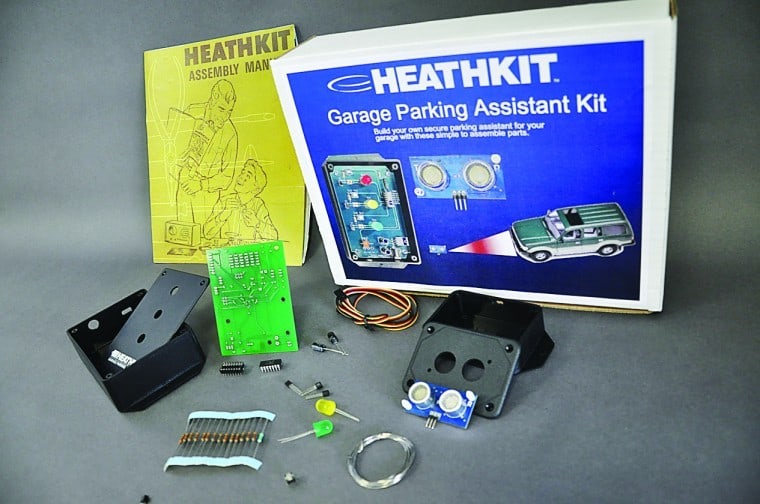
In August 2011 HES announced that it was returning to the kit business, and in September that it would make amateur radio kits (ARRL, 9 May 2012). The first new products were modest: the GPA-100 Garage Parking Assistant and a wireless swimming-pool monitor, introduced “to capitalize on the growing nostalgia interest in Heathkits” (Rich Post, Monitoring Times, July 2013). The January 2012 website still carried a “Kits” menu with the parking assistant, amateur radio, audio and educational kits, and a “Steve Jobs, We Miss You!” tribute quoting his 1995 recollection that Heathkits “gave one the sense that one could build the things that one saw around oneself in the universe” (heathkit.com, archived January 2012).
The collapse was quick. The ARRL pieced together the sequence from staff and a sales representative: most employees were laid off in December 2011; the CEO’s employment ended in March 2012 and operations were suspended; the marketing and sales director, Ernie Wake, left in April (ARRL, 9 May 2012). The landlord’s treasurer said Heathkit abandoned its lease around March and that Southshore was told in May that Desrochers had declared bankruptcy (Herald-Palladium, 19 July 2012).
Desrochers gave the Herald-Palladium the reason in two sentences. The first was about schools: “Heathkit (Educational Systems) was primarily dependent upon federal and state funding for schools. Spending in education continued to drop down, and it was economically unfeasible to continue operating.” The second was about the kits: “When we got back into the kit business, we were losing the education business faster than we were growing the kit business. It was not sustainable.” At the end the workforce was half a dozen, down from 15–20 in 2011. A bank owned what was left and was selling it in online auctions (Herald-Palladium, 2012). The auction of “bank-seized assets” ran in August 2012 (Post, 2013). The ARRL’s headline was “Heathkit Declares Bankruptcy, Closes for Good (Again)” (ARRL, 24 July 2012).
The paper’s closing interview was with John Oliphant of Benton Harbor, who had started at Heath/Zenith in 1984 and stayed almost 28 years as a project manager and technical writer. Laid off in December 2011, he now repaired computers for a living: “I’m actually doing what I used to write training courses about.” In one line it is the whole Heathkit idea, still working after the company had stopped.
7.4 The restart, 2013–2023
7.4.1 “Greatly exaggerated”
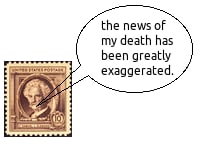
Within a year the name was back. In May 2013 heathkit.com was replaced by a single page with a cartoon of a Mark Twain postage stamp saying “the news of my death has been greatly exaggerated”, and a notice that “Heathkit® in all uses, the Heathkit name, the Heathkit logos and slogans, and ‘Heathkit® Educational Systems’ are internationally registered trademarks of Heath Company” (heathkit.com, archived 25 May 2013). A “Spring 2013 Heathkit® Survey” invited former customers to register interest (Wikipedia lead). On 20 December 2013 a member of the board answered nearly fifty questions in a Reddit “Ask Me Anything” session, and the website promised that “attentive readers should be able to begin assembling the puzzle pieces for what comes next” (heathkit.com, archived 31 December 2013).
Who bought the assets out of the 2012 bankruptcy was never announced in a press release, and the company has “not actively pursued publicity” (Heathkit FAQ). Brueschke and Mack, writing in 2019, could only say that “the final owner bought the Heathkit name, the Heathkit logos, slogans such as ‘we will not let you fail,’ all manuals, and designs including every last bit of Heathkit intellectual property,” and merged several pieces into one Heath Company around 2015 (Brueschke and Mack, p. 154). The company’s own FAQ describes itself as “privately held”, with a board and chief executive who are “avid kit-builders and DIYers” and a chief engineer “who designed and developed Heathkit kit products decades ago” (Heathkit FAQ).
The person who led the restart was Andrew Cromarty, whose professional profile describes him as president of Heath Company who “brought this century-old former $100 million manufacturing company out of bankruptcy and restored it to successful operations”, overseeing research and development, manufacturing, fulfilment, intellectual-property protection and sales (IEEE Consultants’ Network of Silicon Valley). His exact dates in the role are not given there.
7.4.2 Pieces reassembled
Two acquisitions pulled the scattered assets back together. In April 2015 Heath Company bought Data Professionals, the Pleasanton firm that had acquired much of the manual archive in 2008; Data Professionals announced that it would “focus on supporting vintage kits by providing parts, modification, and even ‘Certified Pre-Owned’ Heathkits for sale” (Data Professionals press release, April 2015). It still trades as “a Heath Company business” and runs the company’s vintage-manual shop.
In October 2015 the company’s president wrote to the “Heathkit Insiders” who had answered the survey. Heathkit had designed new kit products with manuals “featuring line art”, filed patents, and “relocated Heathkit, and set up a factory, and a warehouse, and offices, in Santa Cruz”, near Silicon Valley. The first product was the Explorer Jr AM radio kit at $150; the mailing address was a Santa Cruz post-office box (Santa Cruz Tech Beat, 8 October 2015). The December 2015 QST carried the first Heathkit advertisement in decades, under the line “We missed you too” (Brueschke and Mack, p. 155).
7.4.3 The new products
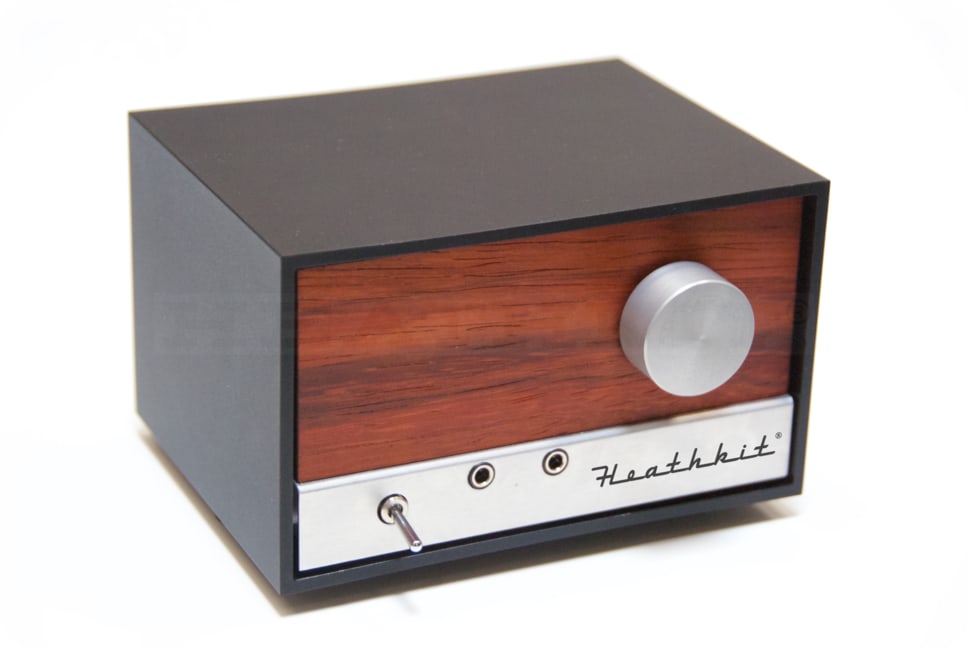
The Explorer came in two versions: the GR-150 “Explorer Jr”, assembled with nuts, bolts and lock washers and no soldering, and the GR-152, a soldered version. Both were single-stage tuned-radio-frequency (TRF) AM receivers. The reception among radio amateurs was poor. Brueschke and Mack collected the complaints: $150 seemed excessive; the main dial had no markings; a single TRF stage gave poor selectivity and sensitivity; the nuts-and-bolts construction broke leads; and the manual had errors. They added drily that “we don’t believe that the original Heath Company ever made a TRF radio.” When they bought a GR-152 in October 2018 for $168.95 delivered, it arrived from P.O. Box 15, Ottsville, Pennsylvania, with 17 envelopes of parts, a “First Production” tag, a 64-page manual they judged “the usual high-quality product”, and a letter signed by the president, “Andy”, dated May 2016 (Brueschke and Mack, pp. 155–157). The GR-152 is still listed in 2026, at $249.95 (shop.heathkit.com).
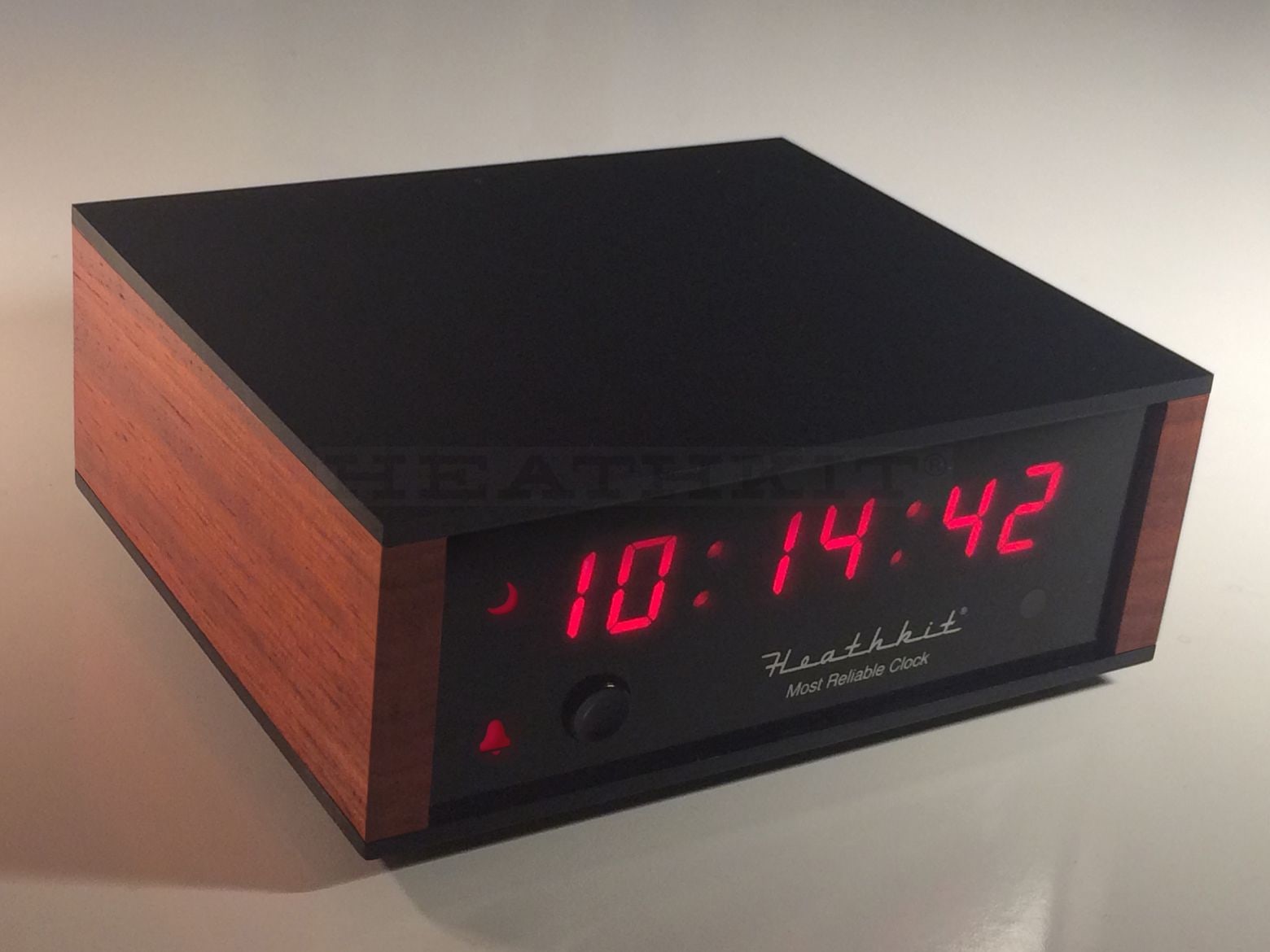
The second product did better. The GC-1006 “Most Reliable Clock”, announced in November 2016 at $100, was a line-frequency-referenced digital clock with 12- and 24-hour modes, auto-dimming, a four-week battery backup, a ten-minute timer for amateur station identification, and a claimed typical drift of half a second a day. Hackaday noted it was Heathkit’s first clock kit in about thirty years and that the new company had roughly six employees; commenters praised the manual and build quality but complained of slow customer support, a sharp contrast with the old “We won’t let you fail” (Hackaday, 21 November 2016). A later display-board update is sold for “early (pre-2017) models”, which places the first production run in 2016 (shop.heathkit.com).
Other products of the Santa Cruz period survive in the catalogue: the AN-P2L “Pipetenna” VHF/UHF stealth antenna, the ER-1001 “HeathRules” active ruler (a code-practice oscillator built as a surface-mount soldering lesson), the GDP-1200 surface-mount toolkit, the EX-1001 microcontroller experimenter kit branded “Heathkit Educational Systems®”, a book called Just Enough Electronics to Impress Your Friends and Colleagues!, and upgrade kits for classic Heathkits: a display for the AJ-1510 digital FM tuner, a dial for the HG-10 VFO, distortion fixes for the IG-18 audio generator, and wind-cup and bearing kits for the ID-1290 and ID-1590 weather stations (shop.heathkit.com).
The model numbers deserve a note. The restarted company reused the old prefix system faithfully: GR for a radio receiver, GC for a clock, GDP for a tool, IGA, AJA and GCA for accessories to IG, AJ and GC models, and part numbers in the old 266-, 455- and 100- series. Anyone who learned the catalogue in 1975 can read the 2026 one.
The company also patented its enclosure design. US Patent 10,219,398, “Electronics enclosure systems and methods”, filed 30 September 2016 and granted 26 February 2019, is assigned to Heathkit Co Inc and names Andrew S. Cromarty, Jacob H. Neugass and Jasen Levoy as inventors. It describes a sliding sled on low-friction skids that lets a builder open and close a kit case repeatedly (Google Patents; Heathkit legal notices).
By December 2018 the company described its engineering and light manufacturing as in California and its business operations (warehousing, fulfilment, administration) on the East Coast; Brueschke and Mack placed the latter in Ottsville, Pennsylvania (Heathkit, About; Brueschke and Mack, p. 155). The FAQ says the company later “moved east”, with operations “in several other locations throughout the U.S.” (Heathkit FAQ).
7.5 Kirkwall and Fargo, 2023 to the present
7.5.1 The acquisition
On 28 August 2023 Kirkwall, a young Fargo technology company, posted a short announcement that Heathkit reposted: announcing “its acquisition of Heath Company”. William Cromarty would serve as chief executive of both companies and oversee the move of manufacturing to North Dakota as part of a planned expansion (Kirkwall on LinkedIn, 28 August 2023). The date is fixed by the post’s identifier. The current Heathkit web shop was set up the same month; its oldest product records are dated 12 August 2023 (shop.heathkit.com).
Kirkwall had been founded in November 2022 by Will Cromarty and Ujjwal Adhikari to bring cybersecurity to autonomous systems. It later broadened into sensor monitoring for industrial sites, sold as “Kirkwall Overwatch”, with machine-learning anomaly detection and alerts within 30 seconds (Fargo INC!, 30 January 2025; Kirkwall). In May 2024 it had “up to three full-time employees” and was based at the NDSU incubator. Cromarty, a former CIA officer, was described as president and CEO of Heath Company as well as executive director of a museum incubator (Fargo INC!, 10 May 2024).
7.5.2 Moving Heathkit in a rental truck
Cromarty’s own account of the takeover, told to Fargo INC! in January 2025, is unusually candid. He “had spent a decade serving on the board of directors for Heath Company”, which places him on the board from around the time of the 2013 restart. In March 2024 he moved to take control, make Heath “a Kirkwall subsidiary, and bring the company’s electronics prototyping and R&D capabilities in-house”. He and his brother spent three days “packing up a UHaul truck to relocate the facility to Fargo”, consolidating it with Kirkwall’s office in the NDSU incubator, for what he put at “over a 90% reduction in overhead”. In October 2024 his aunt, who “had previously managed the Heathkit presence in Pennsylvania”, retired, and a second truck “packed … to the ceiling” came across the country from Pennsylvania, putting “all software development, electronics R&D, defense contracting, and logistics under one roof” (Fargo INC!, 30 January 2025).
The dates therefore split in two. The acquisition was announced in August 2023; the physical move to Fargo took place in March and October 2024. Retellings that give a single year are compressing the two. No source found describes the price or the legal form of the transaction.
7.5.3 What Heathkit sells under Kirkwall
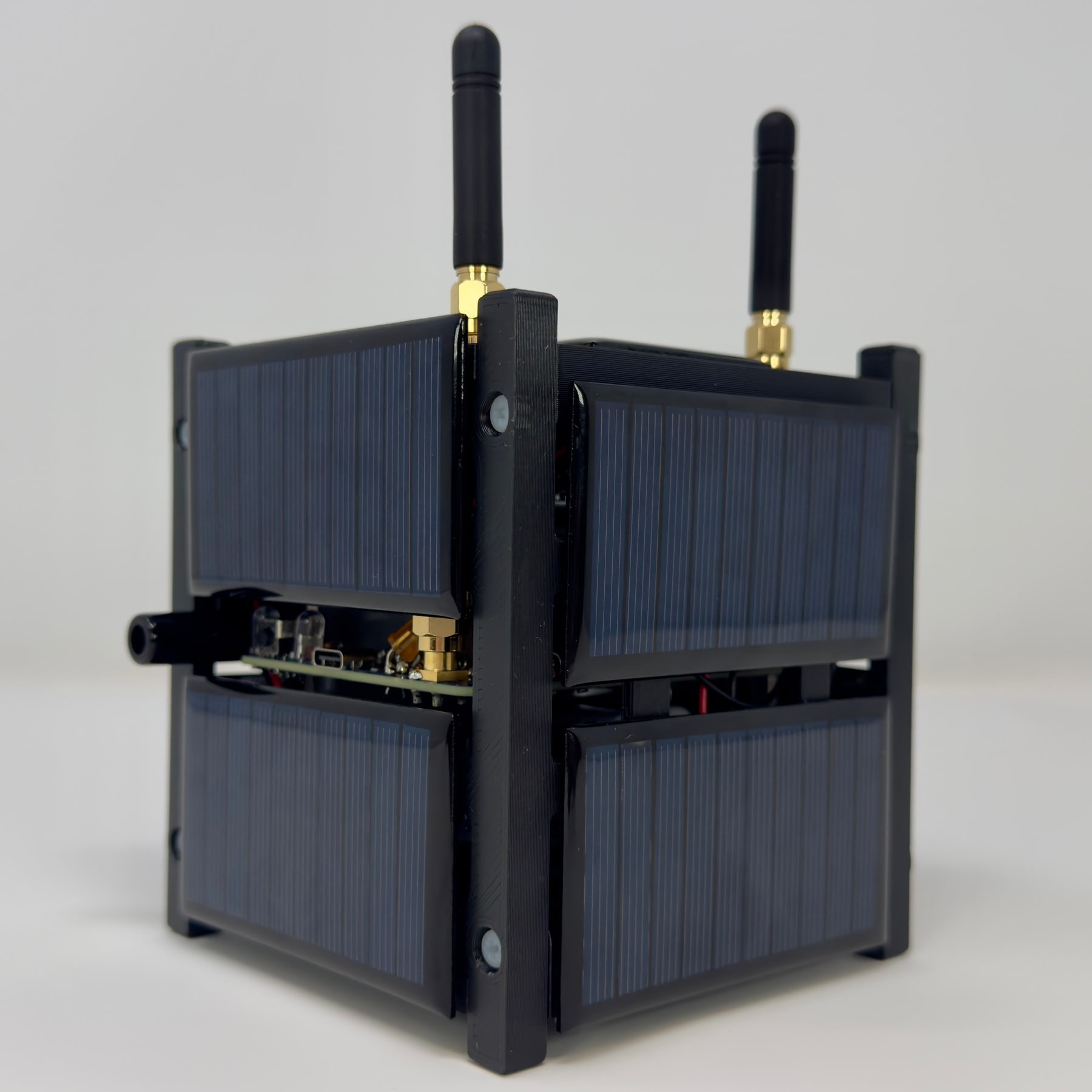
The first new product of the Fargo period marked what the company called “our return to the Amateur Radio sector”. The AMSAT CubeSatSim Kit, Heathkit Edition Educator Pack, $995, packages AMSAT’s satellite simulator (solar panels, rechargeable batteries, UHF telemetry transmitter and 3D-printed frame, designed by KU2Y, KI6ZUM and WD6DRI with AMSAT engineers) with four technical books, over 100 historical spaceflight documents, a NASA mission pin and a twelve-month Kirkwall monitoring subscription. The first ten orders, shipping the week of 1 May 2025, each included a fragment of foil from the Apollo 11 command module (shop.heathkit.com, AMSAT CubeSatSim). The listing was published on 18 March 2025.
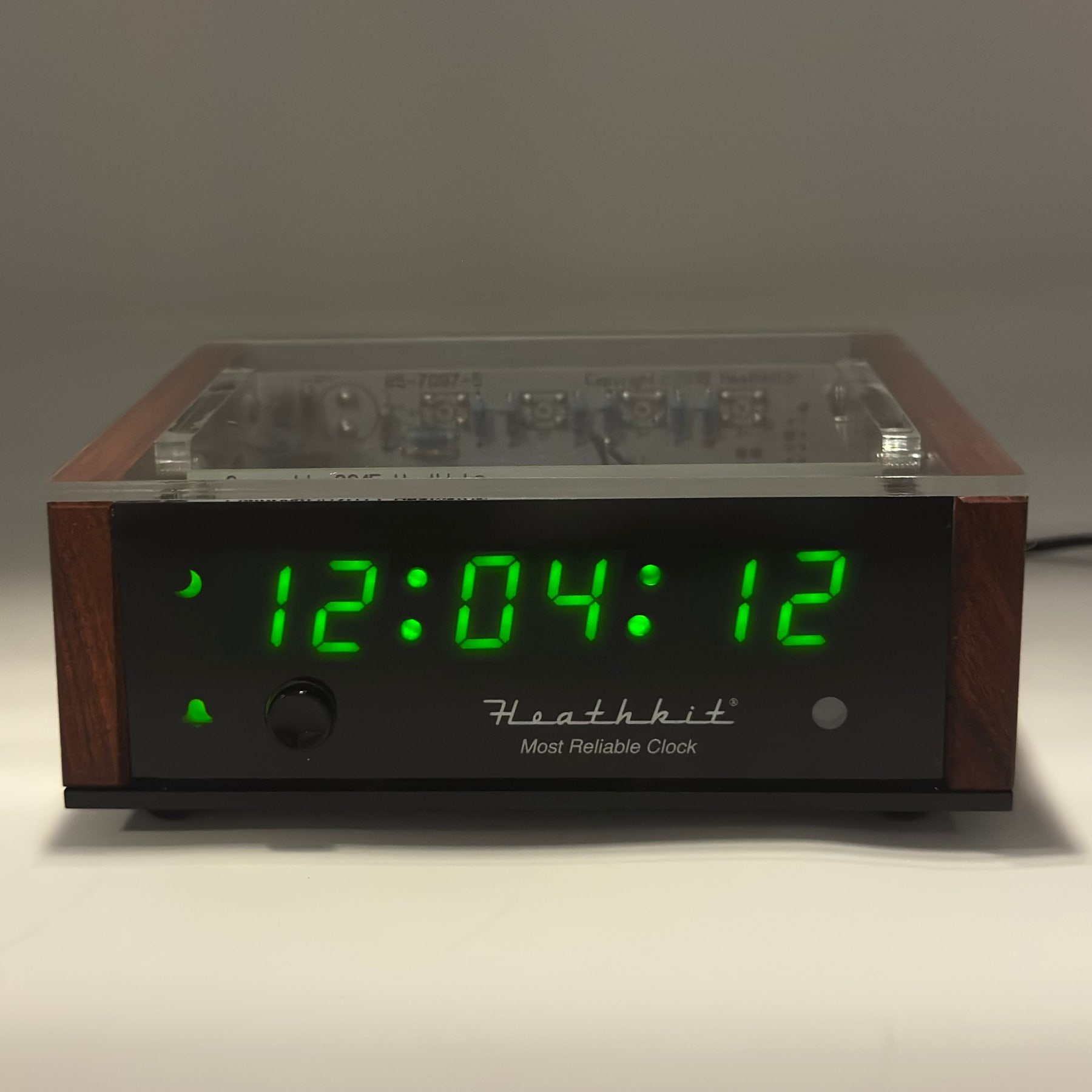
In July 2025 came a limited-edition GC-1006 with a clear top panel, $229.95, and a matching upgrade kit for existing clocks (shop.heathkit.com). The shop also resells Davis Instruments weather stations and accessories, a natural follow-on to the ID-series weather-station parts, and it offers factory repairs for recent models. The company’s “Gold Certified Pre-Owned” vintage Heathkits are sold through an eBay storefront (Heathkit, About).
7.5.4 Heathkit in 2026
As of September 2026 Heathkit’s LinkedIn page names Kirkwall as its parent, and its recent activity consists of reposts of Kirkwall news: an internship in Sioux Falls, a Department of Energy subcontract for power-grid sensor monitoring, and conference attendance (Heathkit on LinkedIn). Kirkwall’s own website, which lists offices in Sioux Falls, Fargo and Grand Forks, does not mention Heathkit at all (Kirkwall). The heathkit.com legal page asserts trademarks, copyrights and the 2019 patent, with a copyright line running from 2013 to 2025 (Heathkit legal notices).
Current owner (verified): Heath Company, trading as Heathkit, a subsidiary of Kirkwall of Fargo, North Dakota; chief executive William (Will) Cromarty. No evidence of any sale after August 2023 was found.
7.5.5 Ownership at a glance
Table 1 — Ownership at a glance
| Period | Owner of the Heathkit name and educational business | What else happened |
|---|---|---|
| 1979–1989 | Zenith Radio / Zenith Electronics | Zenith Data Systems created alongside |
| 1989–1995 | Groupe Bull (with ZDS) | Kits end 1991–92; move to Riverview Drive, Benton Harbor, early 1991 |
| Jan 1995–1998 | H.I.G. Capital (Heath Holding Corp.) | Don Desrochers president 1995–2000 |
| Feb 1998 | Heathkit Division held back when DESA buys Heath/Zenith lighting for $42.4 million | Lighting becomes HeathCo (Bowling Green, Ky.) |
| 1998–2005 | An investment group (not identified) | Building sold to Advantage Schools |
| 2005–2012 | Don Desrochers | 2008 move to St. Joseph Township; archive sold to Data Professionals; 2011 kit relaunch; 2012 bankruptcy |
| 2012–2013 | Creditor bank | Assets auctioned August 2012 |
| 2013–2023 | Privately held Heath Company (president Andrew Cromarty) | Santa Cruz and Ottsville; Data Professionals bought back 2015; Explorer, GC-1006 |
| Aug 2023– | Kirkwall (CEO Will Cromarty) | Moves to Fargo March and October 2024; CubeSatSim 2025 |
7.6 The Hilltop Road plant today
The building most people picture when they hear “Heathkit” is the long plant at 211 Hilltop Road, St. Joseph. When Heath moved out in 1991, Zenith Data Systems stayed; later, according to Kaeding, the building “was sold and now houses several unrelated companies” (Kaeding). For years its best-known tenant was Whirlpool’s customer call centre.
In 2023, the same year Kirkwall bought Heath, Clark Logic, a Portage, Michigan logistics and real-estate company, bought the 27-acre property. The complex covers 522,467 square feet. Clark Logic has renovated the exterior, the mechanical and fire-suppression systems and the common areas, and has repainted the landmark from its “longtime red brick look” to “a modern-looking, sleek dark grey”. Tenants in 2026 include Edgewater Automation (after a 120,000-square-foot expansion), the Berrien Community Foundation’s headquarters, and an 11,250-square-foot Centria Autism therapy centre opened in July 2026. An executive-suites wing, a drive-through coffee shop, and 65 to 80 apartments on the Lake Michigan side are planned (Moody on the Market, 22 July 2026). The report sums up its history in one sentence: the campus was “first producing the legendary electronic kits sold by Heathkit before later becoming home to Zenith Electronics personal computers and eventually serving as a Whirlpool customer service call center.”
The other Heath addresses have fared differently. 455 Riverview Drive in Benton Harbor, the former Kmart where the kit business spent its last year, became the Benton Harbor Charter School (Herald-Palladium, 2008). The Hawthorne Avenue building in St. Joseph Township was the last Michigan home of anything called Heathkit.
7.7 Remembering Heath: collectors, clubs and archives
The company kept changing hands, and its customers took over most of the work of remembering it.
7.7.1 Owners’ groups and mailing lists
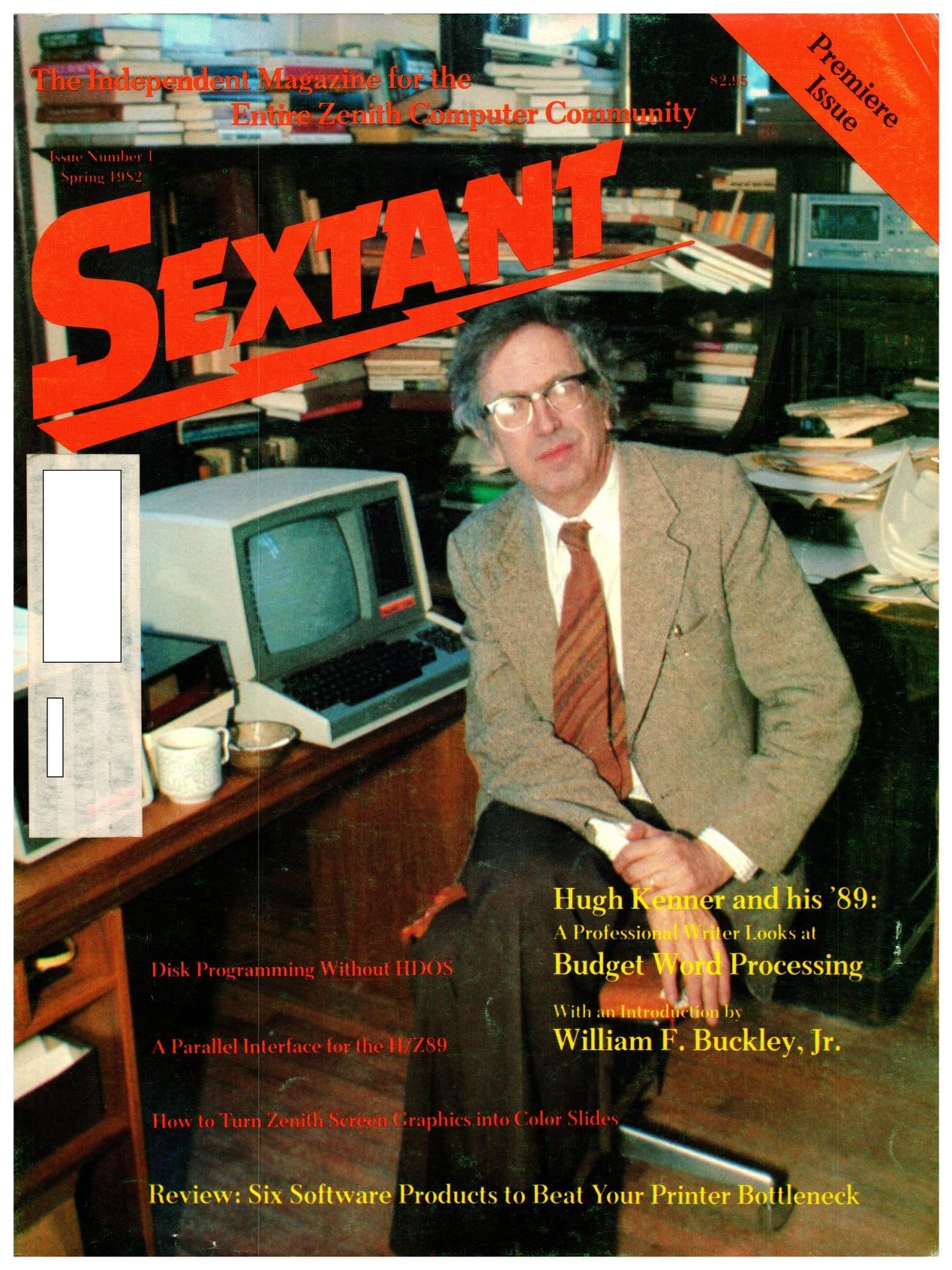
The oldest continuous community is the computer users. The Heath Users’ Group (HUG) published REMark magazine for Heath and Zenith computer owners for many years. An independent magazine, Sextant, “dedicated to the Heath/Zenith line of microcomputers”, ran from its first issue in spring 1982 to at least issue 31 in late 1987; the whole run is on the Internet Archive (Internet Archive, Sextant issue 1). Its first cover featured the critic Hugh Kenner writing about his H-89, with an introduction by William F. Buckley Jr., a sign of how far the Heath computer had reached beyond the ham shack.
The Society of Eight-Bit Heath Computerists (SEBHC) carries the same interest today. Its name goes back to a newsletter whose 1992 issues were already volume 7 (Classic Heathkit Computers, SEBHC newsletters). The online society was revived in the 2000s with a Google group dating from late 2007 (Herb Johnson, Heath/Zenith computers). SEBHC maintains a documentation archive for the H8, H9, H19, H88/H89, H/Z-100, HDOS and CP/M (SEBHC documentation). Since December 2020 Glenn Roberts has edited REMarks, “inspired, in part, by the original ‘REMark’ magazine, published for many years by the Heath Users Group”; issue 7 appeared in April 2026 (SEBHC, REMarks). Mark Garlanger’s Classic Heathkit Computers site hosts computer documentation, emulators, and scans of REMark, BUSS, H-Scoop, Sextant and the SEBHC newsletters (Classic Heathkit Computers).
On the radio and general side, the Heathkit Owners and Collectors List was an early email list hosted on a City of Tempe listserv; Kaeding’s account first appeared there before the Heathkit Virtual Museum republished it with the help of Van Lincoln, WD8AAM (Kaeding). Its successors are several groups.io lists (a general Heathkit list, a Heathkit ham-radio list, and single-model groups such as one for the HW-16).
7.7.2 Websites of record
- The Heathkit Virtual Museum (heathkit-museum.com), run by Cyberventures Unlimited, is a catalogue-derived showcase of kits by category (ham radio, test equipment, hi-fi, computers) with history pages. It does not sell kits or parts (Heathkit Virtual Museum).
- Nostalgic Kits Central has been online since March 2002. It documents Heathkit alongside Knight-Kit, EICO, Dynaco, Conar and others, and its Heathkit model matrix lists more than 1,400 model numbers with first and last catalogue years, prices and specifications (Nostalgic Kits Central; model matrix).
- Heathkit of the Month, written by Bob Eckweiler (AF6C) for the Orange County Amateur Radio Club newsletter since February 2008, had reached 133 illustrated installments by 2026, each a history and restoration guide to one kit or family (OCARC, Heathkit of the Month index).
- World Radio History hosts Heathkit catalogues and flyers from 1947 to 1993 as free PDFs, credited to Paul Kupersmith (World Radio History).
7.7.3 History in print and on stage
The most thorough modern history is Erich Brueschke and Michael Mack, “The History of the Heath Companies and Heathkits: 1909 to 2019”, in The AWA Review volume 32 (2019), published by the Antique Wireless Association (Brueschke and Mack). Rich Post’s “The Heathkit Legacy” in Monitoring Times (July 2013) covered the 2011–2012 collapse (Post). Lou Frenzel’s 2020 interview with Chas Gilmore in Electronic Design is the best inside account of how Heath developed its products and manuals (Electronic Design).
In St. Joseph itself, the Heritage Museum and Cultural Center held a Heath history evening on 20 August 2015. William Johnson, a former president of Heath who had spent 30 years with the company, spoke to more than 100 people (twice the museum’s usual audience) beside a display that included a HERO 1 robot and a Heathkit television (Tony Wittkowski, 6 October 2015).
7.8 The manuals after the company
No part of the Heathkit estate has been argued over more than the manuals, because they are what owners of the surviving kits actually need.
The claim runs in an unbroken line. HES said it held the manual copyrights (Kaeding). It sold the physical archive, with reproduction rights, to Data Professionals in 2008, and BAMA’s free Heathkit collection disappeared that December (KB6NU). The reaction on the boat-anchor mailing lists ranged from calling the buyer a “vulture” to pleas to “put down our weapons and torches” and wait for his plans (boatanchors list, 13 December 2008). Heath Company bought Data Professionals back in 2015.
Today’s owner states its position without qualification. The legal page says Heathkit publications “are copyrighted worldwide by law whether or not marked” and that “‘Fair use’ provides no safe harbor for creating, transmitting, storing or selling copies of Heath Company or Heathkit publications in any format or medium” (Heathkit legal notices). Its own manual shop, run by Data Professionals and linked from the Heathkit store as “Vintage Manuals”, sells paper copies only, made directly from originals: about twenty-two pages of listings, typically $2 to $30 a manual, graded from “Very Clean” to “Condensed”, with the explicit note that “we currently do not offer .PDF or any other ‘electronic’ copies for sale” (Data Professionals manual store).
At the same time, large free collections have grown. The Internet Archive holds more than a thousand Heathkit items, including a 706-item Heathkit manuals collection and new high-resolution scans funded through the Digital Library of Amateur Radio and Communications. Other sites mirror hundreds more, and at least one says it checked each title against Copyright Office records and withheld those still protected (Tubular Electronics). The landscape is surveyed in detail in the Field Guide volume. The practical result is that most Heathkit manuals can be found, but who is entitled to distribute them is still disputed thirty-four years after the last kit shipped.
Sources
- Brueschke, Erich E., and Michael Mack. “The History of the Heath Companies and Heathkits: 1909 to 2019.” The AWA Review 32 (2019). PDF via Wayback
- Kaeding, Randy (K8TMK). “A Heathkit Story (Past & Present).” Heathkit Virtual Museum
- Frenzel, Lou. “Heathkit: An Employee’s Look Back” (interview with Chas Gilmore). Electronic Design, 30 November 2020. Link
- DESA International Inc., Form S-4/A, 1998, including audited statements of Heath Company (excluding Heathkit Division). SEC EDGAR
- H.I.G. Capital, portfolio: Heath Company. Link
- HeathCo LLC, About. Link
- Allen, Kevin. “Heathkit moving to St. Joe Township.” Herald-Palladium, 7 September 2008. Link
- Swidwa, Julie. “Disassembly complete: Heathkit is no more.” Herald-Palladium, 19 July 2012. Link
- ARRL. “Heathkit Educational Systems Closes Up Shop,” 9 May 2012. Link
- ARRL. “Heathkit Declares Bankruptcy, Closes for Good (Again),” 24 July 2012. Link
- Post, Rich (KB8TAD). “The Heathkit Legacy.” Monitoring Times, July 2013. Link
- heathkit.com, archived 5 January 2012, 25 May 2013 and 31 December 2013. 2012 · May 2013 · Dec 2013
- Heathkit FAQ. heathkit.com · shop.heathkit.com
- Heathkit, About. Link
- Heathkit, legal notices. Link
- Heathkit shop. Link · AMSAT CubeSatSim
- Data Professionals. Main page and April 2015 press release · Manual store
- Karplus, Kevin. “Heathkit Moves to Santa Cruz.” Santa Cruz Tech Beat, 8 October 2015. Link
- Maloney, Dan. “Heathkit: Getting Closer This Time?” Hackaday, 21 November 2016. Link
- US Patent 10,219,398, “Electronics enclosure systems and methods.” Google Patents
- IEEE Consultants’ Network of Silicon Valley, member profile: Andrew Cromarty. Link
- Kirkwall. Acquisition announcement, LinkedIn, 28 August 2023. Link
- Heathkit (Heath Company) LinkedIn company page. Link
- Kirkwall. kirkwall.io
- Fargo INC! “Exploring AI with Kirkwall,” 10 May 2024. Link
- Fargo INC! “A Year as a Startup: The Journey of Kirkwall,” 30 January 2025. Link
- Moody on the Market. “Historic Heath/Zenith Hilltop Campus Continues Reinvention…,” 22 July 2026. Link
- Wittkowski, Tony. “Heritage Museum hosts program on the history of former Benton Harbor-St. Joseph company,” 6 October 2015. Link
- KB6NU. “Heathkit Manuals No Longer on BAMA,” 21 December 2008. Link
- Harmon, Gary (K5JWK), boatanchors mailing list, 13 December 2008. Link
- Tubular Electronics, Heathkit Manuals. Link
- Heathkit Virtual Museum. Link
- Nostalgic Kits Central. Home · Heathkit model matrix
- OCARC, Heathkit of the Month index. Link
- World Radio History, Heathkit catalogues. Link
- SEBHC. Documentation · REMarks
- Garlanger, Mark. Classic Heathkit Computers. Catalogues · SEBHC newsletters
- Johnson, Herb. “Heath - Zenith computers.” retrotechnology.com
- Sextant issue 1, spring 1982. Internet Archive
- Home Works by Heathkit. Internet Archive
- Wikipedia, “Heathkit” (used as a lead only). Link
Comments (0)