Heathkit · Volume 9
A Field Guide to Heathkit
This volume is the reference shelf for the rest of the dive. It explains how to read a Heathkit model number, lists the landmark kits in order, shows how the catalogue changed over the years, sets out how to date a kit or a manual, corrects the most persistent myths with the evidence, and says where the manuals and catalogues can be found today. The earlier volumes tell the history. This one is for the reader holding an unidentified grey box at a hamfest and asking what it is, when it was made and where to find its book.
The figures in this volume come mainly from two sources. The first is the Nostalgic Kits Central model matrix, an enthusiast database of more than 1,400 Heathkit model numbers with first and last catalogue years (Nostalgic Kits Central). The second is Heath’s own catalogues and manuals as scanned on the Internet Archive and World Radio History. Where the database and a primary document disagree, the document is preferred and the disagreement is noted.
9.1 Reading a model number
9.1.1 The prefix system
A Heathkit model number is a letter prefix, a hyphen and a number: IM-11, SB-102, GR-2000. The prefix names the product line. No Heath document that decodes the letters has been found, so the meanings below are inferred from the products that carry each prefix in the model matrix. The pattern is consistent enough that the inference is safe: the first letter usually gives the market (I for instruments, H for ham radio, A for audio, G for general consumer products, E for education and scientific, M for marine, C for automotive), and the second letter the kind of device.
Table 1 — The prefix system
| Prefix | Product line (inferred from the kits) | Models in matrix | Catalogue years | Examples |
|---|---|---|---|---|
| IM | Instrument, meter: VTVMs, VOMs, DMMs, counters | 58 | 1951–1991 | IM-11, IM-13, IM-25, IM-105 |
| IO | Instrument, oscilloscope | 29 | 1960–1989 | IO-10, IO-102, IO-4510 |
| IG | Instrument, generator: audio, RF, function | 33 | 1962–1989 | IG-18, IG-5280 |
| IT | Instrument, tester: tubes, transistors, capacitors | 27 | 1953–1985 | IT-17, IT-3121 |
| IP | Instrument, power supply | 25 | 1961–1984 | IP-32, IP-2717 |
| IB | Instrument, bridge (later also counters) | 14 | 1950–1977 | IB-2 |
| IN | Substitution boxes (resistor, capacitor) | 12 | 1961–1991 | IN-11, IN-17 |
| IC | Calculators (and a few instruments) | 11 | 1972–1989 | IC-2108 |
| ID | Digital and miscellaneous instruments, weather stations, automotive meters | 29 | 1964–1990 | ID-29, ID-4001, ID-5001 |
| HW | Ham transceivers (the single-band and HF “HW” line) | 36 | 1960–1985 | HW-12, HW-16, HW-101, HW-8 |
| SB | The SB (“single sideband”) amateur line: receivers, transmitters, transceivers, linears, station accessories | 34 | 1959–1988 | SB-300, SB-401, SB-102, SB-200 |
| HR | Ham receivers | 4 | 1961–1976 | HR-10, HR-1680 |
| HX | Ham transmitters | 6 | 1961–1979 | HX-10, HX-1681 |
| HG | Ham generator (VFO) | 2 | 1961–1967 | HG-10, HG-10B |
| HA | Ham amplifiers | 10 | 1961–1987 | HA-10 |
| HD | Ham devices: keyers, phone patches, code oscillators, dip meters | 34 | 1957–1990 | HD-1250, HD-1410 |
| HM | Ham meters: wattmeters, SWR bridges | 11 | 1961–1984 | HM-2140 |
| HN | Dummy loads | 2 | 1961–1983 | HN-31 “Cantenna” |
| HP | Ham power supplies | 15 | 1960–1980 | HP-23 |
| DX | Early AM/CW transmitters | 11 | 1955–1967 | DX-35, DX-40, DX-100 |
| AA | Audio amplifiers | 49 | 1958–1989 | AA-100, AA-1640 |
| AR | Audio receivers (earlier: SWL receivers) | 20 | 1949–1983 | AR-15, AR-1500 |
| AJ | Audio tuners | 25 | 1961–1981 | AJ-1510 |
| AS | Audio speakers | 24 | 1964–1983 | AS-2 |
| AD | Audio devices: turntables, tape, processors | 41 | 1961–1991 | AD-1305 |
| GR | General consumer receivers: radios and televisions | 63 | 1961–1984 | GR-2000, GR-900 |
| GD | General devices: home, hobby and radio-control products | 73 | 1952–1992 | GD-1 dip meter, GD-1183 freezer alarm |
| GC | Clocks | 19 | 1960–1984 | GC-1005, GC-1000 |
| GW | CB radios | 21 | 1960–1967 | GW-10 |
| H / WH | Computers and peripherals (WH = wired) | 22 | 1977– | H8, H11, H19, H89, WH-89 |
| ET / ETA / ETW | Educational trainers and robots | 15+ | 1958–1990 | ET-3400, ET-18 (HERO 1) |
| EE | Individual Learning course books | not in matrix | 1970s–1999 | EE-3101, EE-3104, EE-1800 |
| EC / ES | Analog computers and components | 12 | 1956–1971 | EC-1, ES-400 |
| EU / EUW / EV | Scientific instruments (the Malmstadt-Enke laboratory line) | 30+ | 1963–1971 | EU-20, EUW-17 |
| MI / MR / MW | Marine instruments, receivers, radiotelephones | 20+ | 1959–1981 | MI-18, MR-1010 |
| CI / CM / CO / CP | Automotive: indicators, meters, analysers, ignition | 20+ | 1956–1989 | CO-1015, CP-1060 |
| SM / SO / SG / SP | Assembled “Heath/Schlumberger” instruments | 50+ | 1971–1990 | SM-2410, SP-2717A |
| O, V, G, C, T, A, W | Single-letter series of 1947–1958 | ~60 | 1947–1958 | O-1, V-7A, G-1, A-7, W-5M |
Counts and years are from the model matrix (Nostalgic Kits Central). The EE course numbers are from Heathkit/Zenith course books on the Internet Archive (EE-3101 DC Electronics; EE-3101-C, 1999; EE-1800 Robotics & Industrial Electronics).
Three facts behind the table deserve a note.
- The SB prefix is not ham-only. The SB line began as amateur radio but later included an SB-610 monitor scope and SB-series station accessories. The HW prefix covered transceivers almost exclusively (34 of its 36 entries).
- The S-prefix instruments are assembled versions. The matrix records the SP-2717 as the “assembled IP-2717” power supply. The SM, SO, SG and SP series of the 1970s and 1980s are the factory-built versions of IM, IO, IG and IP kits, sold under the Heath/Schlumberger instrument name (Nostalgic Kits Central). The “Heath/Schlumberger Electronic Instruments” catalogues of 1974 and 1978 on World Radio History are the matching sales literature (World Radio History).
- The early single letters were a different system. From 1947 to about 1958 Heath used one letter and a digit: O for oscilloscopes (O-1 to O-12), V for VTVMs (V-1 to V-7A), G for generators, C for condenser checkers, T for signal tracers, A for audio amplifiers, W for the Williamson-type power amplifiers. These were replaced by two-letter prefixes around 1959–1961.
9.1.2 Suffix letters
- A, B, C after the number mark revisions of the same model: V-7 then V-7A (1955, a thicker circuit board) (Brueschke and Mack, p. 147); HG-10 then HG-10B; SB-104 then SB-104A. A revised model normally had a revised manual, so the suffix on the manual must match the suffix on the panel.
- W in a prefix or before it marks a wired (factory-assembled) version: WH-89 for the assembled H-89, and EUW-, IGW-, ETW-, GCW- and ACW- in the matrix. Gilmore noted that Heath used “Wired” and “Assembled” interchangeably (Electronic Design, 30 November 2020).
- A appended to the prefix marks an accessory for that line, usually followed by the parent model number and a dash number: SBA-100-1 (a mounting bracket for the SB-100), HWA-7-1, IMA-18-1, IDA-5001-1, GRA- television accessories, AJA-1510-1. The restarted company still numbers its upgrades this way (IGA-18-1, AJA-1510-1, GCA-1006-5) (Heathkit shop).
9.1.3 Number length
Two- and three-digit numbers (IM-11, SB-102) belong to the 1950s through mid-1970s. Four-digit numbers (AJ-1510, ID-4001, IO-4510, SB-1000, HW-5400, GC-1000) mark the later 1970s and 1980s, when the catalogue had outgrown the short numbers. A four-digit number on a kit is therefore a good sign that it dates from after about 1974. That rule is inferred from the model matrix, not stated in any Heath document, so the manual’s print date should settle any doubt.
9.2 Landmark kits by year
The table gives the first catalogue year recorded in the model matrix unless another source is cited. The matrix is sometimes late by a year or more. It gives the ET-3400 trainer as 1981, although the trainer was on sale in the 1970s, so years should be read as “in the catalogue by”.
Table 2 — Landmark kits by year
| Year | Kit | Why it matters |
|---|---|---|
| 1947 | O-1 oscilloscope | The first Heathkit, advertised in the July 1947 Radio News at $39.50 (Gilmore) |
| 1947 | V-1 VTVM | Start of the best-selling instrument line; the last Heath VTVM was sold in 1989 (Gilmore) |
| 1949 | AR-1 receiver | Early general-coverage receiver |
| 1951 | AT-1 transmitter | Heath’s first amateur transmitter (1951–1956) |
| 1955 | V-7 VTVM | First printed-circuit Heathkit; V-7A followed within the year (Brueschke and Mack) |
| 1955 | DX-100 transmitter | 100 W AM/CW, 160–10 m |
| 1956 | ES-400 analog computer | Heath’s first analog computer system, $945 in 1956 (per the sibling ES-400 dive on this site) |
| 1958 | TX-1 Apache, RX-1 Mohawk | The large “tribal” station pair |
| 1959 | EC-1 analog computer | Educational analog computer, 1959–1971 (per the sibling EC-1 dive) |
| 1961 | HN-31 “Cantenna” | Dummy load in the catalogue until 1991; with the VTVM, the lifetime volume leader (Gilmore) |
| 1961 | AA-100 integrated amplifier | $84.95 |
| 1963 | HW-12 “Singlebander” | $119.95 single-band SSB transceiver, start of the HW line |
| 1963–1964 | SB-300 receiver, SB-400 transmitter | The SB line begins |
| 1964–1968 | SB-200 linear amplifier | Probably the top ham kit by lifetime dollars (Gilmore); the matrix says 1964, Gilmore 1968 |
| 1965 | SB-100 transceiver | $360; SB-101 (1967), SB-102 (1970) |
| 1966 | SB-301, SB-401 | The revised receiver and transmitter pair (SB-301 kit $260) |
| 1967 | AR-15 receiver | The audio flagship Gilmore said put Heath “in the top tier” |
| 1967 | HW-16 | CW novice transceiver |
| 1970 | HW-101 | The long-running HF transceiver (1970–1983) |
| 1972 | GR-2000 colour television | Digital channel and time display on screen |
| 1972 | GC-1005 clock | Neon digital clock |
| 1974 | SB-104 | All solid-state HF transceiver; SB-104A 1977 |
| 1975 | AJ-1510 | Digitally synthesised FM tuner |
| 1976 | HW-8 | QRP transceiver |
| 1977 | H8, H9, H11 | The computer line, first shown in the August/Fall 1977 catalogue (Gilmore) |
| 1978 | ID-4001 weather station | Digital weather station (to 1992) |
| 1982 | HERO 1 (ET-18) robot | Project begun 1979, released 1982 (per the sibling HERO 1 dive) |
| 1982 | SS-9000 | Factory-assembled synthesised HF transceiver |
| 1983 | GC-1000 “Most Accurate Clock” | WWV-synchronised clock (to 1992) |
| 1984 | HERO Jr (RT-1) | Home robot, about $600 (per the sibling HERO Jr dive) |
| 1987 | HK-232 | Multi-mode packet TNC |
| 1990 | H-5100 / HS-5100 | ”Builder-friendly” 80286/80386SX computer; proofbuild July 1990 (Internet Archive) |
| 2015 | GR-150 / GR-152 Explorer | First kit of the restarted company |
| 2016 | GC-1006 Most Reliable Clock | Restart-era flagship |
| 2025 | CubeSatSim Heathkit Edition | First product of the Kirkwall era |
Years and prices without a separate link are from the model matrix (Nostalgic Kits Central).
9.3 The catalogues, year by year
Heath sold almost entirely by mail until the early 1960s and mainly by mail for long after, so the catalogue was the company’s shop window. Two kinds of evidence let its growth be measured: the page counts of surviving scans, and the kit counts printed on the covers.
Table 3 — The catalogues, year by year
| Catalogue | Pages (scan images) | Cover or other claim | Where |
|---|---|---|---|
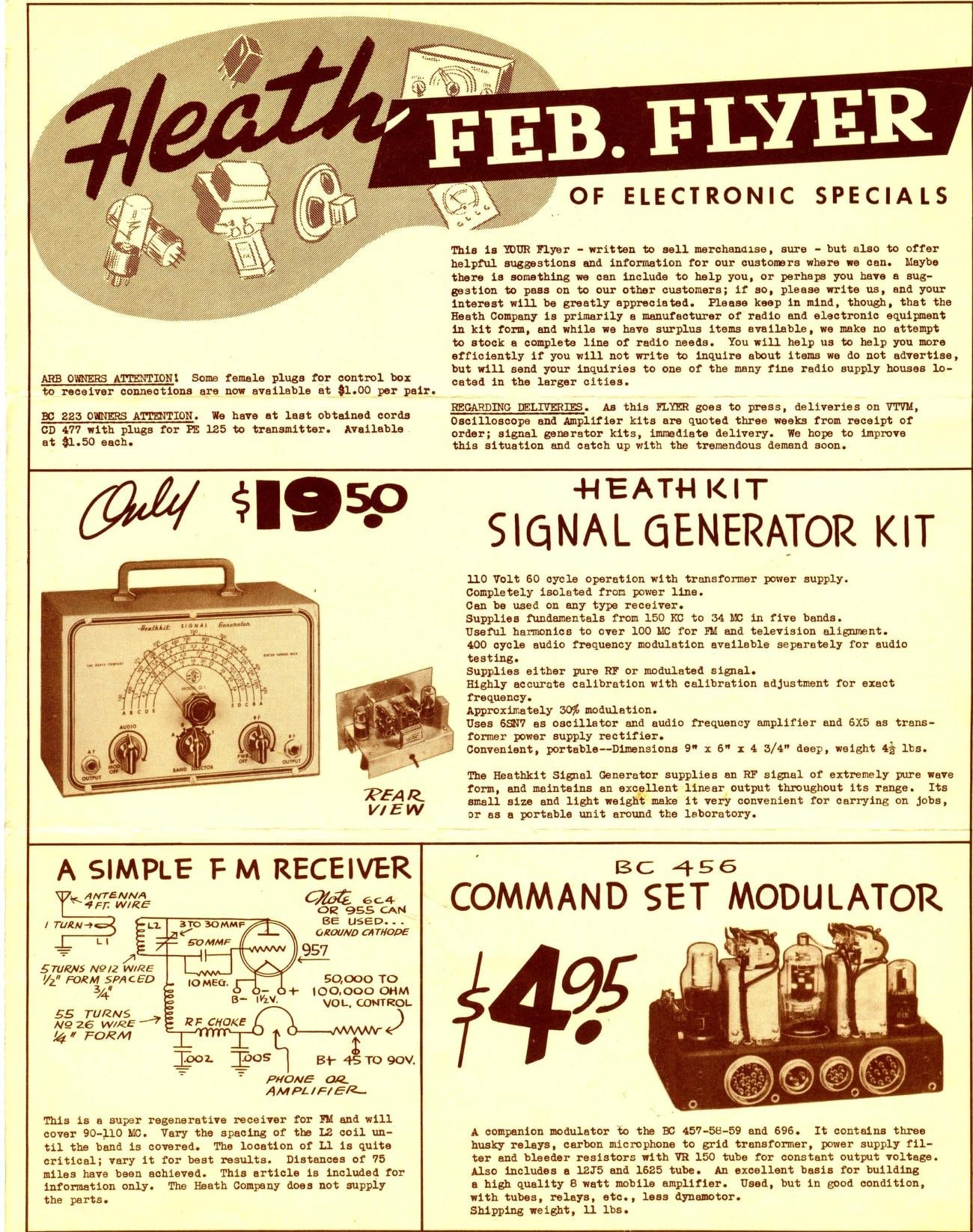
| February 1948 flyer | single sheet | ”Feb. Flyer of Electronic Specials”: $19.50 signal generator kit, $4.95 surplus modulator | Internet Archive |
| 1956 | 64 | ”World’s finest electronic equipment in kit form”; “a subsidiary of Daystrom, Incorporated” | Internet Archive |
| Fall & Winter 1961–62 | 106 | ”Plant location: St. Joseph, Michigan”; Daystrom subsidiary | Internet Archive |
| 1963 (electronic kits) | 55 | $5 introductory certificate | Internet Archive |
| 1966, 810/60 | 117 | ”over 250 electronic kits—world’s largest selection” | Internet Archive |
| 1971, 810/72 | 96 | ”25th year” | Internet Archive |
| 1972, 800/28 | 88 | AR-1500 receiver on the cover | Internet Archive |
| August/Fall 1977 | 104 pages | Computers get 10 pages; test 21, audio 15, ham 11 | Gilmore |
| Winter 1980, No. 848 | ”Heathkit Mail Order Catalog No. 848” | Internet Archive | |
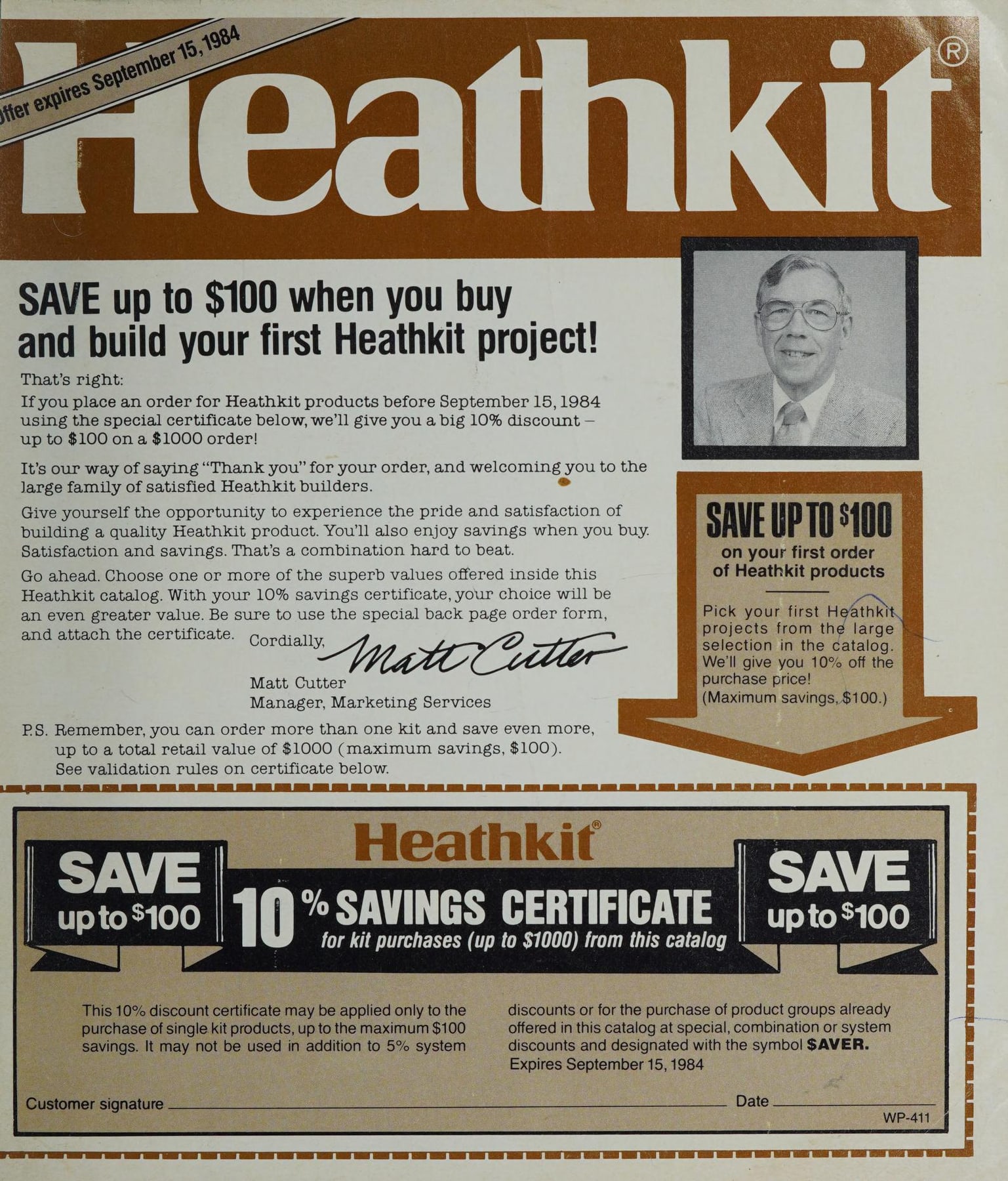
| Fall 1984 | 114 | Savings-certificate cover | Internet Archive |
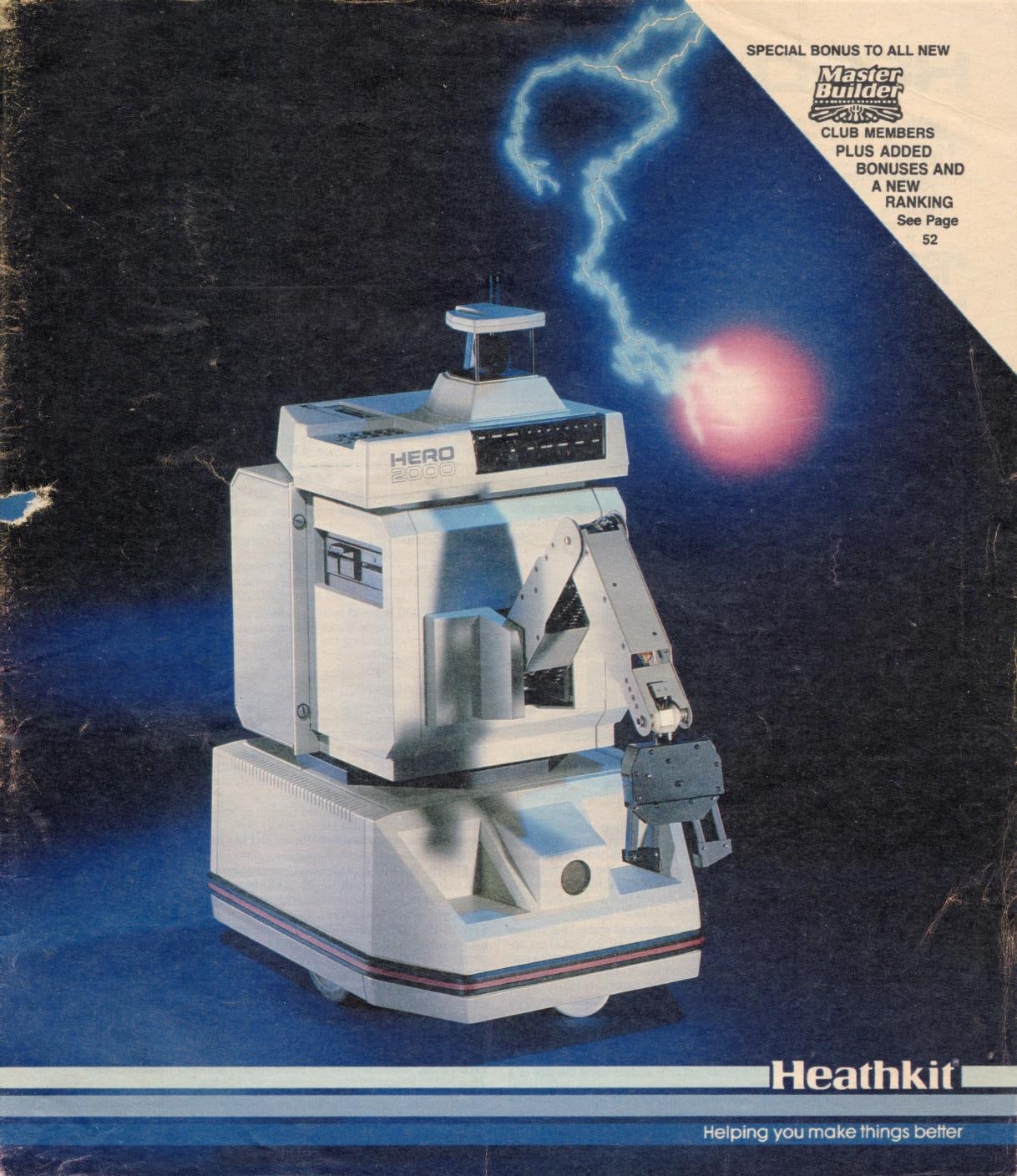
| Spring–Summer 1986 | HERO 2000 on the cover | Internet Archive | |
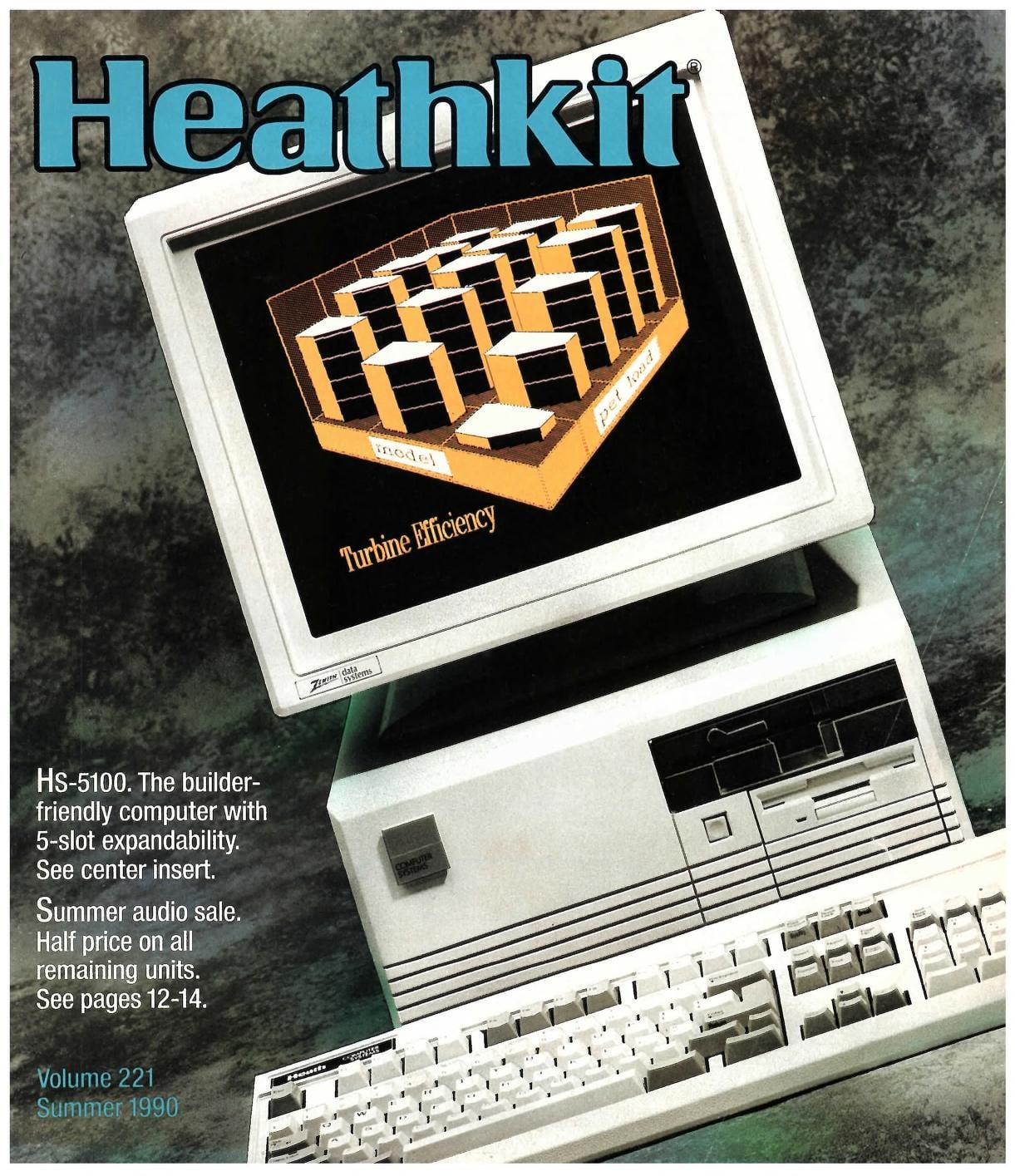
| Summer 1990, Volume 221 | HS-5100 “builder-friendly” computer; “Half price on all remaining” audio units | Internet Archive |
Scan-image counts include covers and the occasional blank, so they slightly overstate printed pages. Gilmore adds that mid-1970s catalogues featured “over 400 products in kit form” (Electronic Design).
9.3.1 How many catalogues survive for each year
World Radio History’s Heathkit page links about 120 distinct PDFs. Grouped by year they show the rhythm of Heath’s publishing: monthly flyers in 1948–1950 (eight survive from 1949 alone), fewer and larger catalogues through the 1950s and 1960s, then three to six a year in the late 1970s and early 1980s (spring, fall, Christmas, winter), falling to one or two a year by 1986–1991. The last general catalogue on the list is Winter 1991 (No. 223), and the last item of all is a 1993 education catalogue (No. 279) (World Radio History). No catalogues survive there for 1953, 1957, 1960 or 1989, which points to gaps in collecting rather than in publishing.
Table 4 — How many catalogues survive for each year
| Period | Catalogues and flyers on World Radio History |
|---|---|
| 1947–1949 | 13 (almost all monthly flyers) |
| 1950–1959 | 20 |
| 1960–1969 | 22 (including Italian and French editions) |
| 1970–1979 | 35 (including German, international and Schlumberger instrument editions) |
| 1980–1989 | 27 |
| 1990–1993 | 4 |
The covers of the 1956, 1961–62, 1966, 1972 and 1980 catalogues appear in the chapters that cover those years.
9.4 How to date a Heathkit
9.4.1 The manual part number
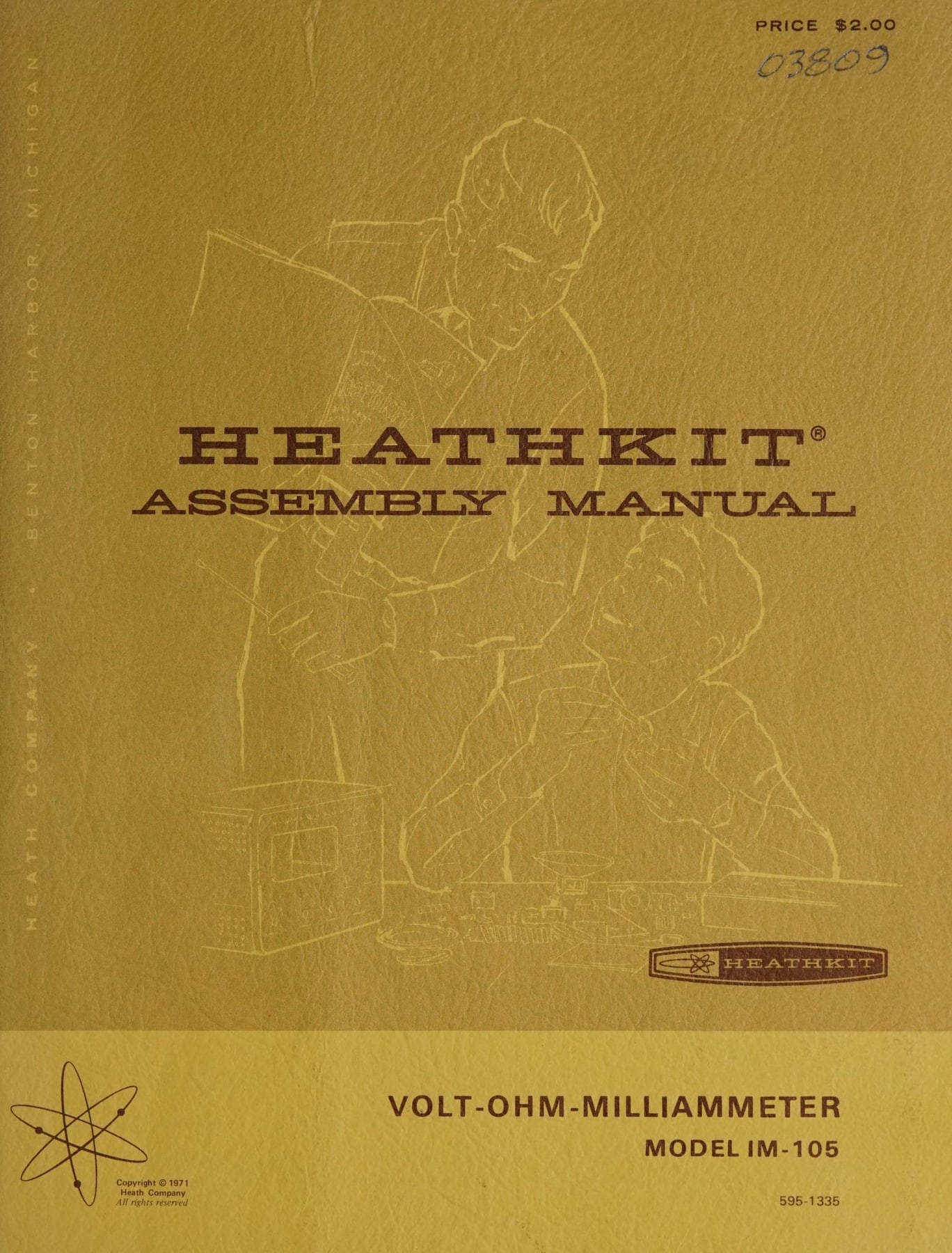
Every Heath manual carries a part number in the 595- series, printed on the front cover (the parts list says only “Manual (See front cover for part number)”). The numbers were issued roughly in sequence, so the number itself dates the manual. A two-digit dash suffix gives the revision.
Table 5 — The manual part number
| Manual | Part number | Date printed in manual |
|---|---|---|
| IM-10 service-bench VTVM | 595-362 | ”Copyright 1960 9/9/60” |
| HN-31 “Cantenna” | 595-527-03 | Copyright 1962 (revision 03, a later printing with the Heath/Schlumberger Kit Builder’s Guide) |
| IM-25 solid-state VOM | 595-1042-02 | 1967 |
| IO-102 oscilloscope | 595-1285-01 / -02 | Copyright 1971 |
| IM-105 VOM | 595-1335 | c. 1971–72 |
| ET-3300B breadboard | 595-2937-02 | Copyright 1983 |
| H-5100 computer | 595-4696 | Copyright 1990 |
Sources: the manuals on the Internet Archive (IM-10, HN-31, IM-25, IO-102, IM-105, ET-3300B, H-5100).
Two cautions apply. The copyright year is the year of first publication, not of the printing in hand: the HN-31 manual keeps its 1962 copyright line in a later revision whose Kit Builder’s Guide carries the Heath/Schlumberger logo. And the revision suffix matters: -01 and -02 printings of the IO-102 manual both exist.
9.4.2 Heath’s other part-number families
The replacement-parts list in any manual doubles as a key to Heath’s internal numbering. In the 1971 IO-102 list: 1- for 1/2-watt resistors (1-xx-1 for 1-watt), 3-xx-7 for 7-watt wirewound resistors, 23- and 25- for capacitors (25- for electrolytics), 56- and 57- for zener and silicon diodes, 417- for transistors, 344- for hook-up wire (priced by the foot), 331- for solder, 85- for circuit boards, 597- for inserts such as the Kit Builders Guide (597-308), and 595- for manuals (IO-102 manual). A loose Heath part with its number still on the envelope can usually be placed in its family from this list. The restarted company still sells parts in the 100-, 266- and 455- families (Heathkit shop).
9.4.3 Corporate identity lines
The owner’s name printed on a catalogue or manual brackets its date:
- “A subsidiary of Daystrom, Incorporated” appears on catalogues from the Daystrom years (1955–1962); the 1956 and 1961–62 catalogues carry it (1956; 1961–62).
- “Heath / Schlumberger” marks the 1962–1979 Schlumberger era. It appears on the Kit Builder’s Guide and on the 1971 catalogue (HN-31 manual; 1971 catalogue).
- Heath/Zenith branding and the rounded “Heathkit” wordmark belong to the Zenith years (1979–1989) and after (ET-3300B manual).
- ZIP code 49022 after “Benton Harbor, Michigan” dates a document to 1963 or later, when US ZIP codes began. The 1971 IO-102 manual’s warranty page gives “Benton Harbor, Michigan 49022” with a 616 area-code phone and a TWX number (IO-102 manual).
- A reference to Heathkit Electronic Centers (the retail stores) in the factory-repair section places a manual after the stores opened in the early 1960s (Gilmore).
9.4.4 The kit itself
The model matrix’s first and last catalogue years bracket a kit’s production run (Nostalgic Kits Central). Revision suffixes narrow it further. Construction gives a rough era. Point-to-point wiring on tube sockets and terminal strips belongs to the early kits; the printed circuit board arrived with the V-7 in 1955 and was “part of nearly every kit thereafter” (Gilmore). Transistors replaced tubes from the early 1960s, the solid-state SB-104 arrived in 1974, and pre-built subassemblies became common in the 1980s. Cabinet colour and panel styling also changed by era, but no documentary source setting out a dated sequence of Heath cabinet styles was found, so the catalogue covers in this volume are the safest visual reference.
9.5 Common myths corrected
9.5.1 “Heathkit went out of business in 1992”
The kit line ended; the company did not. Heath Company continued as Heathkit Educational Systems and a lighting and security business, which were sold separately in 1995 and 1998. The educational company ran until its bankruptcy in 2012, and the name has been in continuous commercial use since the 2013 restart. A Heath employee wrote at the time: “The Company never went out of business. It is true that they no longer make kits” (Kaeding, Heathkit Virtual Museum; DESA S-4/A). The After the Kits volume follows the chain.
9.5.2 “Heath’s first amateur transmitter was the A1”
The A-series of 1951–1958 (A-1, A-3, A-4, A-7 and others) were audio amplifiers. Heath’s first amateur transmitter was the AT-1, in the catalogue from 1951 to 1956 (Nostalgic Kits Central). The error comes from dropping the T.
9.5.3 “No new kits after 1986”
Heath was still developing and proof-building kits in 1990. The internal proofbuild report for the H-5100 computer has a return date of July 1990 (Internet Archive); the Summer 1990 catalogue put the HS-5100 “builder-friendly computer” on its cover (Internet Archive); and a Winter 1991 catalogue exists (World Radio History). What is true is that the range was shrinking fast. The 1990 cover also advertises half price “on all remaining” audio units.
9.5.4 “Surface-mount parts killed the kits”
Surface-mount assembly and cheap factory labour both mattered, but a Heath executive of the period calls them “far from being the only reasons”. Gilmore says “there were plans afoot to make use of surface-mount technology”. He adds other causes: the cost of writing manuals, which assembled-product makers did not bear; builders with less spare time as kits took over 100 hours; computers drawing away the “early innovators”; and the demands of being a division of large public companies (Electronic Design). Brueschke and Mack list eight causes, including the complexity of the manuals and the repeated sale of the company to owners with “little interest in the Heathkit operation other than computers” (Brueschke and Mack, p. 152).
9.5.5 “Kits were always cheaper than buying assembled”
For the first decades, yes; that was Heath’s premise, and Gilmore’s “80% rule” (80 percent of the functionality at 20 percent of the price) described many early kits. By the 1980s it had often reversed. Steve Jobs, in a 1995 quotation later featured on Heathkit’s own website, remembered that “you actually paid more money for them than if you just went and bought the finished product if it was available” (heathkit.com, archived January 2012).
9.5.6 “Zenith Data Systems owned Heathkit”
Zenith owned both. Inside the St. Joseph building, according to Kaeding, Heathkit, Veritechnology and ZDS “each had their own President which reported to ZEC in Chicago”, and “ZDS did not at any time own Heathkit” (Kaeding).
9.5.7 “The Heath Zenith lights company is Heathkit”
HeathCo LLC of Bowling Green, Kentucky, which sells Heath Zenith motion lights and doorbells, descends from Heath’s lighting division. That division was sold to DESA in February 1998 with the Heathkit Division explicitly excluded (DESA S-4/A; HeathCo). The two companies have been separate for almost thirty years.
9.5.8 “Kirkwall bought Heathkit in 2024” (or 2023, depending on the retelling)
Both dates appear, and both are partly right. Kirkwall announced the acquisition on 28 August 2023; its chief executive physically moved Heathkit to Fargo in March and October 2024 (Kirkwall on LinkedIn; Fargo INC!, 30 January 2025). The chief executive’s name is William (Will) Cromarty; spellings such as “Crommarty” are errors.
9.5.9 “The old Heathkit plant was demolished”
The building at 211 Hilltop Road, St. Joseph, stands. It is the 522,467-square-foot Hilltop Business Center, bought by Clark Logic in 2023 and let to businesses, a foundation and a therapy clinic (Moody on the Market, 22 July 2026).
9.5.10 “Heathkit manuals are out of copyright, so anyone may copy them”
The present owner says the opposite, stating that its publications are “copyrighted worldwide by law whether or not marked” and that “‘Fair use’ provides no safe harbor” (Heathkit legal notices). Some older manuals may never have had their US copyrights renewed, and at least one archive says it checked titles against Copyright Office records and withheld the ones still protected (Tubular Electronics). The honest position is that the status varies from manual to manual and has to be checked title by title. No blanket statement in either direction is safe.
9.5.11 “The O-1 cost $39.95”
Retellings disagree on the price of the first kit: $39.50 or $39.95. Gilmore, citing the July 1947 Radio News introduction, gives $39.50 (Electronic Design). The first volume of this dive examines the O-1 in detail.
9.6 Where manuals and catalogues survive today
9.6.1 From the owner
Heath Company, through its Data Professionals business, sells paper reprints only, “1st generation copies made directly from an original manual”, with about twenty-two pages of listings at typically $2 to $30, and states: “We currently do not offer .PDF or any other ‘electronic’ copies for sale” (Data Professionals manual store). This is the only source that claims the owner’s authority.
9.6.2 Free archives
Table 6 — Free archives
| Archive | What it holds | Notes |
|---|---|---|
| Internet Archive, Heathkit manuals collection | 706 manuals and schematics | Most uploaded in January 2024 |
| Internet Archive, Digital Library of Amateur Radio & Communications | New high-resolution scans of individual manuals (IO-102, IM-105, IM-25, SB-200, HN-31, IM-10 and many more) | Page-by-page images; e.g. IO-102 |
| Vintage Radio Info | 719 files: schematics, partial and complete manuals | Rebuilt from the defunct circuitarchive.co.uk collection |
| Tubular Electronics | Heath manuals A–Z | Withholds about 30 titles it believes still in copyright |
| KO4BB | About 140 Heathkit files | General manuals archive |
| W5RKL | 118+ amateur-radio Heathkit documents | Ham-focused |
| AudioCircuit | About 300 audio schematics and service documents | Audio only |
| BAMA | A dozen models | Removed its large Heathkit collection in 2008 |
| SEBHC | H8, H89, H19, H/Z-100, HDOS, CP/M documentation | Computers only |
| bitsavers | H11, Z89, Z100 and other Zenith/Heath computer documents | Computers only |
| Heathkit of the Month | 133 illustrated articles with schematics | Histories and restoration notes, not manuals |
9.6.3 Catalogues
Table 7 — Catalogues
| Archive | Coverage |
|---|---|
| World Radio History | About 120 catalogues and flyers, 1947–1993, including foreign editions |
| Internet Archive | Individual catalogues, 1948–1990 (see the table above) |
| VE5JL Heathkit Catalogs | About 40 catalogues, 1954–1989, in a web viewer |
| Classic Heathkit Computers | Computer pages of 1977–1985 catalogues, plus REMark, Sextant and SEBHC newsletters |
9.6.4 For model data
The Nostalgic Kits Central model matrix is the most complete index of Heathkit model numbers online, with first and last catalogue years, prices and specifications. The Heathkit Virtual Museum presents kits by category from the catalogues.
9.7 Suggested reading
- Brueschke, Erich E., and Michael Mack. “The History of the Heath Companies and Heathkits: 1909 to 2019.” The AWA Review 32 (2019). The most complete single history, from E. B. Heath’s aircraft to the Explorer radio. PDF via Wayback
- Frenzel, Lou. “Heathkit: An Employee’s Look Back.” Electronic Design, 30 November 2020. An interview with Chas Gilmore on product development, the Manual Department, the computer decision and the decline. Link
- Kaeding, Randy. “A Heathkit Story (Past & Present).” An employee’s account of the company’s structure around 1991 and after. Heathkit Virtual Museum
- Penson, Chuck. Heathkit: A Guide to the Amateur Radio Products. Electric Radio Press, 1995 and later editions. The standard reference on Heath ham gear (cited in Wikipedia’s bibliography; not consulted for this volume).
- Post, Rich. “The Heathkit Legacy.” Monitoring Times, July 2013. Link
- Eckweiler, Bob. Heathkit of the Month (2008–). OCARC index
- Sextant (1982–1987) and the Heath Users’ Group’s REMark, for the computer years. Sextant issue 1 · Classic Heathkit Computers
Sources
- Nostalgic Kits Central, Heathkit alphabetic equipment matrix. Link
- Frenzel, Lou. “Heathkit: An Employee’s Look Back” (interview with Chas Gilmore). Electronic Design, 30 November 2020. Link
- Brueschke, Erich E., and Michael Mack. The AWA Review 32 (2019). PDF via Wayback
- Kaeding, Randy. “A Heathkit Story (Past & Present).” Heathkit Virtual Museum
- DESA International Inc., Form S-4/A, 1998. SEC EDGAR
- HeathCo LLC, About. Link
- World Radio History, Heathkit catalogues. Link
- Internet Archive catalogues: Feb 1948 · 1956 · 1961–62 · 1963 · 1966 · 1971 · 1972 · 1980 · 1984 · 1986 · 1990
- Internet Archive manuals: IM-10 · HN-31 · IM-25 · IO-102 · IM-105 · ET-3300B · H-5100 and proofbuild report
- Internet Archive course books: EE-3101 DC Electronics · EE-3101-C (1999) · EE-1800
- heathkit.com, archived 5 January 2012. Wayback Machine
- Heathkit legal notices. Link
- Heathkit shop. Link
- Data Professionals manual store. Link
- Kirkwall acquisition announcement, 28 August 2023. LinkedIn
- Fargo INC! “A Year as a Startup: The Journey of Kirkwall,” 30 January 2025. Link
- Moody on the Market, 22 July 2026. Link
- Tubular Electronics, Heathkit manuals. Link
- Archives listed in the manuals tables above: Vintage Radio Info · KO4BB · W5RKL · AudioCircuit · BAMA · SEBHC · bitsavers · VE5JL · Classic Heathkit Computers
- Wikipedia, “Heathkit” (lead only). Link
Comments (0)